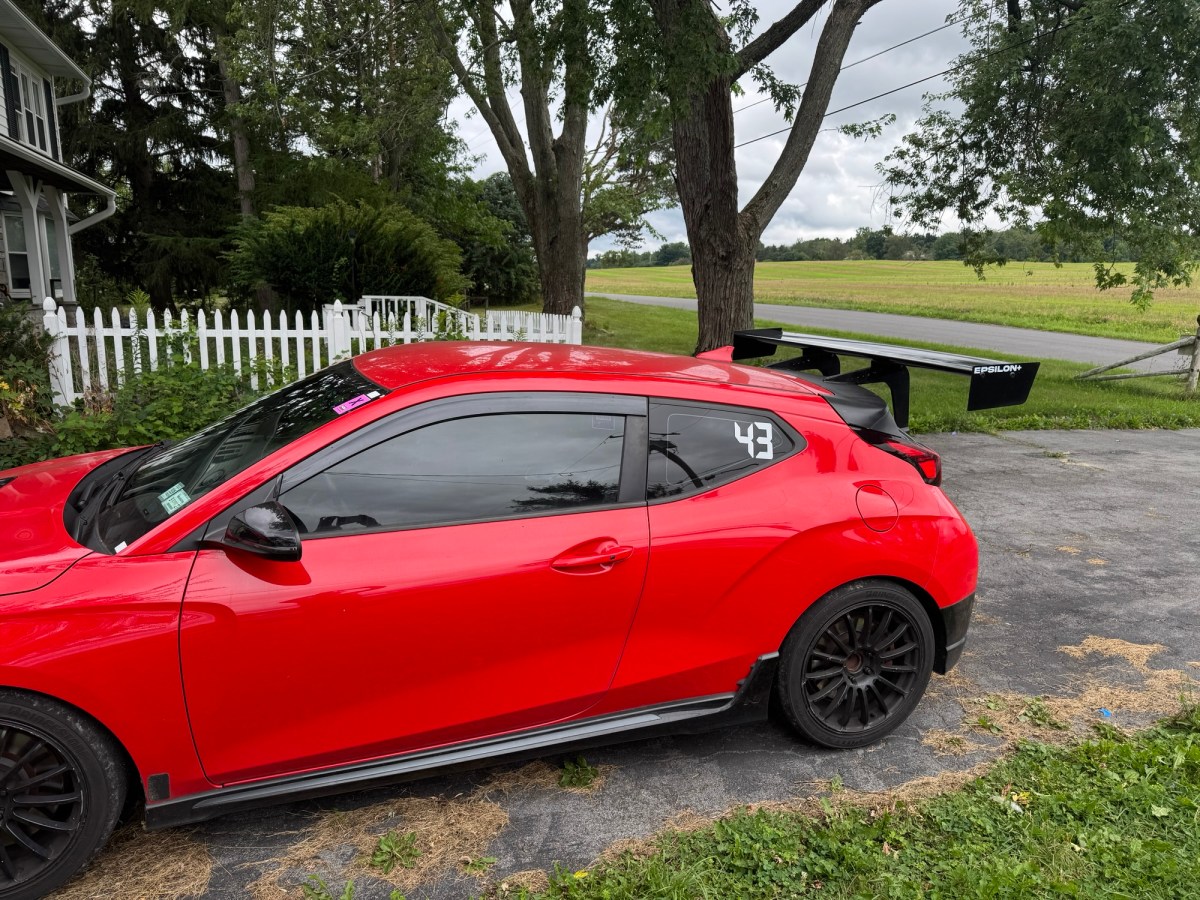
I’ve known of Epsilon+ for a few years because they made a really cool rally wing for the Veloster N. Not many people make parts for this car, and so I was stoked to see such a great looking piece for my car.
I offered to test the WRC wing in the wind tunnel, but Epsilon+ didn’t have any in stock. But Adam Bao got back to me and told me about a new nylon wing they were making, and said they’d send me one for testing.
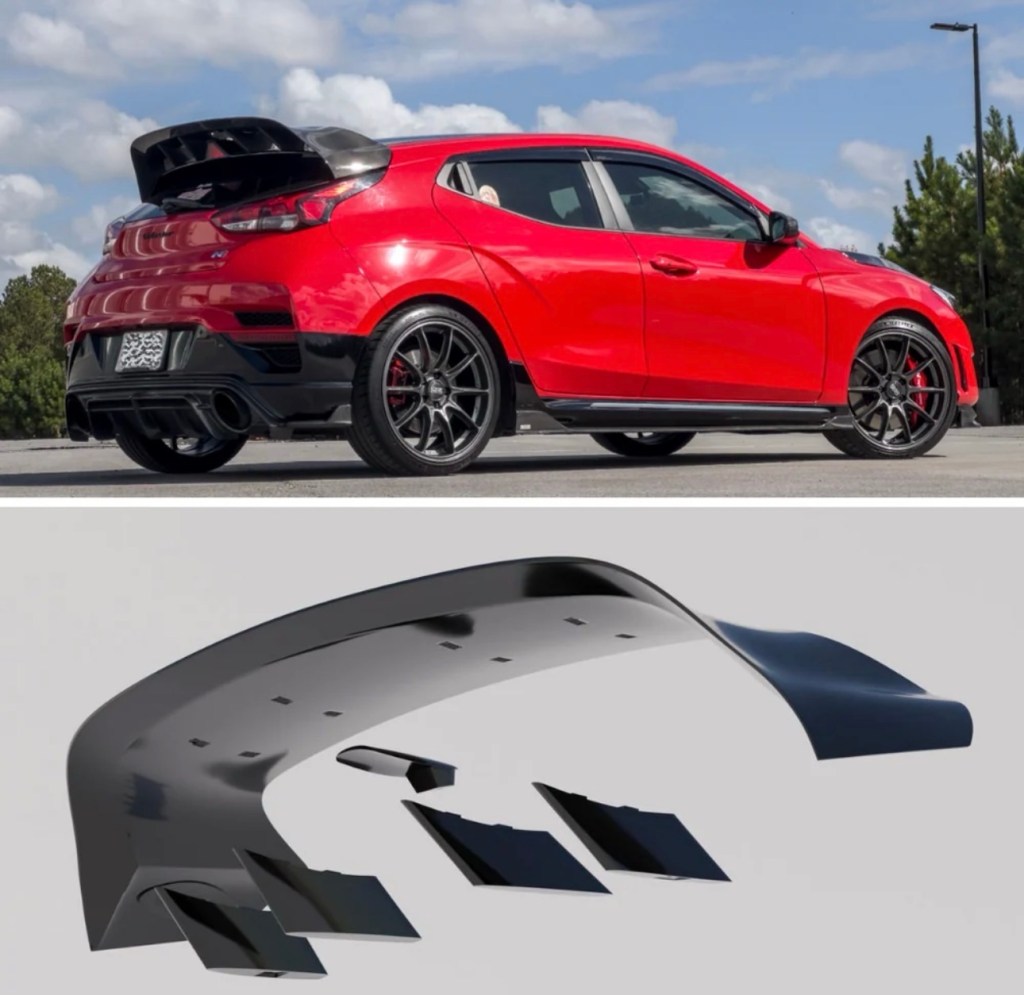
It didn’t make it in time for my most recent wind tunnel test, but fast forward several months and I now have one.
Before I start this rather rather lengthy review, let me start off by saying that I like Adam Bao’s style. I’m pleased that he develops parts for the Veloster N, and that he has enough confidence in his products to send me a wing so I can do an unbiased review, and test it in the wind tunnel.
It’s a GLTC Wing
The TC wing is aimed squarely at cars competing in Grid Life Touring Cup (GLTC). The size, shape, and construction of the wing was specifically designed for cars in that ruleset.
- Size – The chord and wingspan were designed to maximize the planform area allowed within the rules (701 square inches).
- Shape- The shape of the airfoil was chosen for lower-powered cars (GLTC cars have around 13 lbs per hp), optimizing wing efficiency rather than maximum downforce.
- Construction- The wing is made of nylon, which is lighter and cheaper than aluminum, but also less rigid. However, it’s unlikely for a GLTC car to exceed 140mph, which is considered the max speed in the design specifications.
Airfoil shape
One of my more popular articles is Car Wing Comparisons, wherein I examine various wings and compare shapes, drag, lift, and efficiency. It’s a bit nerdy, but I want to start this evaluation by doing the same for the TC wing.
I measured the wing thickness and camber and compared these to the chord, which is the standard way wings are measured in the NACA 4-digit coordinate system. The TC measures 12% thickness. If you experiment with a NACA calculator, you’ll find that downforce usually maxes out around 12%. But NACA wings are for flying, and motorsports wings are for going around corners, and so many motorsports wings are around 15% thick (or in the case of the spec TCR turd wing, 18% thickness).
The location of maximum camber is at 30% of chord. Again, this is pretty normal for a low-Reynolds high-lift aviation wing. But motorsports wings often have maximum thickness further forward, and maximum camber further aft, compared to aviation wings.
The TC’s maximum camber is about 9% of chord, and the location of max camber is at about 55% chord. (This is a less exact measurement, as I’m using a straight edge and eyeballing the median camber line.)
In Benzing coordinates, this is somewhere around Be 123-095. Anyone who says this is a copy of a 9 Lives Racing wing would be wrong, as the Big Wang has more camber (Be 123-125).
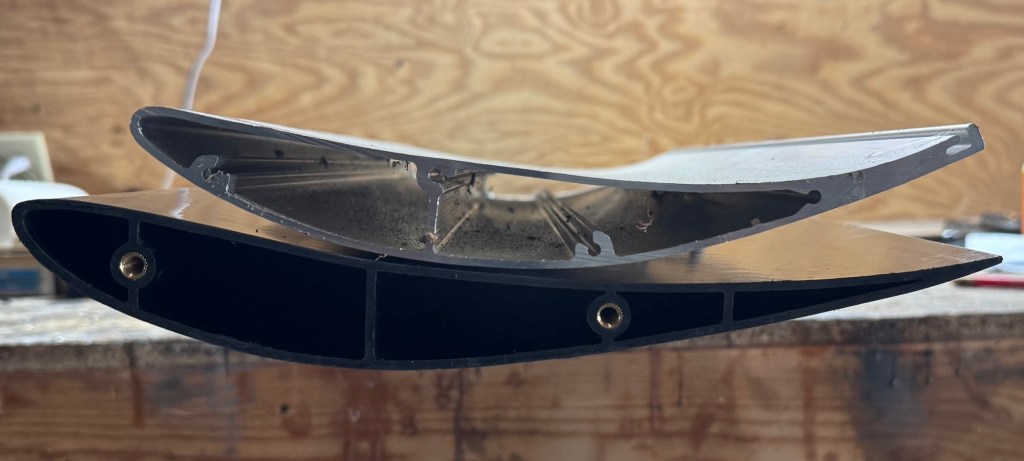
I listened to the Blind Apex podcast, where Adam talks about this wing, and he said the airfoil was inspired by an APR GTC 250, but with less camber. I don’t know what an GTC 250 measures, so I went looking for wings with similar coordinates, and found the Eppler 420-series and Chuch-Hollinger CH10. I made a trace and shone a light through the back, and it’s definitely not a CH10.
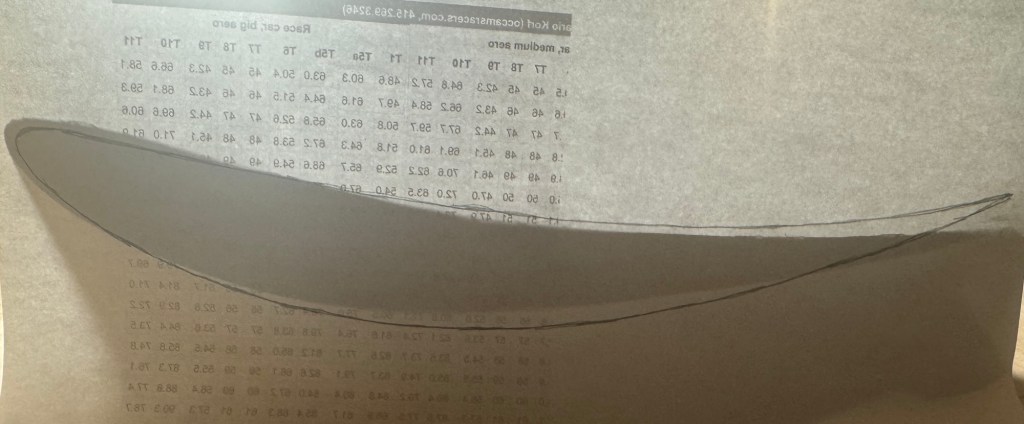
I then went the other way and traced the TC onto a piece of paper, and compared that to all the wings I could find. The best fit I found was using the front half of a Eppler 423 and the rear half of a Eppler 421.
Since the TC is somewhere between E421 and E423, let’s take a look at them in Airfoil Tools. First the E421:
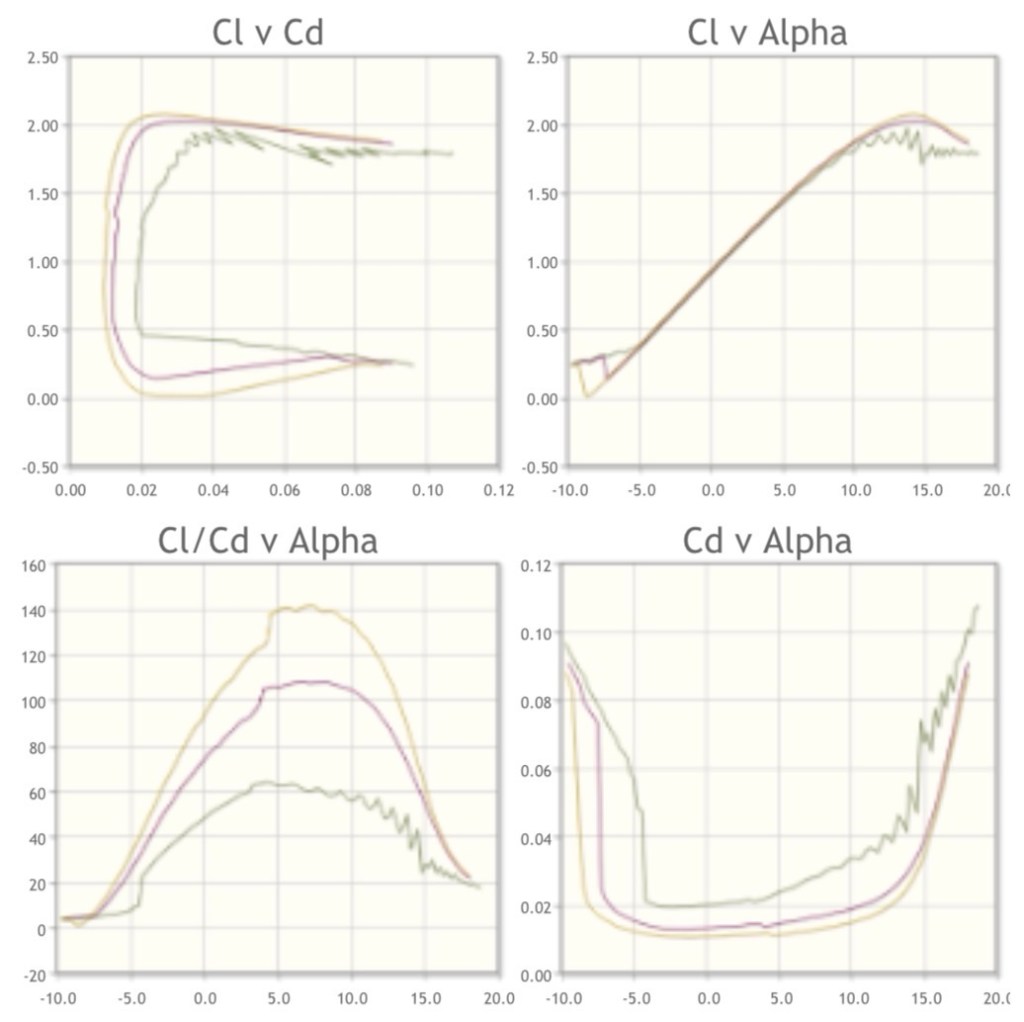
I like the fat range of efficiency from 5-10 degrees (Cl/Cd vs Alpha), and the gentle stall characteristics at max alpha (angle of attack). This looks a lot like the CFD from the Epsilon+ site. So let’s see how this compares to a E423:
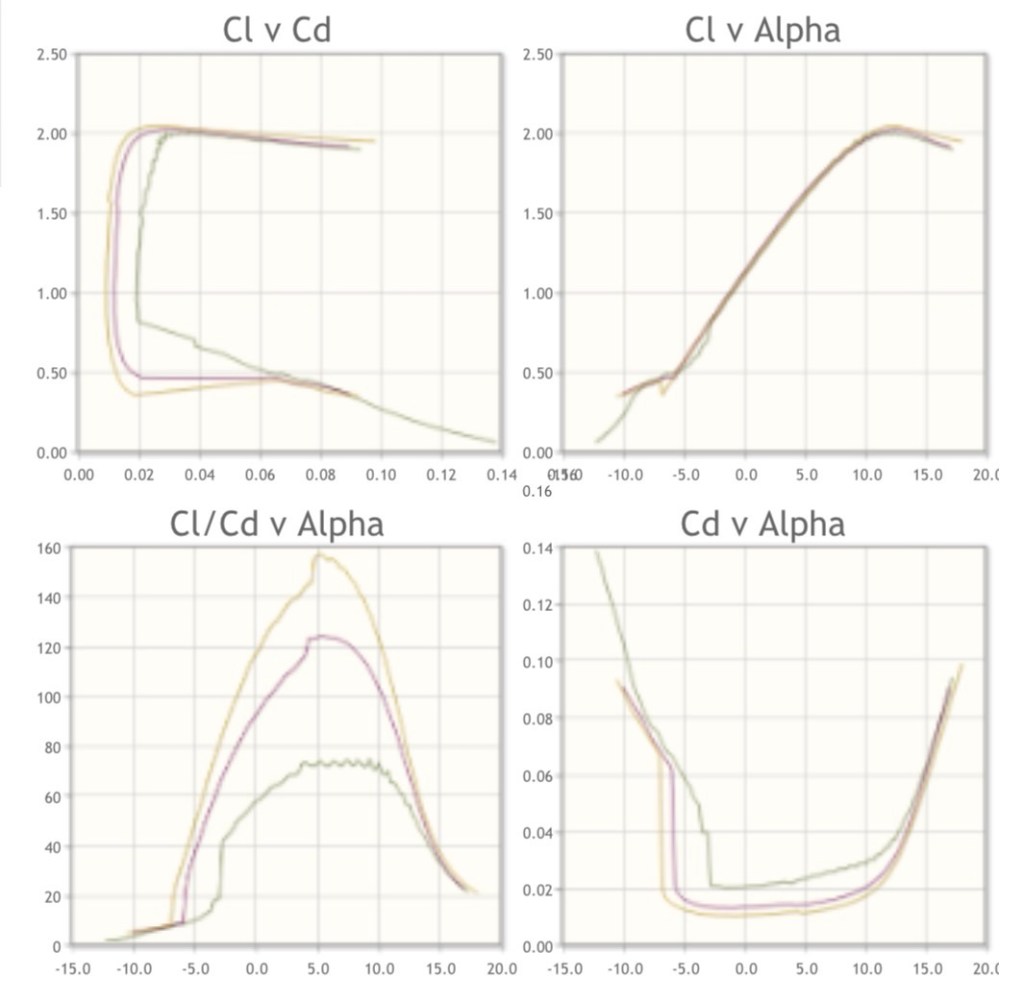
The E423 has higher peak efficiency, while the E421 has a broader peak efficiency. I mostly care about max downforce, and they are quite similar in this respect. Based on the data, both the E421 and E423 would make acceptable car wings. But if the TC combines the best aspects of the E421 with the best of the E423, then I’d say Adam has done an excellent job choosing an airfoil!
Construction
The novel thing about this wing is that it’s made from nylon. The material makes it lighter than aluminum, and cheaper to manufacture. (Fun fact: nylon is an acronym of New York and London, the two laboratories where NYLON was invented.)
If you’re worried about strength, the wing has been stress tested on the computer, and the data on the website says this wing is safe up to 140 mph. That’s probably the upper limit of a GLTC car at say Watkins Glen or VIR, and so it should be safe. (Personally, I’d have put a vertical brace at 30% of the chord, which is typically the position of maximum stress, but I’m going to assume the engineers figured out the best internal structure for the wing.)
Sizing
If I was designing a custom wing for a GLTC car, the first thing I’d do is make it the maximum wingspan allowed in the rules (body width excluding mirrors), and then divide that into 701 square inches to find the chord.
But for a mass-produced product, it’s unrealistic to make 13 different wings to cover cars from 64″ wide (Miata) to 76″ (C6 GS). It would be a lot easier to settle on one wingspan, say 67″ (which is a good middle ground that fits a BRZ/86, E36, E46, NC Miata, Lotus Elise, etc), and then maximize the chord to fit the GLTC rules.
This is what Adam has done. Except something got lost in the translation, and it ended up just a bit too big.
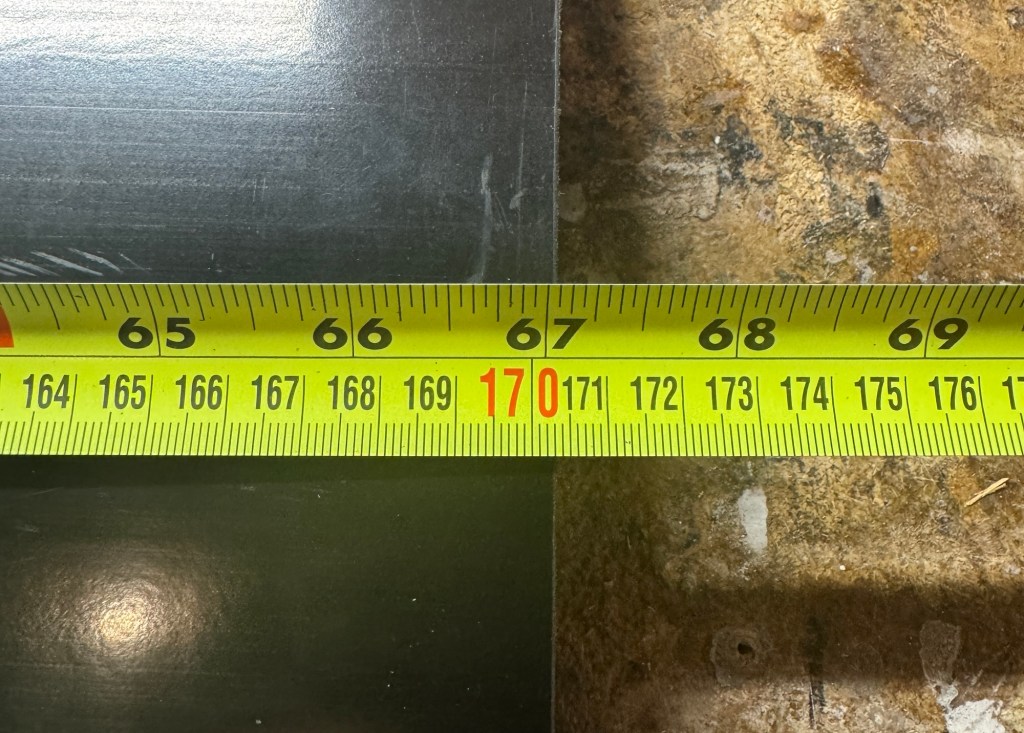
Measuring it up, I got 67” wingspan.
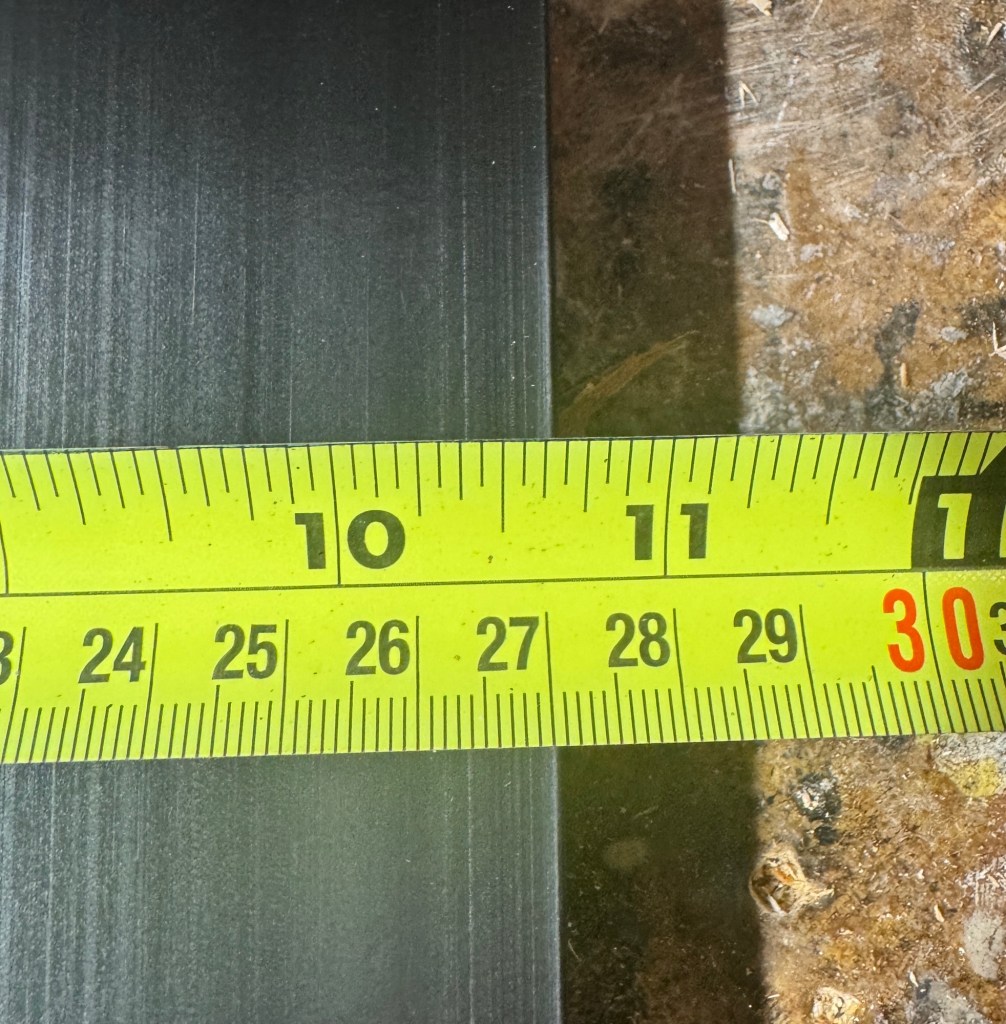
The chord measures about 10.63”. Multiply the area and you get 712 sq-in. Oops, that’s a shade over 701 square inches. But since this is a nylon wing, it’s easy to correct it.
- For cars 67″ wide or wider, I’d put this on a table saw and take .2” off the trailing edge. Losing the sharp TE is a minor thing, and inconsequential if you intend to use a Gurney flap.
- For cars 66″ and under, I’d cut 1-1/8” off one end, or whatever is your body width. (But first you’d want to drift the brass endplate insert deeper on one end.)
Bottom mounts
Another thing that’s unique about this wing is that it’s designed for bottom mounts that attach with pop rivets, rather than welding. I’ve used rivets for wind tunnel testing, and it’s always worked out fine for me.
The bottom mounts are made out of steel and are heavy duty. I think they could have been made from aluminum and been strong enough and considerably lighter. They also don’t fit the shape of the wing exactly, with obvious air gaps between the wing surface and the mount.
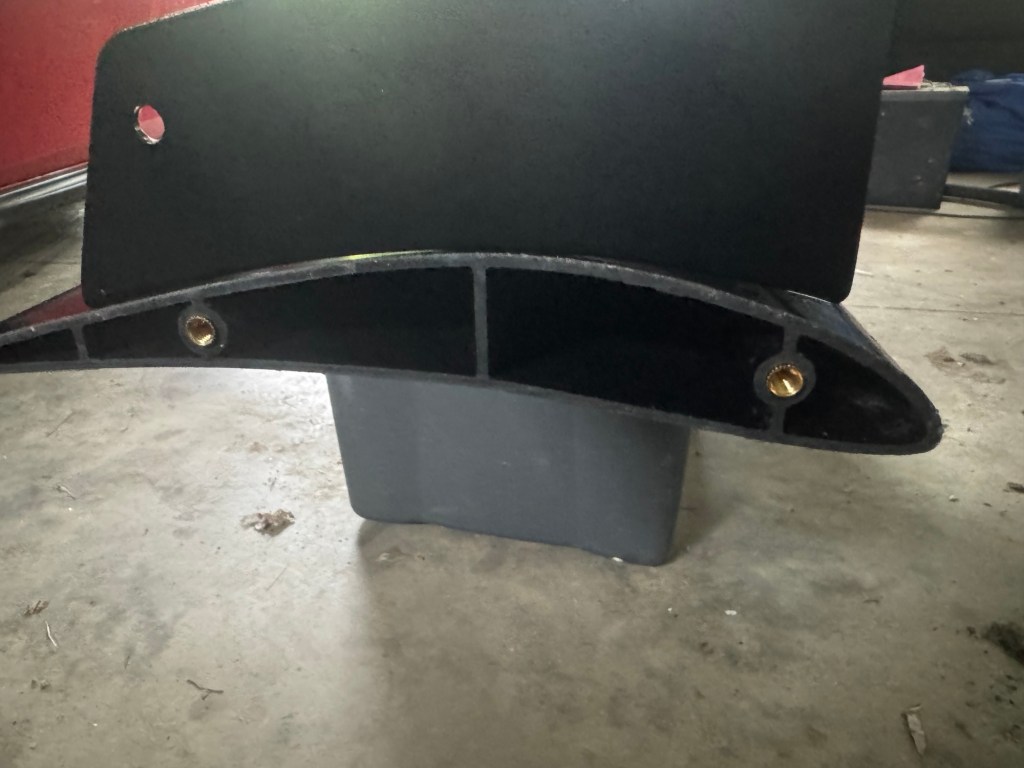
I don’t know how much of a problem that is, and I suspect this is just an issue with the first pre-production batch I got. But I could see some difficult customers getting their balaclavas in a bunch over this, and demanding better fitting mounts. I’m sure Epsilon+ will iterate on this, as is normal for any product.
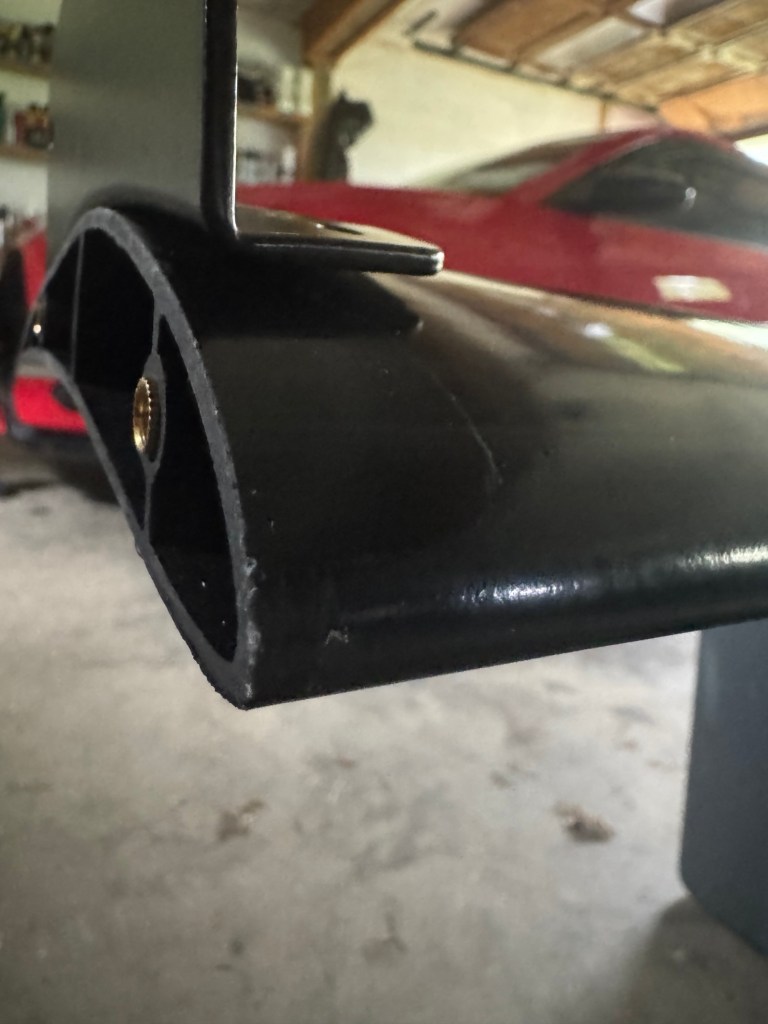
The mounting instructions say to put the flat part of the mounting brackets to the inside, but I put them to the outside. The reason for that is my wing mounts are about 20” apart, which is pretty narrow (Miata wing mounts are 40” apart). Swapping the brackets side to side should make the wing stiffer, and keep the wingtips from bending as much.
Another place I deviated from the instructions was that I measured the location of the mounting brackets from the trailing edge, rather than the leading edge. This is just way easier, because 1.034” from the leading edge, or 1.426” on the diagonal, is way too complicated. Measure 3” from the trailing edge and the bracket fits just fine.
Whatever rivets the kit comes with are heavy duty, make sure you have your long-handle riveter. I had to take a short rest before setting the last two, my hands were worn out.
Endplates
The wing comes standard with plastic endplates, which look good, but I replaced them with aluminum. The plastic feels flimsy, and based on wind tunnel testing other endplates, I’m certain they will bend at speed. I’m not sure how much that affects performance, but on the large aluminum endplates I tested, the bending resulted in more drag and less efficiency than endplates that didn’t bend.
The TC endplates are also on the small side. Based on the many endplates I’ve tested, there appears to be a minimum depth required below the wing for best performance. Given that the Wing-Logic MSHD endplates are too small for its wing, I’m going to guess that the Epsilon TC endplates are too small as well (since the TC has more chord, it likely needs more depth).
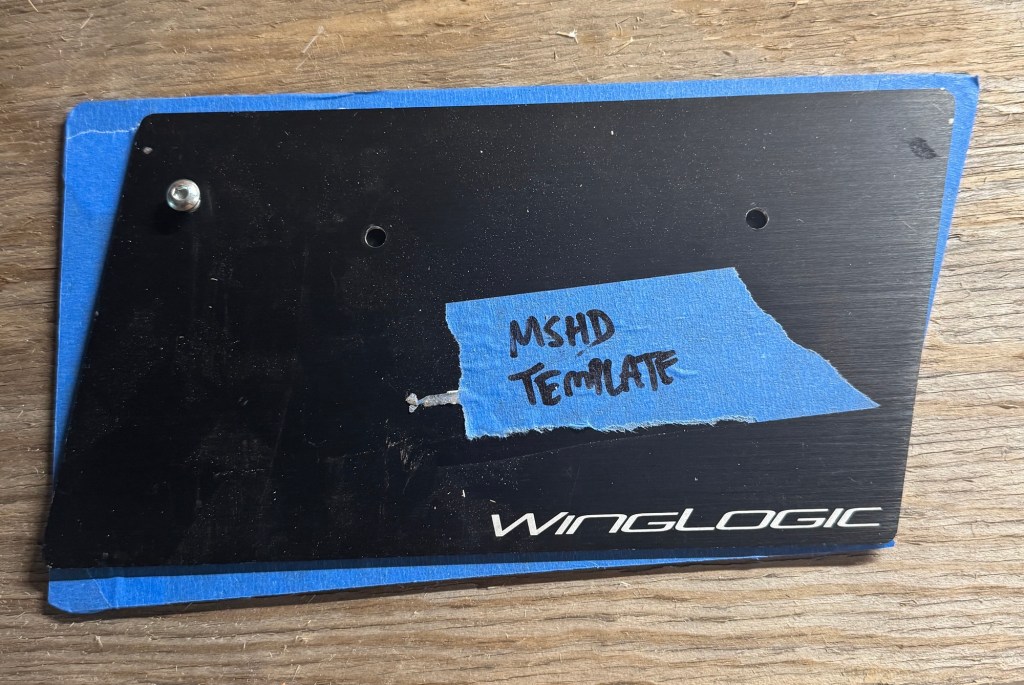
The shape of the endplates looks excellent, with more surface area low and forward, and a gradual taper at the rear. I copied that shape and made larger ones out of aluminum. The pair of them weigh about 8oz more than the plastic ones, which bothers me not at all.
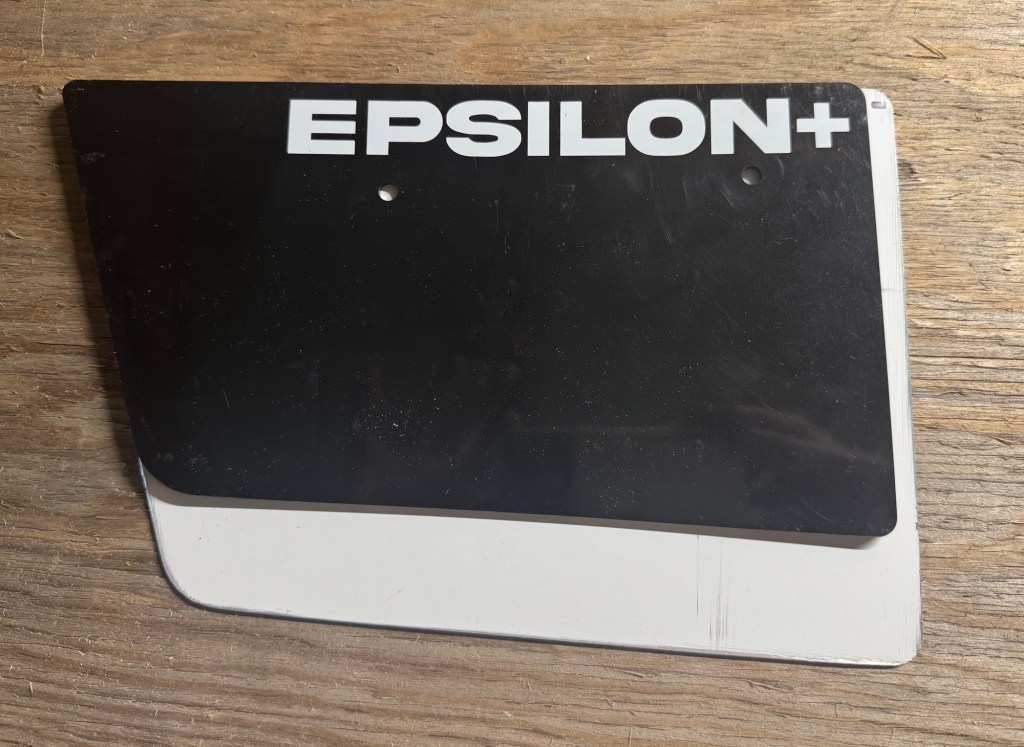
Another problem with the endplates is they fasten to the wing with two pressed-in brass inserts. These were sitting slightly proud of the nylon, and I had to push them in so that the endplate would sit flush, without a gap. The ease at which the plugs pushed in gave me zero confidence that they’d stay in.
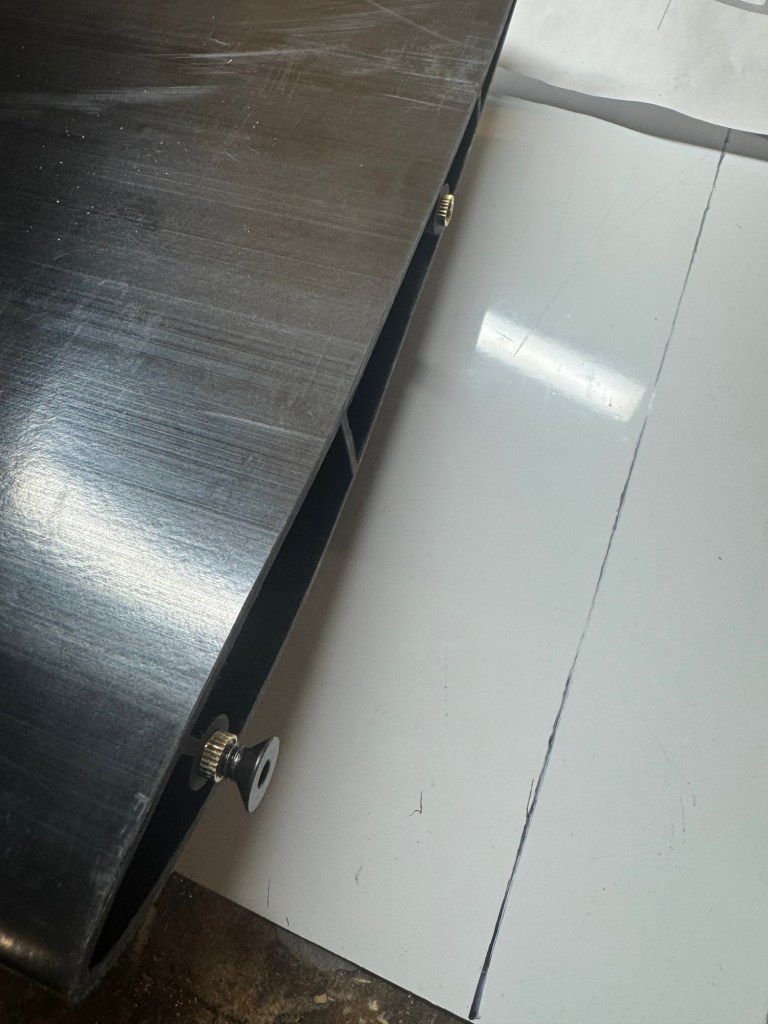
My understanding is these push-in inserts are just for the first shipment of wings, and these will be improved upon in future shipments.
Weight
I was supposed to get this wing in time for wind tunnel testing in May, but the shipment didn’t arrive stateside until August. On my next trip to A2, I’ll test the TC versus a 71” Wing-Logic MSHD and report back. But if I can’t compare the wings in the tunnel, I can still compare the wings in other ways. First, let’s talk total weight.
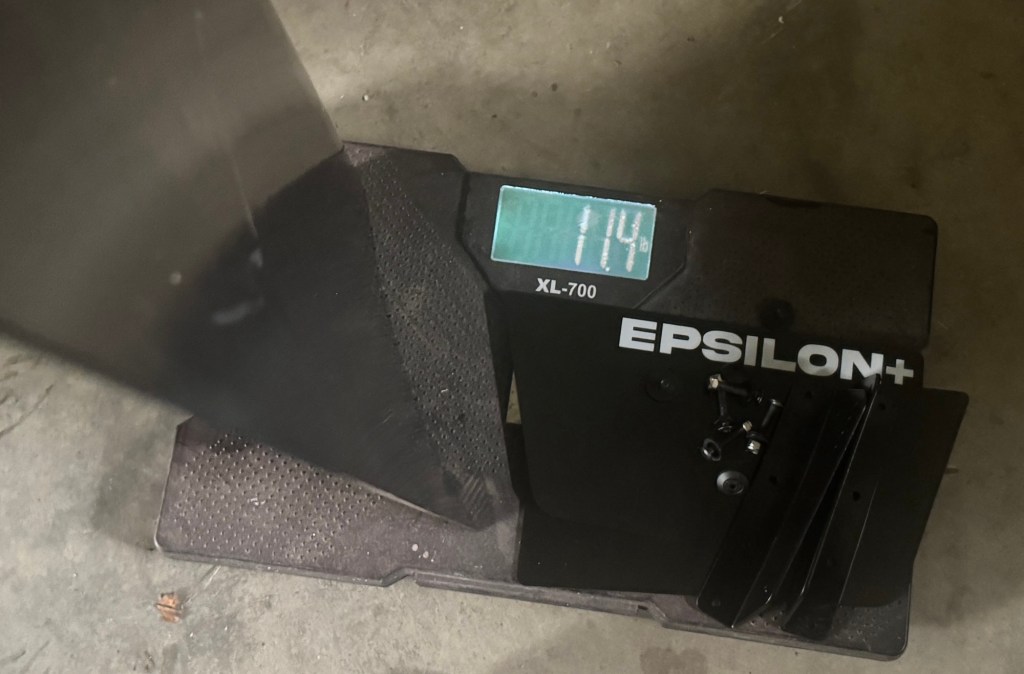
The Epsilon+ weighs 11.4 lbs, with endplates, all hardware, and bottom mounts. This is quite light for a 701 712 sq-in wing.
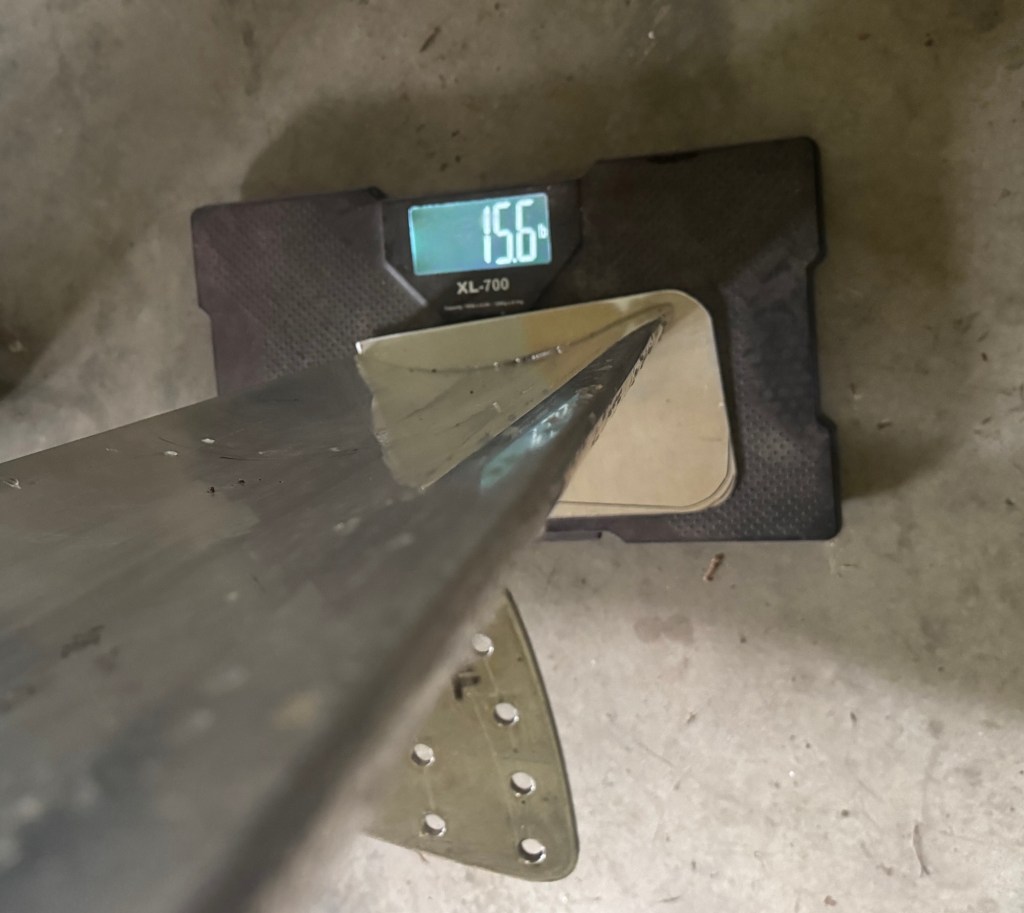
By comparison, a Wing-Logic MSHD 250 weighs 15.6 lbs. However, this is with larger aluminum endplates.
With properly sized larger aluminum endplates, the TC wing weighs an even 12 lbs. This means the nylon wing saves about 3 lbs over the aluminum wing, apples to apples. That’s not much difference, but that weight is high up and at the very end of the car, which is the opposite of mass centralization.
I currently have the TC wing mounted on my Veloster, and the wing has to go up and down every time I open the boot. That 3 lbs does make a difference here, so I do appreciate a lighter wing.
Track testing
I got a chance to test the TC wing at NYST. I tested the TC versus no wing, and then again vs a 71″ MSHD (which has slightly less area).
In the following speed trace, the TC wing is red, and no wing is black. You can see that up to about the 2500′ mark, the lap times are about the same. But once I get into turns 6-7 and the esses, the wing starts to make a difference. For the rest of the lap, the wing results in higher speeds, and the end result is 2 seconds faster.
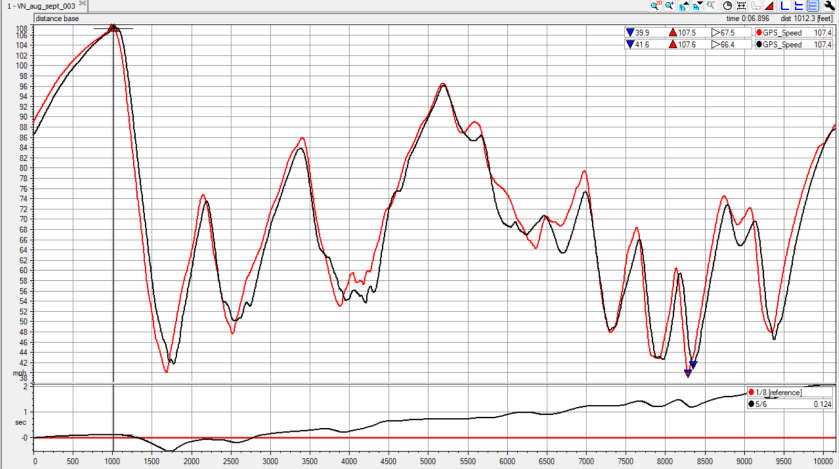
Two seconds faster in 2 miles is pretty normal for a wing vs no wing experiment. Subjectively, the car felt so much better with the wing, and my lap times were much less consistent without the wing. So let’s see how the TC does against the MSHD.
In the following image, the TC is again red, and the MSHD is blue. I’m using three laps from each wing, so you can get a better picture of how the wings behave.
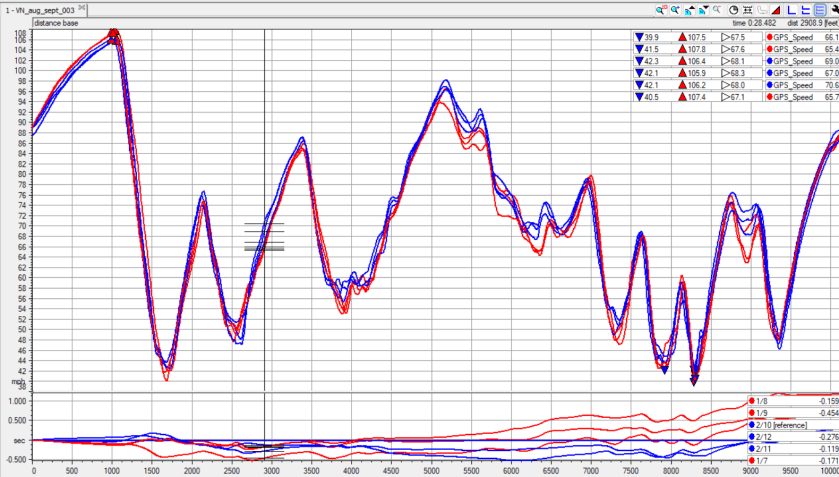
You can see the TC has less drag, which results in a 2 mph advantage on the front straight. But everywhere else, the MSHD has a higher top speed. This is because of the min speed advantage. The end result is the MSHD is about .7 seconds faster than the TC.
Now this is just one low-speed track, and the results could be totally different at some other track, like Watkins Glen or VIR. These tests were performed in back to back sessions, but track conditions, tire life, weather, and other factors can’t be isolated, and so I hesitate to make a conclusion out of this. I’ll test the TC in the wind tunnel as soon as I can, and with that I’ll have some hard numbers.
But I can say this in the meantime: The TC wing is staying on the car! I love the way the wing looks, and I appreciate the lighter weight every time I open the trunk. And since the Veloster isn’t a competition car, I don’t care about being fractions of a second faster during a DE day.
Subjectively, I didn’t notice any difference between the feel of the two wings, just that they were both way, way better than no wing. So there really isn’t any advantage of using the MSHD for casual track days. After testing the TC at full span in the wind tunnel, I’ll likely cut it to 60″ because then it will be even less intrusive, and I think it will look “just right” at that size, on this car.
Final thoughts
It’s great to see another budget wing on the market. It’s a new design and a new material, so it’s not surprising that there are some details that can be improved:
- I’d like the bottom mounts to be made out of aluminum, which would cut the weight by about 8 ounces or so. Aluminum is also easier to drill, which is important for retrofitting this wing to existing wing supports.
- The mounts should fit the airfoil shape better, with no air gaps.
- The plastic endplates should be larger and made out of aluminum (or carbon). The lighter aluminum wing mounts will offset the additional weight of larger aluminum endplates, so the entire package should still weigh the same 11.4 lbs.
- Put Helicoils in the ends of the wings, or stake the brass inserts so they don’t potentially pull out at speed.
These are minor details on what is a very innovative wing design. I applaud Adam Bao for thinking outside the extruded aluminum box and bringing the TC to the market. Welcome to the party!


the endplate inserts should have needed heat to get pushed in farther… at least with my 3d printing experience to date. and i think the new classing will drive me to push the civic faster than 140mph… maybe.
LikeLike