Back to the A2 Wind Tunnel

My annual trip to the wind tunnel is coming up soon. I had originally planned to do just a single day of testing, but two cars became three, which became four. Now I’m at five. And that’s too many to test in one day.

So I’ll be headed to A2 on 5/18 for hatchback day, then to VIR to instruct for a couple days, and then back to A2 on 5/21 for fastback day. There’s room for a third car on the first day, contact me if you want to get in on this.

Hatchbacks 5/18

The first day will be my Veloster N and Andrew Rivers’ Honda CRZ. We are both testing canards and wings, and some other odds and ends.

I’ve tested canards on my Veloster twice now. The first time I was mostly concerned about the location of the canard. If you bought Wind Tunnel Report 01, then you know that location played an enormous role in downforce. The same exact canard produced anywhere from 11 lbs to 80 lbs of downforce depending on how high I mounted it.

The second time I tested canards I wanted to find out if I was getting downforce from the interaction between the canard and splitter, or was it just the canard itself? I was also able to test a CFD-designed canard from Verus, which didn’t produce a lot of downforce, but also had zero drag.

This time I’m testing canard edge treatment and size. The DIY canards I’ve tested on my Veloster have had a sharp outer edge, but I often see canards with a vertical outer edge, kind of a fence or Gurney flap. So I’m testing two different heights versus a plain edge. Then I’ll also increase the size of the canard to see if more area produces more downforce.

Finally, I want to see if I can get a mid-height canard to interact with the lower canard. On other cars I’ve tested, the lower canard does most of the work, while the mid-height canard seems to reduce the drag of the entire system. I want to see if I can make that happen on my car.

Andrew is doing some different canard experiments, seeing if there’s interaction between various front end components. I don’t want to say too much on this, as those are his tests, but they should be super cool.

Next we are both testing wings. I’m finally getting around to testing a MSHD wing, both as a single and dual element. I’ll bring along a 9 Lives with me as well, since that’s a popular benchmark, and easy to test as a single or dual element.

Because hatchbacks are weird, I also plan to test wing location. I’m fairly certain that higher is better, but I want to check forward and rearward locations, and how those affect front downforce. I also want to test bottom mounts versus swan necks.

Andrew is testing a Simon MacBeath wing with swan necks, and I’m very excited to see how that performs. He’s doing a sweep of angles and a couple different end plates. I plan to throw a MSHD on his car, just to see how they compare.

Andrew’s car looks great with all the aero, and I’m interested to see which hatchback will have better numbers. But no matter how it turns out, we’ll learn from each other’s experiments, and both of our cars can improve from that.
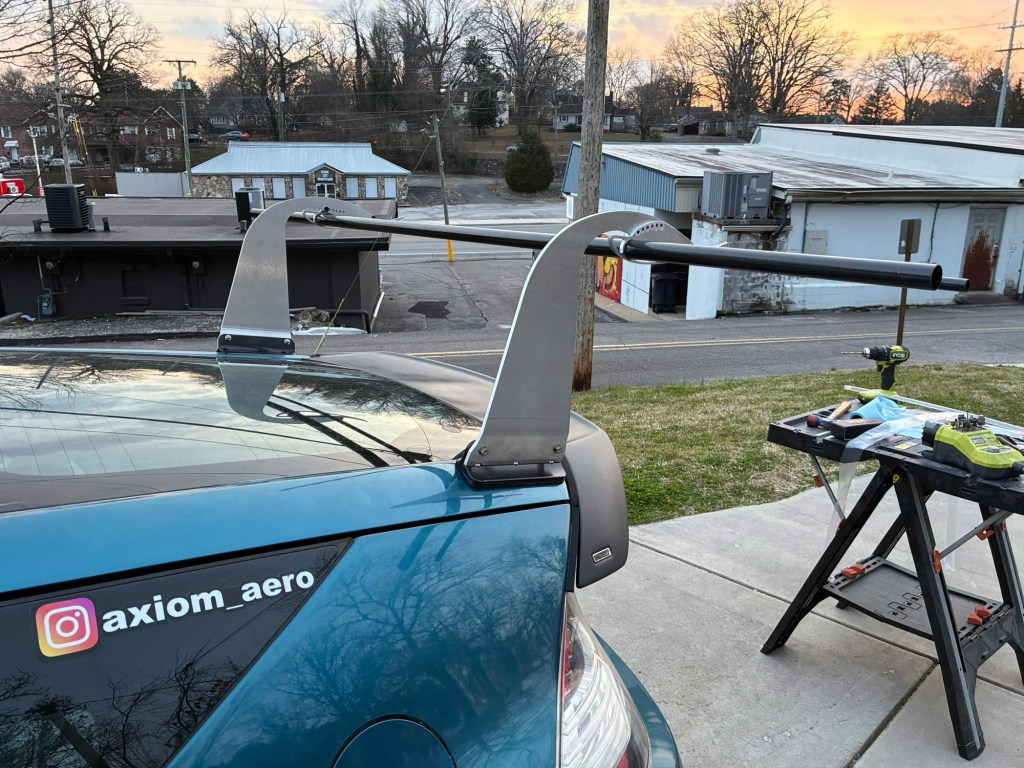
Andrew’s CRZ has very nice swan necks. The tube is a stiffener inside his DIY S1223.

Fastbacks 5/21

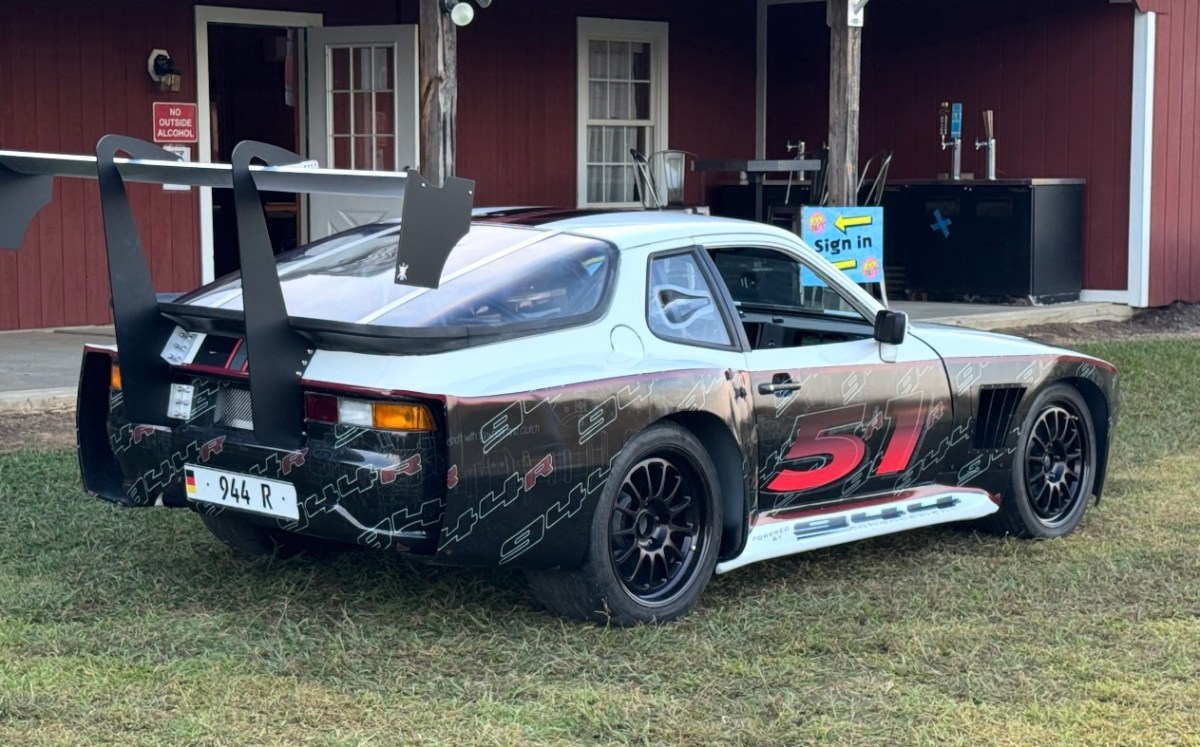
This is going to be an exciting day, because we can test wings on proper rooflines, not crappy hatchbacks. Pete is bringing his endurance racing 944, Raul has a BRZ, and AJ is bringing a C7.

As part of the wing tests, we will throw a mess of different end plates on the Porsche. I made an Open Call for testing end plates, but so far not that many manufacturers have joined the game.

Just the same, there are some really cool endplate designs we’ll be testing, with vents, 3D shapes, and other trickery. Even if endplates don’t make a huge difference, they are easy to change out and are visually interesting.

We may try the most radical end plates on two or three different cars, to see if there’s any difference. It’s worth checking out, but I kinda doubt it.

Raul’s BRZ will be the test bed for a few different wings including a PCI, MSHD, APR GTC200, and 9 Lives. I’m also trying to get my hands on a Verus high efficiency wing, and there’s a new nylon wing from Baero that might sneak into the tests if it can get through customs quickly. It has a familiar look, but with a lot more chord, and I have high expectations.

We have to fit many of those wings on the same trunk mounts, which is proving to be a bit of work making brackets. We also want to test wing location, and if setting the wing back a little further is better.
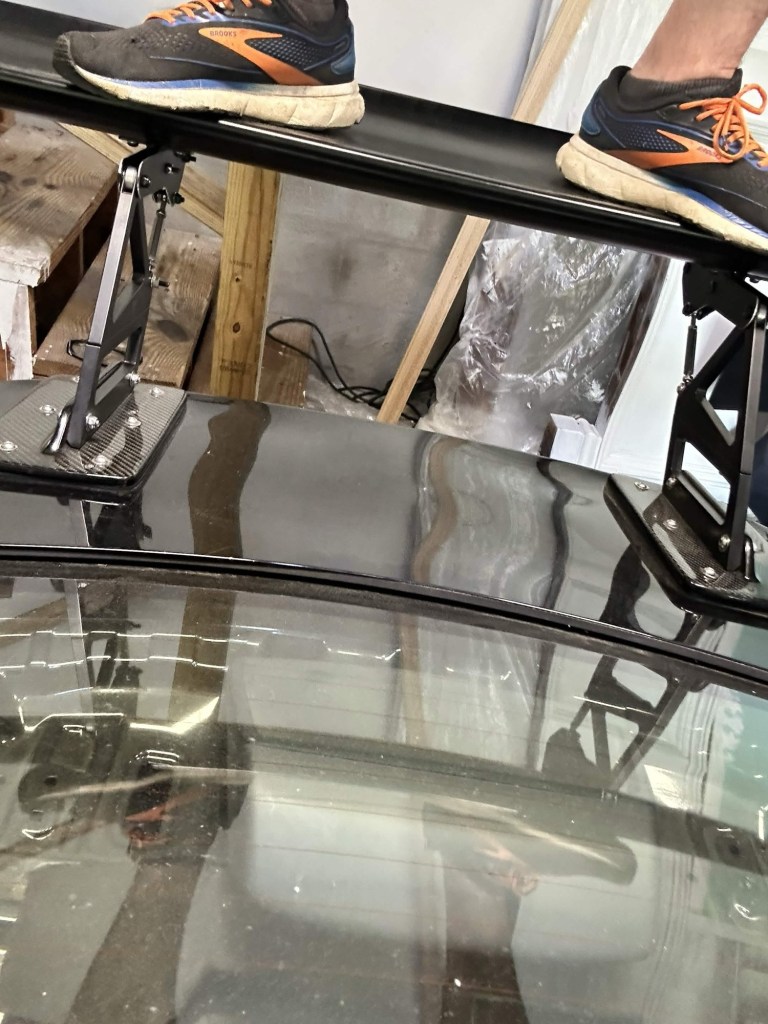
Raul doing the obligatory “is is strong enough?” test.

Raul’s car also has a splitter and so we plan to test splitter tunnels and some other front end stuff.

I’ll write up a report this summer, and probably jump on a podcast to talk about some of the results. Hopefully Kaan from the Blind Apex will come down to see some of testing firsthand, and we can recap that on his show with some special guests.

As usual I’m planning to rope AJ Hartman into participating, but also inviting Ido Waksman and Tim Miller, if their busy schedules permit. Michael Jui from Wing-Logic is also coming for the first day, and so it will be cool to finally meet him in person.

All said, it looks to be quite the party, and we are set to learn a whole bunch about our expectations, and that aero results are often not what you think. Subscribe to the blog if you haven’t already, you don’t want to miss the articles coming out of these tests!
Miata Spoilers

If you’re serious about downforce, use a wing; it can generate more downforce, and is more efficient than a spoiler. It begs the question, why would anyone want a spoiler?

  • Spoilers are usually cheaper than wings.
  • Some racing rules don’t allow wings, but allow spoilers.
  • A small spoiler can reduce both drag and lift.
  • Wings are often gaudy on a street car, but spoilers almost always make a car look cool. Not only my opinion, but NASCAR fans as well.

I tested a Blackbird spoiler in the wind tunnel, and it performed much better than I expected, and in some ways, better than a wing. You can read about that in my Miata Wind Tunnel Report. I finally had an opportunity to test my large-chord, small wingspan S1223 wing in a wind tunnel, as both a single wing and as a dual wing. The results were not what I expected. I go over all of the details in my Miata Wind Tunnel Report, which is available for $35.

I didn’t just test spoilers, I also tested several wings, splitter diffusers, spill boards, tire spats, canards, hood and fender vents, NACA ducts, brake ducts, and even a fastback, which has a built-in spoiler. You can read about all that in the report, but let’s get back to the topic on hand, which is Miata spoilers.

How a spoiler works

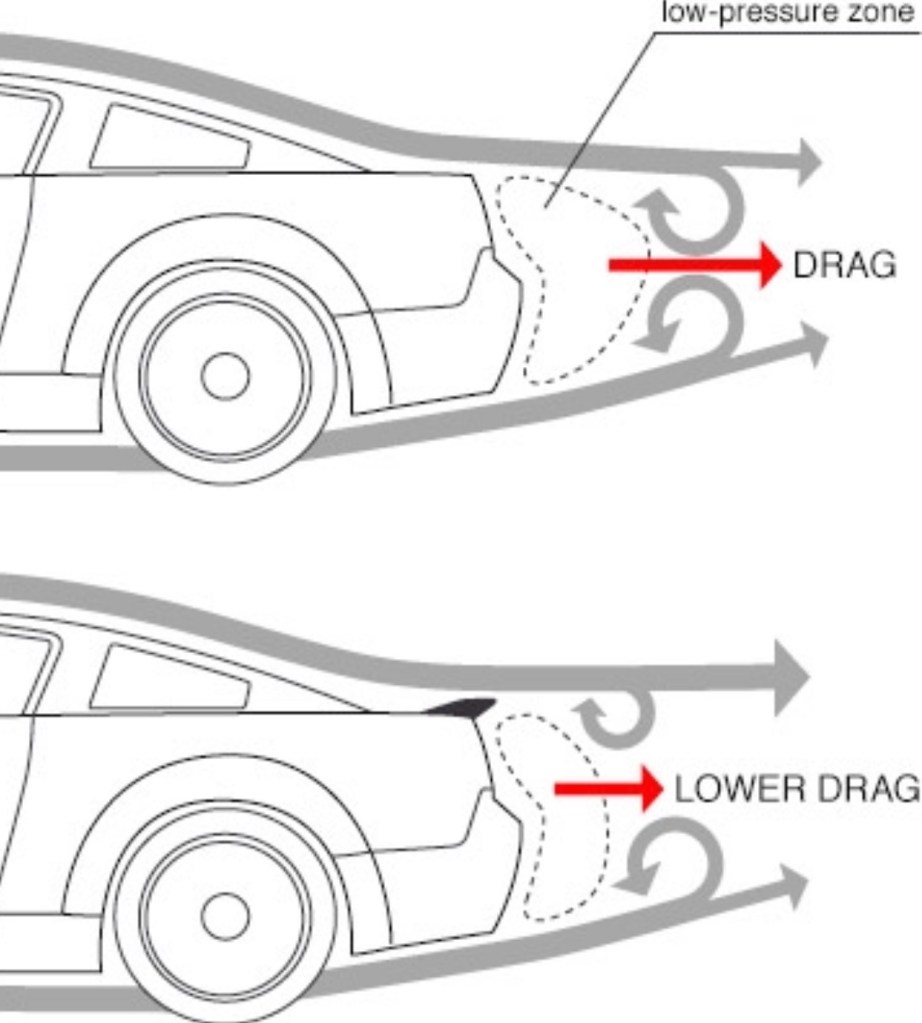
Cars are basically shaped like airfoils, and as air moves over them, it creates lift. The faster the car goes, the more lift and instability is generated. A spoiler, as the name implies, “spoils” the airflow coming over the top of the car, fooling the air into behaving as if the car has a different profile. This cancels some lift, and often reduces drag as well.

A spoiler also concentrates high pressure air on the rear deck lid. Pressure is akin to weight, and so this adds downforce to the rear of the car.

A spoiler also moves the center of pressure rearwards, and like a streamer on a kite, this promotes stability.

Spoiler height

How high should a spoiler be? Let’s take a look at what the pundits say. In Race Car Aerodynamics, Katz shows two different graphs for spoilers. The first is based on spoiler height alone, at a fixed angle of 20 degrees from vertical, or what I’d call 70 degrees.

I’ve put some pencil marks on the graph and drawn some conclusions.

  • A low spoiler about 1″ tall reduces drag the most. It also adds a bit of downforce. From a drag and downforce perspective, it’s a win-win!
  • A 3″ spoiler doesn’t add drag (compared to no spoiler), but doubles the downforce of the low spoiler. In other words, you get something for nothing!
  • A taller spoiler adds downforce and drag, but downforce increases more rapidly than drag. The gift that keeps on giving!

So no matter what height spoiler you chose, it has a benefit. Based on theory alone, we should all have low spoilers on our street cars, and taller spoilers on our race cars (rules permitting).

Note that the previous image shows a loss of front downforce at all spoiler heights, but in my testing, spoilers have increased front downforce by a very small amount.

Spoiler angle

Katz includes another graph on spoiler angle, this time using a fixed-height spoiler. Confusingly, this time the angle is measured from horizontal, not vertical, and the 70-degree angle from the previous graph isn’t included.

Some observations of this data:

  • Drag increases fairly linearly with angle (meaning height).
  • Lift-drag ratio seems best at a very shallow angle, but this may simply be the low overall height of the spoiler. Also note that L/D ratio is at best 3:1, whereas in my testing I’ve seen 11.5:1 L/D ratio using a 5” spoiler on a Miata.
  • Increasing spoiler angle to 60-degrees or more increases downforce, but at a diminishing return.

Spoiler height and angle combined

Next I’ll look at my other favorite reference, Competition Car Aerodynamics. McBeath cites CFD work done on NASCAR spoilers, in which they changed both the spoiler height and angle. Now we’re getting somewhere.

I’ll use the above results to compare spoilers of different lengths and angles that result in a similar total height above the deck. Which in turn allows me to figure out the most efficient spoiler angle.

  • 160mm spoiler, 20 degree angle, 54.7mm total height
  • 80mm spoiler, 40 degree angle, 51.4mm total height
  • 60mm spoiler, 60 degree angle, 52mm total height

It’s a bit difficult to see in this graph, but a 60mm spoiler set at 60-degrees is slightly better than a 160mm spoiler set at 20 degrees, even though the longer spoiler is a little bit taller. In other words, a higher angle works better. But it’s only by a small amount.

Based on Katz and McBeath, here is my simplified conclusion: The total height of the spoiler is the most important factor, and the more vertical, the better.

NASCAR spoilers

NASCAR used rear wings for a short period of time and then switched back to spoilers. Not because they could get better performance from a spoiler, but because the series is always looking for ways to make racing both closer and safer, and the wing did neither. In addition, the fans didn’t like the look of a wing. To be fair, the CoT wing was hideous, see for yourself.

Yuck.

So we can’t look to NASCAR for the most effective spoiler design, because we know their priorities lie in close racing rather than outright speed. But it’s worth noting a few things about NASCAR spoilers.

  • NASCAR probably knows more about spoiler design than any other race series, and they still don’t settle on one design. In fact, the regulations change almost yearly. Looking only at the height, in 2016 it was 3.5″, in 2017 2.375″, and in 2019 8″.
  • Some years the spoilers were adjustable for angle, some years they were fixed, and there have been different heights, widths, and shapes throughout the years.
  • NASCAR uses the spoiler to balance not only the overall aero package, but as a way to balance the performance between different cars, and at different tracks.
  • When NASCAR reverted from rear wings to spoilers, they set the spoiler angle at 70 degrees. In 2019 the fixed angle remains 70 degrees. Interesting.

Here’s an excellent article on A comparative look at NASCAR’s new spoiler, old spoiler, and wing.

Nscs-newspoiler2010hi_medium
Click image to enlarge.

NASCAR spoiler shapes

The 2019 spoiler is flat across the top, but different shapes have come and gone.

Image result for nascar spoiler shape
Curvy, almost bat-wing style.
Image result for nascar spoiler shape
Convex top edge.

The size and shape of Miata spoilers

So now that we’ve looked at spoiler theories and real-world examples from NASCAR, let’s get down to what matters: Miata spoilers.

  • Miatas have a roofline that is peaked in the middle, and you might imagine that the ideal spoiler shape has a matching convex arc to it. Although like all things aerodynamic, this could be totally false, and maybe the sides should be taller.
  • The rear edge of the trunk is curved and so a curved spoiler would look more natural, and could be an easier DIY project as well. Also, a curved spoiler would be more rigid than flat. However, some race series say that the spoiler must be flat, with no curvature. Booo!
  • There’s no reason to “spoil” the air coming along the sides of the car, and so a spoiler much wider than the rear canopy seems like a waste. Although the exposed spoiler ends are probably adding downforce. Albeit not very efficiently, and at probably a different angle than is ideal for spoiling the roofline shape.

Miata products

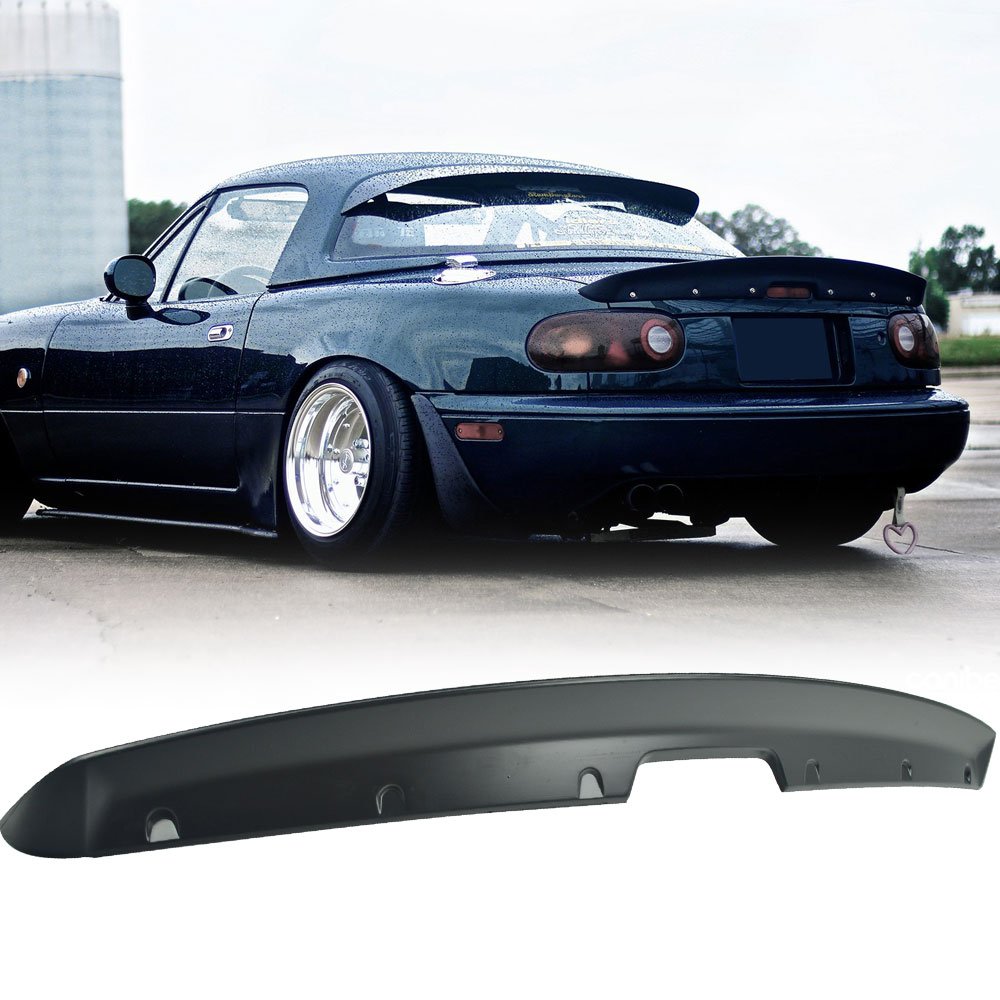
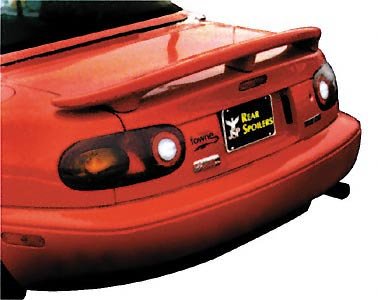
This IKON spoiler is an attractive design, with a convex top edge and curved profile. It would be neat to see something like this with a flat extension that’s adjustable for height.

The Rocket Bunny spoiler is flatter across the top, taller, and with a steeper angle. I’d guess it’s slightly more effective than the Icon, but it has a tacked-on look that doesn’t really appeal to me.

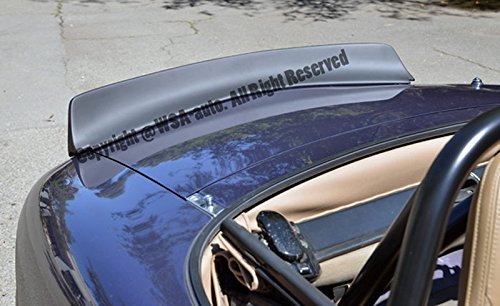
And then there’s this JSP spoiler that looks like a wing, but isn’t (air isn’t going to flow under it, hence not a wing). The shape follows the curvature of the sides and roof, and this may be an efficient design. But meh to the looks.

Of course all of these spoilers have a fixed height and angle, so there’s no way to adjust the aerodynamic balance. On the other hand, the Blackbird Fabworx spoiler is large and adjustable for angle. I’m also not a huge fan of the way this one looks, but the beauty lies in the function.

Spoiler done right.

DIY spoiler, testing height

I made my own spoiler, it’s about 3.5″ tall and has some curvature to it that follows the trunk shape. It’s made of plywood and fiberglass, and there are 6mm T-nuts so I can add an extension.

With the low spoiler (without any extension), I ran very consistent 1:22s at Pineview Run. And by consistent, I mean 1:22.03, 1:22.05, 1:22.07, and in my second run, 1:21.99, 1:21.99 and 1:21.93. This was a hot day, and if I compare the times to previous ones, the track was definitely slower than normal.

With a 3.5″ extension (total 7″ height), my lap times were less consistent, most of them around 1:21.5, but my fast lap was a 1:21.03, almost a full second faster. But that one was an outlier, and if I average the five fastest laps, the taller spoiler was about .55 seconds faster than the lower spoiler.

The following table is an average of four back-t0-back runs, two with the spoiler extension, and two without. I’ve averaged the top six fastest laps.

ConfigurationAvg LapSimulatedHPLbsCgCdCl
Low Spoiler1:22.01:21.1111224001.00g.44-0.25
Tall Spoiler1:21.451:20.6311224001.00g.45+0.20

I added .01 to the Cd as a guess, but drag isn’t that consequential anyway. I came about the Cl figure by changing that value in OptimumLap until I got the .55 delta in lap time. It seems absurd to think a spoiler can make a .45 swing in Cl, but that’s what the simulation says. Interestingly, this is also the value cited for a 8″ tall spoiler in MacBeath’s Competition Car Downforce.

In Race Car Aerodynamics, Katz cites several examples of spoilers, but none that go as high as 7″. In his examples, the relationship between height and coefficient of lift is nearly linear, and from 0″ to 4″ there’s a change of about .4 in Cl. So if I extrapolate those values from a 3.5″ spoiler to 7″, I’d only expect to see a change of .4 Cl, which is again pretty close to the test result.

Whatever the case, a 7″ tall spoiler works on a Miata. Now I have to make a taller one and test that.