I plan on doing a few tests at Watkins Glen International this year, and this is the first of (I hope) several reports. WGI is 25 miles from my house, and I have a lot of opportunities for free track time with groups I instruct for (Chin, HoD, MT, NASA, PCA, SCDA). The Glen is convenient for testing, and the corner speeds are high, making it a good place to test aerodynamic downforce. But the straights are also quite long, and so drag matters a lot here.
However, as a testing venue, WGI is only so-so because it’s a popular track, and so there might be 40+ cars in your run group. It’s not just the traffic that’s the problem, but highly variable weather, and virtually no runoff. So it’s not uncommon to lose a session due to rain, fog, or because someone hits a wall. For this reason, I may need to use sector times and predicted laps in order to get good data.
But on April 13th we had decent weather and lots of space on track with Mass Tuning, and so I was able to test different things and get clean laps. But because I made aero changes each session, and was also playing taxi (guest rides), I wasn’t able to string together many hot laps, and so there are only three decent laps from each aero configuration.
Another reason for the lack of hot laps is it takes a full three laps to get my tires up to temperature. I start them at 27 front and 30 rear, and at the end of the session they are properly at 37 F and 36 R. But I lose a lot of time early in the session, braking and accelerating hard to get the temps up, while keeping corner speeds low. If I’m impatient and corner hard at less than 32 psi, the tires roll over and I cord the outer edge. I learned this the hard way last year, getting only about 1/3 of the life out of my tires.
In the future, I may start the tires at 30 psi, which should put the tires out of the danger zone after one lap. This would result in the front tires being 40-42 psi for most of the session, and while this won’t return the best lap times, I should be able to normalize the data better.
The long warm-up times are probably the result of not enough negative camber. In fact I never hear the tires working hard, they just make a low-frequency moaning sound, not the screeching howl I get out of my Miata on the same tires. The Veloster sits on lowering springs and has one set of camber bolts, and this maxes out the camber at -1.8 degrees. With offset bushings (or slotting) it’s possible to get -2.5 degrees, but any more than that and I risk blowing the OE struts. This is still a street car, and I’m not going to ruin it by turning it into a track car with coilovers, stiff sway bars, and solid bushings. Well, not yet anyway.
OE N wing 2:17.4
In the wind tunnel, the OE wing (or it could equally be called a spoiler) made 30.8 lbs of downforce at 100 mph. This cancelled out the rear lift on the base model hatchback, giving the car a slightly negative coefficient of lift. This is very rare in a street car. In my article Thinking in Aerodynamic Coefficients, I show that most cars have positive lift of around Cl 0.1-0.2. Cars that have zero lift or even some downforce are rare, and usually an exotic sportscar. But the Veloster N is one of those unicorns that has downforce straight from the factory.
The OE wing does a good job of stabilizing the rear of the car, and I felt none of the rear instability issues I felt when testing the car with the base model roof extension (meaning no wing). That was a test I ran at NYST, and the rear lift made the car twitchy under braking going into T1 and T5. But at WGI where I was 30 mph faster, the N wing felt stable under braking, and so the OE wing is definitely an improvement on the base model’s featureless roof extension.
The N wing also had the least drag, and posted the fastest top speed of 132 mph on the back straight. But the OEM wing also had the least downforce, and you can see this on the speed trace below, where I compare the OEM wing (red) to the same wing with a Gurney flap (blue). Note the difference in speed through the esses, it’s huge. But also note the vMins in each corner that I’ve circled. Not only are the vMins higher, they are shifted to the left, indicating that I’m backing up the corner better when the car has more rear downforce.
Red is OEM wing; Blue is the same wing with a Gurney flap.
Wicker kicker 2:16.4
I put a 1” tall Gurney flap (wicker) on the trailing edge of the N wing, and in the wind tunnel this made 114.7 lbs of rear downforce and 8.9 lbs of front downforce. The fact that this made front downforce means the wing is behaving more like a spoiler than a wing, and the combined 123.6 lbs of downforce is a lot more than I would have thought from adding a simple Gurney flap. When I add a Gurney flap to a wing I usually get 150-170% more downforce, not over 400% more! With an increase in downforce, there’s more drag, and 8.3 hp is lost at 100 mph.
Wicker-kicker Gurney flap thingy.
But the extra grip through the esses is worth it, and by the time I get on the brakes for the bus stop, the max speeds are identical with or without the wicker. Around the rest of the lap, the modified OE wing has more grip, and the lap times are 1.1 seconds faster, lap after lap.
I uploaded a video of three consecutive laps, and I apologize in advance for the shitty audio. I use an original SmartyCam with an internal mic, and I can’t figure out how to make it less terrible. Anyway, I do a brace of identical 2:17.031 laps (down to the thousandth of a second!), on either side of a 2:16.415.
Three laps, turn the audio off.
S1223 54×11 wing 2:16.8
In the wind tunnel, my DIY Selig S1223 wing made 179.5 lbs of rear downforce at 100 mph, and 31.6 lbs of front lift. Wings are located higher and further rearward than spoilers, and so it’s normal for wings to lift the front end through leverage. As a practical matter, this is why people typically use a splitter and a wing together, but a spoiler can often be combined with a simple airdam, or just used on its own.
The wing’s total downforce of 147.9 lbs, divided by 45.3 lbs of drag force, returns a 3.27:1 L/D ratio, which is about the same as the OE wing, but not as good as with the Gurney flap. The drag amounts to 12 hp at 100 mph, and on the back straight of Watkins Glen, the wing is 2 mph slower than the other options.
One of the reasons the wing isn’t very efficient is because it has a span of only 54”. This is problematic for two reasons: first, wing-tip vortices have a detrimental effect on the wing’s overall performance, and so the greater the aspect ratio, the better the wing performs; second, most of the wing is in the silhouette of the hatchback roofline, and so very little of the wing is in clean air.
The reason the wing is 54” is because I wanted a cheap way to test a dual element wing, and bought a $35 extruded wing as the upper wing. The dual wing worked well at Pineview Run and NYST, setting the fastest laps (.8 seconds and 1.0 seconds faster than the single wing, respectively). But after seeing the initial results from the single wing at Watkins Glen, I didn’t even bother attaching the upper wing, as I’m sure the dual wing would have been the slowest.
Single wing has rather tall end plates, as they are used to hold a second wing element. I didn’t try the dual wing option at WGI.
Under most racing rules, wings are allowed to be body width, which in the case of the Veloster N would be 71.7”. I tested a 70” Wing Logic wing in the wind tunnel, and it made the same amount of total downforce as my 54” DIY wing, but with 44% of the drag. The resulting 7.4:1 L/D ratio shows how important it is to get the wing tips as far apart from each other as possible, into clean air, and away from the hatchback roofline. I may test this on track in the future.
Conclusions
Based on testing the single wing at Pineview Run (.7 seconds faster) and NYST (1.5 seconds), I felt for sure the S1223 single element wing was going to be worth 3 seconds at WGI. The fact that it was only worth about 1 second has me tail spinning into the D-K pit of despair. Let me think about why that may be….
One reason for the lack of performance may be the aero balance. As mentioned, the wing adds rear downforce with a lot of leverage, and so it was the only one that lifted the front. The result is the car may have too much rear aero bias, and not enough grip for turning in. Perhaps when I put a splitter on the car, I’ll see better results.
But note also that the aero balance was even worse at NYST and Pineview. The fastest rear aero on those tracks was the double wing, which I didn’t measure in the wind tunnel, but certainly has the most downforce and drag.
Another reason the wing underperformed could be the driver underperformed. I don’t believe I was cornering hard enough, and just barely edging into the performance envelope where aero is adding to what the tires alone can give. With more laps and coaching, we may see the driver perform better, and with that, the results may change.
Of course drag is a factor at Watkins Glen, and the 54” wing had the most drag. If I swapped to a 70” Wing Logic wing, I’d gain the equivalent of 6.7 hp (at 100 mph).
But as it sits now for both car and driver, the easiest and cheapest way to go faster in a Veloster N is to put a 1” Gurney flap on the OE wing. The performance of this modification was one of the biggest surprises in the wind tunnel, and it’s nice to see that reflected in real life, as well.
Three hot laps from each configuration went like this:
Config
Best lap
Average
Predicted
OEM wing
2:17.434
2:17.91
2:16.841
OE + wicker
2:16.415
2:16.83
2:15.783
54″ wing
2:16.795
2:17.02
2:16.284
While I have some work to do to get faster, I’m a consistent driver. Watkins Glen is a long 3.38 miles, but my lap times are usually within a couple-three tenths of the previous lap. That’s around a 0.3% difference, and probably similar to the noise you’d see in other variables that change throughout the day, such as air and track temperature, wind speed and direction, etc.
<brag>On a track that I have more laps on, like Pineview Run, I’m a metronome. Here’s six laps in a row with 0.372 seconds between all of them. If you throw out the fastest and slowest, I do four laps separated by 0.076 seconds.</brag>
Consistent laps matter for testing.
I mention this not just so that I can thump my chest, but to throw some validity on track testing aero components. There are a lot of variables that change throughout the day, or even within a single track session. As those tolerances stack up, lap times can vary a lot. However, my driving is probably less of a factor than you might think, and I just want to point that out so I can deflect some of the “you’re driving like shit” comments. (Which are true, but at least I’m consistently driving like shit.)
Future tests
For Watkins Glen to be useful as an aero testing venue, I’ll need to fix my attitude, and turn my frown upside down. I’ve never gotten along well with this track, and I have to get to the point where I enjoy driving here. With some help from Gregg Vandivert (Omega 13 Coaching) and many more visits to the track, perhaps I can flip this script.
[sigh emoji] I hesitate to list the tests I want to do in the future, because the best laid plans of mice and men usually amount to the same dung heap of disappointment. But if things go as planned, I’ll test the following:
Driver mod – I’m curious to see how much time I can lose from professional coaching alone. In order to A/B test myself, I’ll need to use the same baseline setup and pray for days with similar weather.
Splitter – I didn’t use a splitter in any of these tests because I was matching the same setup I already tested at Pineview and NYST. But now that I’ve done those tests, I can put a splitter back on my car and see how this compares to the wind tunnel, and how getting more front aero load helps the overall balance. Naturally I’ll need to test the splitter at various heights and angles of attack, and so this could be a whole day of testing on its own.
Canards – I tested canards in the wind tunnel on two different occasions, and now it’s time to take the best results and see how they do in the real world.
OE wingmodifications – The 1” wicker worked great on the OE wing, but I’ve only tried the one size. Next I should try 1/2” and 1.5” tall, and see what happens. Also, I believe that getting the OE wing a little higher may increase performance, and with that, I could also add some angle of attack. This should be as simple as installing a few shims beneath the wing.
Ducktail spoiler – I tested a DIY spoiler at Pineview and the results were similar to the single wing. But WGI has already proven to be quite different than other tracks, and so I should test this one.
Bigger wings – The wind tunnel already showed me how important wing span is, and so a 71.7” wing will be a lot more efficient. I’m building a big wing now, and shall test this for sure.
Active aero – I wrote an article on active aero, in which I did racing simulations at Watkins Glen. Now it’s time to put my money where my mouth is and do the same experiments in real life. The easiest active aero to fabricate would be a DRS spoiler, so I may start with that rather than jumping straight to a dual wing.
Diffuser – I tested a diffuser in the wind tunnel and it was pretty lousy, losing about as much front downforce as it made in the rear. But the A2 wind tunnel doesn’t have rollers for the wheels and so the effect of the underbody can’t be 100% trusted. So I should probably test the diffuser IRL and shoot myself up with another dose of disappointment.
vMins and driver performance
If you saw my previous post on vMins, you may wonder how well I performed on the vMin table. I put the OE wing on the Street table, and the modified wings on the Track side.
The red circles indicate my vMins with the OE wing, and you can see that I’m OK, but not great. My T7 may be a bit high, or more likely, all of my vMins can come closer to that level. However, when I add rear aero, I park it in the bus stop! I’m probably using the same braking marker, and then just over-slowing the car with the extra downforce and drag. I expected my vMins to be a lot worse than this, so I’m pleasantly surprised that I’m not driving like shit. And at least I know what to work on next time.
Gran Turismo nerds
I prepared for my Watkins Glen weekend by doing some laps in Gran Turismo 7. GT7 doesn’t have a Hyundai Veloster N in the game, so I’ve been using a Scirocco R. Now that I have data to refer to, I can modify the car to be as close as possible to the real world.
In the game I set the car weight to 3000 lbs and the horsepower to 244 (buy the lightweight modifier and add ballast weight and a power restrictor). This approximates the dry weight of my car (I have lighter wheels and the rear seats removed) and what my car puts out on the dyno (my engine is bone stock, not even a cold air intake). More importantly, this also gives me a realistic speed of 132 mph on the back straight. (I’m sure you could use a heavier car with more power, but this is just what I landed on.)
I also fitted the non-adjustable Sport suspension because I have lowering springs, and added the Sport brake pads (which do nothing in the game, but I’m trying to match the car IRL). I added a rear wing so that I can adjust the rear downforce from low (OE N spoiler) to high (single wing). GT7 doesn’t simulate aero accurately anyway, but I added no other downforce because I’m not using any. I use Comfort Soft tires, which puts the corner speeds in the right window for Hankook RS4s with painfully not enough negative camber.
If you have GT7, make a Scirocco R like this and play along. The PP value should be 492 with the wing maxed out. You can drop a comment here or contact me if you want to compare notes.
With the Scirocco R set up like this, I can click off low 2:14 laps regularly, and get the occasional 2:13 at WGI. That’s 3 seconds faster than I’m doing in the real world, which seems about right seeing as I can drive much harder in the game than IRL. As I get better in the real world, I expect the lap times to get closer to GT7. We shall see.
If you made it this far, thanks! If you’d like to support more content like this, hit the Buy Me a Coffee link. If you’d like the Veloster Wind Tunnel Report, it’s just $25 and goes through a ton of stuff you can do to make your car faster.
TL;DR: A long story on how I got started with data, became frustrated with data coaching, and developed a simple tool for self coaching. You can skip this epic tale and print the PDF of the Watkins Glen vMin table.
I’ve been a data coach for a few years, and everyone I’ve coached has made massive improvements. Most of the time data coaching takes just one or two sessions, and on average, I’d say people go about a second faster per mile.
On a short track like Pineview, that’s only one second, but at Watkins Glen, that’s three seconds. Three seconds is like going from a track tire to a slick. Or adding aero. Or buying a lot of horsepower. Any of those things could cost $2000 or more, and so getting three seconds for free is phenomenal. Yes, free.
For a couple years I was the lead data coach for the Niagara Region Porsche Club of America (NRPCA), and we offered free data coaching. While PCA clientelle can certainly afford paying for it, we were trying to lower the bar and get more students interested. Nevertheless, I’d have only one or two students per day.
This became a discouraging waste of time, and so last year I took a hiatus from data coaching. I’ll get back to that again, but in the meantime, I want to share something I invented, which is a vMin table for self-coaching. It looks very simple, but there’s a lot of research and effort that went into it.
It’s a long sorry, hence the TL;DR at the top. I won’t blame anybody for simply clicking the link and moving onto using the tool. But for those that want the backstory, it begins like this:
I never wanted to use data
14-odd years ago I did one or two HPDEs with Hooked on Driving in California, and after seeing a shit-heap of a car on its way to race at Chuckwalla, I convinced my brother and a couple friends to buy a first-gen MR2, cage it, and race it in the 24 Hours of Lemons. For several years, everything I knew about performance driving I learned with the bit between my teeth, going wheel to wheel in an underpowered car, trying to catch faster cars in the corners.
I was good, always setting the fastest times on my team. When we acquired Ben Dawson (Dominating with Dawson, on Garage Heroes in Training), I was able to match his times, but not better them. Then my identical twin brother became a real student of the game, reading Speed Secrets, getting into data, sim racing, instructing… and he left me in the dust.
After being the fastest on the team for a couple years, I was now a few seconds slower per lap. Ian encouraged me to follow in his footsteps, but I countered that I wanted my skills to represent the everyman driver. It could maybe turn into a twin study, where one brother used data, the other didn’t, and look where they ended up years later.
That’s how much I didn’t want to use data; I was willing to let my identical twin trounce me on track, handicap our team’s position in the final standings, pretend to do a bogus twin study, and skill-shame myself with a milquetoast modifier like everyman.
(When reading this article to my wife, she said if people only knew how competitive I am, the fact that I would let my twin brother beat me is incomprehensible. This is the exclamation point on how much I didn’t want to get into data.)
The transition to using data happened sometime after leaving California and starting a new team in New York. Ian flew out a couple times to race my new Miata, and he’d annoyingly show up to some unseen track, and destroy the team’s best times in his first few sighting laps.
It took a while, but the everyman got tired of his everyday beatings, learned how to use data, and then began to coach others through the same process. The track to hell is paved with good intentions.
Data coaching barriers
Data coaching hasn’t taken off for me like I had imagined it would. The reason for that isn’t a hardware problem, since I bring six Aim Solos and assorted brackets with me to all events. Neither was it a financial hardship, because I offered it for free. And nobody ever lost a driving session, since I’d schedule their coaching sessions around that. There were literally no barriers to data coaching, and so the reluctance was puzzling.
Part of the reason data coaching didn’t catch on was due to PCA itself being different from other clubs: we weren’t supposed to talk about lap times, none of the senior instructors were using data or pushing it into the curriculum, much of the clientele were older and skeptical of things new, and in any national organization, change moves at a snail’s pace.
There’s also the “I’m just here to have fun” contingent that comprises most of the people that sign up for a HPDE, and I totally get this group. If I went to a pickup basketball game and some “coach” was on the sidelines saying he could run me through drills between games, I’d walk the other way. The fact is, most of us sign up for track days to have fun with friends, and while the E in HPDE stands for Education, we are really there for the E in Enjoyment.
However, what I’ve found through years of trying to get people to dip their toe into data, the largest barrier to data coaching is this: nobody wants to know they are slow. And they don’t want anyone else to know that either. Pride is the wall that stands between having fun and and going faster.
The real barrier to data coaching.
The thing is, I haven’t met any slow drivers. Everyone has at least one corner where they are fast, and we all have one or two corners where we are slow. You use the former to build on the latter. And that’s what data coaching does – it finds your strengths and creates an individualized strategy to address your weakness. People call it driver mod and it’s a good term, because it’s something you take to every car you drive.
But because pride is more delicate than money is valuable, people will spend thousands on car mods and won’t accept a free driver mod. This was doubly frustrating because NRPCA HPDEs are mostly on weekdays, and so I was burning vacation time to help one or two students per day. So I pondered the incredible value of data coaching, against the struggle of getting people to try it, and I realized this: people will only try data coaching if they can do it in private.
Technological barriers
I wasn’t the only one who figured this out, Garmin did, too. Their Catalyst product combines AI coaching with data privacy in a compact package that doesn’t require a laptop or a professional to review the data.
I read the Garmin Catalyst review by Mark Petronis at AMT Motorsport, and that should have deterred me from buying one, because I’m already an advanced data user. But a virulent case of FOMO swayed me into buying one and experimenting with it for a couple months. I found the following shortcomings.
The Catalyst doesn’t actually know where you should brake, turn in, accelerate, or track out. It only knows what you’ve already done. so you’ll never know the fastest way around the track, just the least-worst that you’ve done so far.
If you drive consistently, the Catalyst won’t help; without variation, it returns nothing. You need to make errors in your driving that end up being beneficial mistakes.
The Catalyst uses only your recent driving. There’s no way to save and then upload best laps from yourself or other drivers to compare with. And so if you live for comparative data (driver mod, tire testing, aero testing, etc), you can’t A/B test jack shit versus shit jack.
You also can’t download your Catalyst data and then compare it with other people using different devices. This is infuriating, because the Catalyst is gathering GPS data. All I need is a CSV file so I can dump that into Race Studio, but Garmin refuses to play well with others.
The coaching “opportunities” were mostly good, but occasionally had advice I disagreed with, or missed some obvious wins. For examples of that, see Gregg Vandivert’s article When Garmin Catalyst leaves time on the table.
The audio hints are fun and come at a good cadence, but the advice has nothing to do with skill, just to drive with more gusto. As useless as the advice was, some of it remains memorable; I can still hear her say “keep pushing,” but it’s mostly her accent, and no longer in the context of driving.
The Catalyst isn’t plugged into the OBD2 port, so it doesn’t know the most basic information, like whether you had pulled your foot off the gas, braked lightly, or balked a shift. It doesn’t know what gear you’re in, so it can’t whisper “hey there big guy, don’t downshift before the next left, hold 4th gear.”
There are numerous other quirks or strategic decisions that are baked into the firmware or blocked from export, and I simply don’t agree with a closed system that reeks of rotten Apple products.
In the end, I discovered what the Catalyst is: an excellent delta timer and video camera. [sigh] Perhaps there have been updates that address these issues, and maybe I wasn’t using mine in a way that got the best use out of it. In any case, I sold mine and haven’t looked back. But if Garmin could export the optimal lap video as 10hz GPS data, I’d buy it back at twice the cost.
My requirements must not represent the majority, as I see a lot of Catalysts at the track. However, it appears that most of them are being used as a lap timer and video camera. I rarely see people removing the devices from their cars in between sessions, and so I doubt they are using the coaching opportunities during the day. I guess this is like buying a gym membership and then only using the sauna, but least they are in the right area for self betterment. I understand many people really like their Catalyst, but those people probably never had real data coaching, and accept the shortcomings as a tradeoff for a great UX and data privacy.
On the technological flip side you have Aim products, which sets the gold standard for motorsports data loggers. Unlike the Catalyst, you can plug an Aim SoloDL into your car’s OBD2 port and/or jump into the CAN bus and get brake pressure, throttle position, steering angle, and anything else the car reports on. The amount of data is staggering, and Aim’s decision to display everything by default (including useless data like the device’s internal battery voltage), is complicated and off-putting.
But the true barrier to using Aim products is the software. I’ve worked in software development for 25 years, for companies like Oracle, Salesforce, and Google. I know what good usability looks like, and the amount of effort it takes to take a very powerful tool and make it easy to use.
The Race Studio 3 user interface is a cornucopia of poor decisions, many of which could have been fixed using setup wizards to create custom profiles. Or hire a technical writer like myself to explain how to use three lefts to make a right. But there’s nothing intuitive, streamlined, or adequately documented in Race Studio 3, and so I use Race Studio 2 most of the time, which also isn’t great, but sucks less.
It’s also worth mentioning that unless you put a password on your Solo2, your data isn’t private. When I turn on my laptop in the Watkins Glen garage, I can walk around and pick up everyone’s Solo2 on the wireless network. Because the Solo2 is so damn confusing, most people are using it only as a lap timer, and so they haven’t set a password, and everyone within earshot can access that data.
At this point of the story we come to the realization that technology sucks, and that the best tool for introducing people to data doesn’t exist. If I wanted to get people to dip their toe into the waters of data coaching, I’d need to invent something with the following qualifications: free, private, and devoid of all technology.
[vMin table entered the chat.]
vMin data coaching
The intro to data coaching tool I came up with is simply a table for minimum corner speed, or as data coaches call it, vMin. Every track has thousands of laps of historical data, and my approach takes advantage of that knowledge, using the best drivers. The primary use of this table is for identifying which corners you need to work on. I’ll show you how to use the table in a minute, but first I want to explain why vMin.
vMin is only a single piece of data, so is it really that important? Well, after seven-and-a-half years of weekly email tips and tricks, Ross Bentley thought so. The final Speed Secrets Weekly #400 could have ended on any subject, but there’s a reason he chose vMin; it’s the thing that separates average drivers from great drivers.
Unlike lap times, which can be bought, setting an ideal vMin is 100% skill. It’s the one variable you can look at that separates the wheat from the chaff. It’s like a unique identifier for expertise, or a genetic marker for driving greatness. Here’s why:
Average drivers throw away entry speed without a thought, and that’s because their thoughts are on two things they learned in the novice group: late braking and early acceleration. When you’re adept at those skills, and combine that with a modern car’s nannies and horsepower, you can pass everyone in your DE group. Advancing to the fastest run group and passing the instructors is simply a matter of more power and better tires.
On the other hand, advanced drivers hoard entry speed like a dragon with its gold; they save it and defend it. Having already mastered late braking and early acceleration, they can instead concentrate 90% of their attention on the last 10% of corner entry. In that very small and compressed zone just before the apex, they make micro adjustments in a delicate dance that maximizes traction, minimizes steering angle, and positions the car for the optimal exit. And they do all of that while retaining the highest minimum corner speed. Herein lies the real art of driving, and if you want just one metric that separates the artistes from the poseurs, you can see it in a single number: vMin.
Another great thing about vMin analysis is that you can still get data in a DE session that’s full of traffic. Unlike looking at lap times, which can be spoiled by a single slow driver, you only need to hit each corner once perfectly, and you’ll have representative vMin data. Of course the more laps you do the more accurate your data is, but the point is, you don’t need to be enraged by backmarkers spoiling a lap, you can still get good data on a crowded day.
Data coaches may add the fact that while vMin is an important metric, where the car is at the point of vMin, and what direction it’s pointing, are actually more important. Yes, I agree wholeheartedly. But if you are able to get that kind of information, then you’re already using data, and this vMin table was not invented nor intended for you! But I will also say that that the where and what direction are already subtly baked into those numbers.
But let’s get back to vMin simply as a number, and not as a position or angle. By raising your vMin speed, you have an advantage until the next corner. For example, at Watkins Glen, let’s say you typically go through Turn 1 at 64 mph. If you can roll another 1 mph through the corner using a different line or technique, that might be worth a full second by the time you reach the bus stop.
Is a higher vMin always better? No. If going through the corner at 66 mph means you’re later to full throttle, then you might be a full second slower by the time you get to the bus stop. So the point isn’t to get the highest vMin in each corner, but the appropriate vMin. If your vMin is at the appropriate speed, and if you’re also at the correct location and angle, and you do this through every corner, this shows up as horizontal line in the vMin table.
Before I explain how to use the vMin table, you should know it’s a coarse measurement, and it’s not perfect. Necessarily so. Later in this article I go into how I created this table, and some decisions I made for ease of use over accuracy. The purpose of the vMin table is to give the everyman a free, private tool they can use to data coach themselves with nothing more than pencil and paper.
Using the vMin table
The vMin table (download PDF) shows the ideal minimum corner speeds at Watkins Glen International. It is divided into three columns, based on how much aero your car has. Circle your vMins in each corner, and they should (ideally) form a horizontal line across one or two rows. Speeds that are above that line (slower) are corners where you can increase your vMin. Speeds that are below (faster), indicate that you are either late to full throttle, or can bring several vMins higher.
In the previous image, there’s a horizontal-ish line formed by the inner and outer loop, and turns 7, 8, 9, and 10. But T6 and especially T11 are slower, and are areas for improvement. T1 is faster than other corners, meaning the driver is either late to full throttle, or all corners could be faster.
And that’s basically it. Draw circles around your vMins, look at the ones above and below the line, and try different strategies so that you end up with a horizontal line.
You probably noticed that there are no vMins for Turns 2-3 (the esses). That’s because low-powered cars can’t reach a high enough speed before these corners. If you’re flat footed before, during, and after the corner, it’s really just a straight, isn’t it? For the same reason, if you’re in a slow car, your vMin data for T10 could be off, because you may not reach the T10 vMin on the straight between T9 and T10.
Those caveats aside, one of the great things about vMin analysis is that it doesn’t matter if it’s raining out. All your vMins will come down by the same amount. For that matter, tires don’t matter. If you’re on all-season tires or racing slicks, your vMins should still form a horizontal line.
The vMin table can also be used as a comparative metric with other cars or drivers. If you and a buddy have similar aero (more on this later), you can compare vMins. You may find one of you has a corner you need to work on, and the other has the answer. No data coaches needed, just share driving notes with friends.
Improving your vMins
You’ve circled your vMins on the table, and it’s time to address the outliers. Most of the time you’ll be working on raising your vMins, and so I’ve included various strategies for that below. I can’t take credit for these, it’s things I’ve learned standing on the shoulders of giants. Certainly much comes from Ross Bentley, and his excellent Masterclass online webinars and Speed Secrets books, emails, and other content. I also compare notes with other coaches, and so if you have a method for raising or refining vMin, please contact me and I’ll update the list.
What I’ve found is the best way to raise vMin is deprogramming. We need to challenge our beliefs, break old habits, and even unlearn things we were taught as novices. These are things that we rely on for speed and safety, and they are deeply ingrained. But they are also holding us back. Deprogramming requires a change of focus and a deliberate (sometimes diametrical) change in our actions. By completely changing what you were concentrating on and performing through habit, and intentionally moving that focus and doing something else, you’ll begin to deprogram yourself.
Try to change your focus and actions in the following areas, and see how it changes your vMin.
Existing focus
Focus on this to raise vMin
Beginning of braking point
End of braking point
Late braking
Brake earlier/lighter/longer
Threshold braking
Release longer, softer
Downshifting before the corner
Hold a taller gear
Driving a late apex line
Take a late apex as early as you can
Always on one pedal
Coast/pause mid-corner
Early acceleration
Maintain momentum
Setting a fast lap
Learning
Driving
Drilling
Note that different corners will require different strategies, and not all of them will work out. People are different, too. You may find that one strategy works for you, while someone else may have a very difficult time with it. For example, I find that the best way to improve my vMins is doing the no-brakes drill, and that may not be practical for most people who are sharing a crowded track with others.
I’ll explain each of the focus areas, so you understand why they can increase your vMin.
BoB vs EoB – Most of us have a solid reference for the beginning of braking point (BoB). At Watkins Glen, it’s usually something very obvious, like the 400 board in T1. I’m not suggesting you stop using that, but add a second reference point for the end of braking (EoB) point. It’s deeper than you think, near the apex. By shifting your focus to EoB, you’ll spend less attention on late braking and more on that crucial zone, where the wild things are.
Brake lighter – For someone who is really good at late braking, it may seem that breaking earlier, lighter, and longer will result in a slower lap time. However, some combination of earlier, lighter, longer will set you up for a higher vMin, and with that, your lap time will come down. You may eventually get back to later, stronger, shorter, but only after you understand the true vMin in that corner, and position your car appropriately.
Release softer – It’s easy and fun to pass people on the brakes. Drop anchor a fraction of a second later, brake hard in a straight line, and turn in at the last possible moment and you’ve made a great pass. But once the pass is complete, it requires a lot of effort to turn the car sharply at a low speed. If you release the brakes softer (earlier and longer), you can add a little bit of steering into the final part of the braking zone, making the car a wee bit less stable. This will allow you to pivot the car using yaw instead of steering angle, which results in earlier and acceleration and less tire scrub.
Hold a taller gear -Because the engine has better acceleration at higher revs, most people downshift before the corner. Instead, try holding a taller gear. By not downshifting, you can use all of you concentration on corner entry. By using a taller gear, you can apply full throttle earlier; it’s like a passive traction control system. If there’s just one exercise you try, I hope it’s this one, you may be surprised by the results. If this doesn’t work, then your car may have large gaps in the gearing, and so try downshifting after the corner. This will still free up your concentration on corner entry, while providing more oomph at corner exit. My twin brother has been trying go under 1:02 sim racing a Miata at Brands Hatch Indy, and was stuck there for years. He changed his shifting to after the corner, and can now consistently click off high 1:01 laps.
Apex earlier – You were taught a late apex line for good reasons, it allows a larger corner radius, earlier acceleration, and it’s safe. Do what you’re doing now, just do it earlier. We call this backing up the corner, and it’s one of the things I look for immediately when data coaching. Whenever I compare two or more drivers, whoever has their vMin further to the left will be the fastest, because they broke earlier, turned the car earlier, and got on the gas earlier. Another reason you should apex earlier is because not all corners require a late apex. But most of us learned the late apex line early in our driving careers, and because it’s so effective, we’ve programmed ourselves to use that strategy in all corners. This is the most common mistake I see as a data coach, but unlearning the school line requires a deliberate change of focus.
Coast – Whether or not they’ve heard “always be on one pedal,” many people are. They transition immediately from hard on the brakes to hard on the gas. The term is pedal mashing; the definition is slow. You’ve probably seen a friction circle, and understand that if you use 50% of the tire’s traction for braking or acceleration, you only have 50% left for cornering. The result of immediately jumping from the brakes to the gas means the car never experiences 100% of the tire’s grip for cornering. However, if you allow the car to settle in the middle of the corner, then it can use all of the the available traction for lateral grip. We aren’t talking a lot of time spent coasting, it could be just a couple heartbeats between the pedals, but it can pay huge dividends in vMin. If you’re a pedal masher, it may take some effort to delay your transition from brakes to throttle, but try coasting for a full second mid corner, watch your vMins go up, and your lap times come down.
Conserve momentum – Drive a Miata. No, seriously! Every car is a momentum car, and if you can’t go fast with 90 hp, 900 hp isn’t going to help you. The only way to go fast in a slow car is to conserve momentum, and the best way to learn that is in a Miata. If you can’t borrow or rent one, drive your car two gears taller than normal. It’s probably still faster than a Miata, but you’ll get the point of the exercise.
Focus on learning – Lap times are an important measurement of self worth, and at some point during a weekend most of us are focused on setting a PB lap. But you only need one, and it’s usually set around 10-11am. So for the afternoon sessions, change your focus to learning, and experiment with things that can raise vMin. You will go slower than normal, but your next morning session will thank you. Also, if you drive a modern car with traction- and stability-control systems, turn off all the nannies, even if it’s raining. Heck, especially if it’s raining. Those things may help you set a fast lap right now, but they are seriously holding you back in the future. In my car, the difference between letting the car’s computer think for me and me thinking for myself is about 1.5 seconds per lap, and that’s on a short 1-mile course.
Drills – It’s difficult to learn how to play a musical instrument without doing scales or other repetitive exercises. And when you want to learn how to play a song, you need to break it down into multiple pieces and do each piece separately for a while. That’s drilling and it’s an essential part of mastering anything. How much drilling do we do at the track? None. Part of that is because drilling isn’t fun, but it’s also both unsafe and rude to do drills when sharing the track with people who are mostly trying to set PBs. The answer is to use your warm up and cool down laps for drills. But if you want real mastery, you should spend more time drilling than driving, and that requires a mostly vacant track. For this I suggest either becoming a member at a private club like Pineview Run or Circuit Florida, or hitting a less popular track mid-week. I won’t go heavy into which drills you should do, but the no-brakes drill, followed by no shifting, is a good one-two punch that will raise your vMin and drop seconds per lap.
Now that I’ve addressed your low vMins, what about those corners that have a vMin that’s faster than others? These are both rarer and easier to solve. Like in golf, most of us are trying to correct a slice (low vMin), but the odd duck has a hook (high vMin).
If you have one vMin that’s too high, you might be a novice that’s under-driving the whole track. That’s OK, this gives us something to work with! The confidence and skill you’re experiencing in that one faster corner can be applied to every other corner, and all your vMins can come up. Ask you instructor to help you with this, you’re about to drop 5 seconds per lap!
If you’re an intermediate or better driver with one vMin that’s too high, then you’re getting on the gas too late. Review your data in this corner and you’ll see you are either late to full throttle, or rolling off after an initial throttle application, and then reapplying throttle at corner exit. On some corners, this is an appropriate strategy, but Watkins Glen doesn’t have a turn like that.
The reason for your high vMin is likely one of two things. Either you started tracking in a low powered car, in which case your natural default is to conserve momentum, or you simply charged in too fast. Good for you, because too much is easier to fix than not enough! Change your focus to braking and turning earlier (backing up the corner), and get to full throttle before the apex. You may eventually move your acceleration point a bit later, and dial in some maintenance throttle, but to break old habits you need to do something extreme, and changing your inputs such that you can apply full throttle before the apex should do it.
Using the vMin table as a shortcut in data coaching
You’ll recall that the purpose of the vMin table was to allow people to keep their data private and coach themselves. What I didn’t expect was that I’d also use this table with every single student I coached at Watkins Glen.
Before I had the vMin table, my normal process was to send a student out for two sessions with the Aim Solo. The first session was mostly to make sure the unit was working and to warm up the driver, but sometimes there are good corners or sectors that are worth saving. The second session is usually the fastest of the day, and I bring them in after that and download the Aim data into Race Studio.
I’d load up their best three or four laps, and look at the the shape of the speed trace. From that I can get just about every input they are doing, and so I don’t need things like steering angle, brake pressure, throttle position, etc. I’ll also look at the time slip on the bottom to look for any large gains due to beneficial mistakes. Next I’ll do a sector time analysis to calculate a realistic theoretical best lap, and expand the histograms to show them how consistent they are. I may then open the friction circle to show the student how they are blending inputs (there’s often a discrepancy in left and right turns), although I could already suss that out myself from looking at the speed trace.
Now that is a pretty long and complicated process, but it’s also very accurate and illuminating. But what I found was that it wasn’t necessary with the average student. Most people have the same things to work on, and it’s easy to grab the low hanging fruit. The largest, lowest, and juiciest fruit is vMin.
These days my process has changed, and after downloading their data into Race Studio, I load up all the laps (not just the fast ones), take a note of the vMins in each corner, and circle them on the vMin table. This allows me to immediately assess the general skill level of the student, and which corners they need to work on.
For example, if I see that T7 and T8 are off by say 2-3 mph, I know the student has some work to do in general. But if those corners are the same, then I can assume a higher level of skill. There are other shortcuts you may discover for yourself, so if you’re a data coach at Watkins Glen, try my vMin table and see if it speeds up your data coaching process as well.
How I created the vMin table
You might be wondering where the data comes from, and how accurate the vMins are. I started by analyzing hundreds of laps at WGI, from rookie drivers to pro racers. I found a lot of 10hz GPS data online, and so it was easy to import a .drk file or convert a CSV from some other system, and then analyze the data in Race Studio.
But when I didn’t find enough pro-level data, I found another way, which was to watch in-car videos on YouTube, and simply jot down the vMins in each corner. It’s definitely a longer and less accurate process, as I needed to watch multiple laps and get the highest vMins in each corner. Data was useless at less than 10 hz, but I found some quality videos online, and it’s worth mentioning the Catalyst videos were excellent. (However, most of the Catalyst users aren’t at a level where their data was super useful.) By combining GPS data with videos I was able to get an expert-level dataset large enough to work with.
After acquiring that mountain of data, I noticed that most advanced drivers go through turns 7 and 8 at the same speed. Drivers of less skill might go through T7 a couple mph faster, or it could be T8, but the best drivers were just about the same speed through both corners.
That got me to thinking of these two corners as a base corner speed, and that every other corner was simply some multiple of the average of T7 and T8. But after some pondering, I realized it wasn’t the average of the corners that mattered, it was the higher of the two. Because the best drivers went through both corners at the same speed, everyone else should be able to as well.
I then looked at my consistent drivers, meaning those who drove T7 and T8 the same-ish speed, and jotted down what their vMin was in every other corner. Then I made that into a percentage of the base corner speed. For example, I found that an expert driver usually goes through T1 at 108% of the base corner speed (the higher of T7 and T8).
Now that I had multipliers on the base speed for every corner on the track, I could make a table for every 1 mph interval of the base corner speed. If you look at the table, you’ll notice turns 7 and 8 are always whole numbers, while every other turn is a decimal value. Now you know why.
At this point I had a workable vMin table, except for one thing: aero. Cars without aerodynamic downforce lift at speed, which means they lose grip the faster they go. Conversely, cars with aero downforce gain grip the faster they go (well, in relation to cars without downforce). Because WGI has so many fast corners and sees everything from IMSA racers to Spec Miatas, my data was not actually correct, since some cars were lifting off the pavement, and others were pushing into it. For an in depth look at the interplay between tires and aero, see my article on How Downforce Affects Tires, which shows the cornering speed of cars with varying levels of downforce, and their speed through Watkins Glen T10.
To get accurate vMin information, I’d need to know the frontal area and the coefficient of drag and lift from every car in my dataset. This is impossible, especially at the pro level where these secrets are guarded. In addition, pro teams may optimize their mechanical grip for just a couple corners, and make the driver earn their pay in the rest of them. So even if I could get specific aero data on the car, I’m not sure I could use those values for every corner equally.
OK, so instead of 100% accurate data, I figured I could estimate the amount of downforce on every car and log it next to the vMin speeds. After doing that for every car in my dataset, I would then be able to create each car in OptimumLap, run a simulation to see what the difference was in speed and lateral grip, and factor that into the final vMin value for each corner.
That’s a lot of work, but it’s the kind of thing I’m good at. I’ve done a lot of aero research, and combined with my wind tunnel testing, I can make an educated guess on a car’s drag and lift values, and land within a few percent.
After assigning values to every car and running test simulations, I now had an aero factor for each corner. To get accurate vMins, I just had to classify the car’s aero on a scale from 0 (none) to 1 (lots), factor that into my formula, and then I’d know the approximate vMin.
And here I ran into my first usability problem. My initial goal was to create a mathematical formula to say, “if the car has this coefficient of lift, it should go this much faster through the corner.” But this would require the user to know the coefficient of lift on their car, and then apply a mathematical formula to find each vMin value in the table. Nobody is going to do that.
So what I ended up with are three columns to represent aero: none, medium and big. It’s still up to the user to determine which column to use, and for that I’ll provide some quick guidance here, but also you should look at my article on Thinking in Aerodynamic Coefficients.
No aero – This represents most cars without aero, but also a lot of cars with factory wings, front lips, side skirts, and body kits. None of that OE stuff does much for downforce. Coefficient of lift ranges from +0.25 to -0.1.
Medium aero – This represents most track cars with wings and splitters or pro-level cars with just airdams and spoilers. Coefficient of lift is all negative (downforce), in the range of -0.3 to -0.8 or so.
Big aero – This represents professional aero done correctly, and some amateur-level time attack aero. It’s rare to see this level of aero at the track. Anyway, coefficient of lift is -1.0 and better.
As I’m writing this, it occurs to me that you could average the vMins between two adjacent tables, and in that way get five values for aero. That level of accuracy shouldn’t be necessary for most tracks (corner speeds are lower), but that’s kinda neat.
One more thing to note about aero (and it relates to the dataset in general) is that if you compare the three aero columns, the speeds are the same in Turn 1. This isn’t a typo or error on my part. T1 is certainly fast enough for aero to make a difference, but for whatever reason, aero cars and non-aero cars (driven by pro and expert drivers) go through T1 at virtually the same speed, respective to the base cornering speed.
This is why it’s not possible to assemble an accurate vMin table by measuring corner radius, camber, lateral grip, and coefficient of lift, and then running that through a number crunching algorithm. The drivers are the real computers here, and so it’s necessary to see what they are doing in each corner, not what is theoretically (mathematically) possible.
To find out who the best drivers are, it was necessary to quantify driver skill. This required estimating tire grip for each car and factoring that in. Essentially I was asking this: given this tire and aero, how fast should this car be able to go through each turn? This wasn’t terribly difficult because I have a lot of tire data, and I know how to tweak the values in OptimumLap to return realistic values. This got me close, and in some cases I had to slightly correct the values based on what the best drivers were doing.
With all of this information on tires and aero, I could assign every driver a cornering score. What you see in the vMin table is the best of the best. Some of these are pro drivers, but there are quite a few drivers that have pro-level vMins, with only a single corner and/or some consistency they need to work on.
vMins at other tracks?
You might be wondering if I’ve created vMin tables for other tracks, and of course I have. The ADHD part of me loves the dope rush of starting a new project, but then the realization of actually having to finish it sets in. This ends up with me starting another vMin analysis at some new track and not finishing that one either.
But I do intend on releasing more vMin tables in the future. The next tracks are likely Lime Rock, NYST, PittRace, Thompson, and Mosport, all of which I started and then backburnered.
It’s a time consuming process to find all the data, cull that into an expert driver dataset, log all the data in a spreadsheet, calculate a base corner speed, and then figure out the multipliers for each corner. But the endgame where I have to factor in the aero is particularly lengthy and difficult to get right. Now you know why I move on to the next before finishing.
There’s also the fact that not every race track has corners that are useful for vMin analysis. I mentioned previously that T2 and T3 at Watkins Glen don’t have vMins, and the climbing esses at ViR would be similarly problematic in a slower car. Also very long corners, like the Octopus at NJMP Thunderbolt, or the T8-9 complex at Brainerd, just don’t lend themselves well to vMin analysis, since vMin is then very location dependent.
If you have a track that you’d like me to create a vMin table for, contact me and perhaps I can be compelled to start a new one. (I mean, I can always be compelled to start a new one; I really need some motivation to finish one.) But know this: the accuracy of a vMin table depends on having pro- and expert-level driving data from that track to create a dataset. Without that, it’s a non-starter.
Find a data coach
I hope you get something out of the vMin table and try some of the exercises on the reverse side. Most of you will see a significant drop in lap time, but you’ll eventually hit another plateau, because where your car is at vMin, and where the car is pointing, and how long it’s at vMin (thanks Ross) are more important than the actual vMin number. To work on those, you’ll need a data coach.
I suggest hiring a data coach at the track. While there are coaches and services that will analyze your data remotely, having a data coach at the track with you is much more effective. You’ll shorten the feedback loop and get results that day.
If you’re well connected and monied, absolutely go straight to Ross Bentley or Peter Krause. For people coming to Watkins Glen, I suggest the following.
My data coaching partner Chris White is still with Niagara PCA, and also data coaches for the WGI-based Trackmasters group. So if you make it to Watkins Glen for those events, book time with him, I believe this service is still free. Also, Chris tells me that the vMin table is now being used in the PCA classroom, and so perhaps the worm has turned?
Gregg Vandivert runs Omega 13 Coaching and is available at several tracks in the northeast. He uses both Aim and Garmin devices at the same time, and combines that with right-seat coaching. I don’t believe you’ll find a better full-service coaching experience. Gregg told me a great story where he got someone six seconds at WGI, and it wasn’t even his student!
Patroon BMW visits WGI at least once per year and has a great crew of data coaches. They are headquartered in the Albany area, and so you’re more likely to see them at New England tracks like Lime Rock, but look them up if you’re in their area.
I’m available for private data coaching at Watkins Glen and other tracks in the Northeast, but I prefer to do this at Pineview Run. I have a lot of comparative data there, the track is usually pretty empty, and the lodge is air-conditioned with big tables where we can sit and review data. Pineview is a highly technical track, and so it can be even more useful if you’ve never been there before, as you can test your assumptions on driving strategy versus a mountain of data from other drivers. I have a sliding scaled based on dates (was I planning on being there already) and whether or not you own a Porsche.
If you’d like to get drill-based instruction and data coaching from me and Ross Bentley at Pineview, sign up for the Ross Bentley Driver Development Program. The 2-day class doesn’t include data, but the 3-day class does, and is offered only on July 25-27. The cost is $4000, but the driver mod will be worth it, many times over.
I’ve had my Veloster N for a year and a half, and with two track seasons finished, it’s time for a retrospective. I’m not going to get into daily driver details, just going to review the important things; race track things.
Wheels
Most people downsize the OEM wheels from 19” to 18” because aftermarket wheels are much lighter, and 18” tires are usually about 20% cheaper. The big challenge is fitting wider wheels and tires; unless you cut the fenders and install flares, the Veloster N can’t fit wide tires. When you compare the wheel and tire sizes to other cars, the Elantra N can easily fit 245 on 9”‘ wheels, while a Civic Type R can fit a 265 on 10”. It’s just not fair.
Ergo, VN track drivers typically fit a 235 tire on 18×8.5 +45. My buddy Chris was able to fit a 245 RT660 on a 8.5 +50, but he was at stock ride height. I tried the same tire on a 8.5 + 45 with 1” lowering springs, and it rubbed front and back.
On 1” lowering springs, a 245 RT660 on 18×8.5 +45 rubs front and rear. The same tire on 18×8.5 +50 will clear with stock springs.
I have three sets of wheels:
OEM 19×8+55 – Theres nothing to like about the stock wheel, it’s narrow and weighs over 29 lbs. When I wore out the OE Pirelli PZ4 tires, I put $65 Linglong Crosswind tires on these wheels, which is better rubber than they deserve.
Konig Countergram 18×8.5 +43 – I bought these because I like the black center and polished aluminum lip. They were about $300 at Fitment Industries and weigh 19 lbs. I have only used these for Kumho V730s, and they fit fine.
Motegi MR140 18×8.5 +45 – These are a bargain at $173 from Phil’s Tire. The only downside is the mounting holes are super narrow, and even 17mm lug nuts won’t fit, so you need to use spline (tuner) nuts, which I fucking hate. Anyway, the wheels are cheap and at 19.1 lbs, quite light. I used these for the 18” PZ4, Blu Trac Race, Pilot SS, and RT660.
I’ve read somewhere that reducing rotating weight is 3x more important than weight elsewhere on the car. So taking 10 lbs off each wheel is a huge benefit for acceleration and braking. Being unsprung weight, this also helps handling.
Tires
I put camber bolts in my Veloster N, and it maxes out at -1.8 degrees of camber. I understand that the DCTs can get more camber than the 6M versions, but I don’t exactly understand why. In any case, this doesn’t allow my car to get the most out of a proper track tire, and so the difference between an all-season and a super 200 is less what it should be. Or another way ofputting that is that my car goes well on shitty tires.
At this point I’ve track tested eight different tires, from cheap all-seasons, to max performance summer tires, a few 200s, and a premium 100 treadwear. All of these were properly abused on the same race track, and I dutifully collected data for comparative analysis.
I’ll list them in the order I drove them (including two tires on a friends Veloster N), and sum it up with a report card.
Pirelli PZero PZ4 – I’ve had these in the OE 235/35-19 on 8” wide wheels, and 235/40-18 on 8.5”. I felt they were decent rain tires, but otherwise just average. You need to keep the pressures high to keep them from rolling over, and rotate them frequently, as they deteriorate quickly on a dry track.
Falken RT660 – I drove these in a wider 245/40-18 on my buddy Chris’s VN, and came away solidly impressed. On an otherwise stock VN I was only .25 seconds off Pineview’s all-time FWD record. Chris’s car doesn’t have a lot of camber, but he had the tires heat cycled before delivery, and thus experienced none of the center delamination or tread splice issues that others have reported.
Maxxis VR1 R2 – The Hankook RS4s used to be my favorite dual duty tire, but it’s not always available, and rarely on sale. Maxxis VR1s are pretty close in performance, and a great second choice. I used this tire on Chris’s VN and went a little slower than I did on the RT660. On the other hand, Chris didn’t like the feel of the Falken’s and went faster on Maxxis. This goes to show you that it’s not always the outright grip that matters, and you might turn a faster lap on a tire with less grip. Feel, feedback, and confidence are important.
Linglong Crosswind UHP All Season – I bought these because I needed something (anything) to put on my 19” OE wheels after the PZ4 wore out. At $65 on sale, I didn’t expect much more than round and black, but I took them to the track just the same. The sidewalls were mush and they howled like a chorus of tone-deaf banshees, but the performance wasn’t terrible. Three different drivers flogged them all day long, and the budget 400 TW tires earned some respect.
Kumho V730 – This is a good dry track tire, but worthless in the wet. It has a NT01 feel, with great feedback and grip that’s good down to the cords. While searching for more grip, I aired them down too low and corded the outside shoulder with half the tread remaining. I can’t start these at less than 32 cold, which means they’ll come up to 41 psi hot, and so I have to pit once and air them down, which is a PITA. They are cheaper than most 200s, and if the car could get more camber, I’d use nothing else.
Armstrong Blu-Trac Race – Armstrong left the e off of Blu and the k of off Trac and the grip off a 200 TW tire. And yet this was the most fun tire I’ve tried so far. They break away very early, but are super easy to control when sliding. You can get them with a money-back guarantee, and they go on sale a few times per year. This tire puts the E in HPDE.
Goodyear Eagle Supercar 3R – I admit that I often order food looking at the right side of the menu, and so it’s not surprising that I buy tires by price. But this summer I decided to spoil myself for once and get a premium tire and set some PB laps. The grip of the SC3R was incredible, if inaudible, and the turn-in was so insanely quick, it felt like I was driving a completely different car. All the ingredients were there, but the lap times never materialized. The tires made the car feel like I had all the nannies on, and took the fun out of driving. In the end, I went a second faster on V730 than I did on SC3R. I recently traded them away for a used set of RT660s. I’ve also had the devil of a time getting my rebate, which is part of why I bought them in the first place. I’m done with Goodyear.
Michelin Pilot Super Sport – These were the OE tire on the base Veloster N (non-Performance Pack), and came in a smaller 225/40-18 size on that version. I got them for free on Facebook Marketplace with half the tread remaining. They are easy to drive at the limit, but have an unusual sound, more of a protesting whine than a painful howl. The PSS are a generation older than most 300 TW tires, but were within a second of the V730 or SC3R. I corded the outside shoulder, just like every other tire. Man I need coilovers.
The following table is how I’d rank the tires on my Veloster N. I’ll probably get some disagreements here, but I like a playful tire that lets the car dance, and lap times matter don’t as much to me as having fun.
Tire
Grip
Longevity
Price
Fun
Grade
SC3R
A+
D
D- ($325)
D
C-
PZ4
C
C
B ($175)
C
C+
RT660
A
C
C- ($250)
C
C+
Crosswind
D
C
A+ ($65)
C
C+
PSS
C
B
C+ ($175)
B
B-
VR1
B
B
C ($230)
B+
B
Blu Trac
D
A
B+ ($165)
A
B
V730
A
B
B- ($200)
B-
B
Tires by grade.
In the future I have two choices: get coilovers so that I can use better track tires, or switch to endurance tires with a symmetrical tread pattern. RS4s are the easy button, working well with camber challenged cars, and allowing me to flip them once, after I wear the outside shoulders.
The more expensive choice is to buy coilovers, which allow more camber and corner balance the car, and that would reorder my tire list completely. The negative camber would also allow the wheels to tuck under the fenders better. With that I might be able to fit 18×9 +45 wheels and 245 tires.
But… this is still a street car and I’ve ruined other cars in the past making them too track focused. I’ll revisit this conundrum in 2025.
Brakes
Muzafar Umarov manages the N Track and Autocross group on Facebook, and is a knowledgeable source on all things N. From him I learned that the Veloster N brake bias starts at roughly 70% front, but changes dynamically based on slip. Brake bias is controlled electronically for each wheel, and can shift to as much as 93% front if the rear wheels are locking.
This is both good news and bad news. If you’re accustomed to using the rear brakes to rotate the car on corner entry, you’ll be disappointed. The system essentially prevents corner entry oversteer, intentional or not. This infuriated my brother, who swore the traction control was on, even though it was turned off in the custom settings.
This also means that putting higher friction brake pads on the rear is a waste. Just as the dynamic brake bias system won’t help you turn the car on corner entry, it also won’t stop the car any faster. The sticky rear pads will just transfer more bias to the front brakes sooner. As a result, even the very serious folks at GenRacer are still using the OE rear brake pads.
And for that reason I’m also using OE rear pads, and will be for the foreseeable future. They are inexpensive, wear is imperceptible, and there’s no reason to use anything else. Life can be just that simple.
The OE front brake pads are reported to be quite good as well, and can do autocross and light track duty as long as you use the OE tires. But they are a little expensive, and the cheap hack is to use the Elantra N pads, and reuse the Veloster N shims.
But I don’t know about that, since once you upgrade the tires, you’re going to want better than OE pads. Knowing this, I switched the front brake pads to Porterfield R4-E immediately upon delivery.
This is a pad I have racing experience with, and as someone who’s never had antilock brakes on a track car before, I typically prefer pads with a lower friction coefficient. I believe the R4-E (E is for Endurance) come in around .46 mu, which is quite a bit lower than most serious race pads. As a result, they probably require more brake pressure. But I like the way they feel as I release the brake pedal, and that’s more important to me than initial bite or maximum stopping power.
Another reason to use a less aggressive pad is that several Veloster N owners have reported getting ice mode when using higher friction track pads. This can overwhelm the stock calipers and ABS system, and send the car into a panic. And so there are at least a few reasons for me to use the R4-E (the E is also for Economy).
The pads cost $210, which is $100 less than what you’d pay for most hybrid street/track pads, and half the cost of a dedicated track/race pad. I leave the R4-E on for daily driving, and they stop fine when cold and don’t squeal annoyingly like an aggressive track pad. (Although I understand some people like that.)
The way the R4-E work on both street and track remind me of the old Stoptech 301, before they switched manufacturing plants. That was a true dual duty pad, but it lasted about half as long as a R4-E. Still, they were less than half the price, and I used them without complaint for years.
Admittedly, I don’t experiment much with brakes, but Gregg Vandivert has done a ton of brake pad testing on his Elantra N. He had a problem using the Porterfield R4 (not R4-E) compound; the pads cracked and separated from the backing plates. The reason this happens is because Hyundai uses a cheap single piston caliper, and so the backing plate needs to be ultra stiff, or it flexes.
Gregg says Porterfield has two thicknesses of backing plates available, and you can special order pads with the thicker ones. Well, my R4-E pads have not cracked or separated, and so perhaps the E pads come with thicker backing plates to begin with? I will need to ask the folks at Porterfield at some point.
In any case, the brake pads are just fine for street and track driving, and they held up for over a year of both. Eventually the brakes started to fade on track, and I figured it was time to change them out. When I pulled them off I noticed they wore evenly inside and outside, and I had used 99% of the friction material without getting into the backing plates. I got lucky there.
I got everything out of them.
Moving on from pads to rotors, I’m now just onto my second set. The service limit is 28mm and that’s where mine are at the outside edge, but down near the center they are 27.2mm.
It looks like I’ll need to replace rotors every two sets of pads, but if I get pad-curious then I’ll do both at the same time so they bed in properly. I paid $140 at Parts Geek for the front rotors, while my local Hyundai shop wanted $400 for essentially the same thing. Areyoufuckingkiddingme?
Two sets of front pads and one pair of rotors works out to $540, and that covers maybe two years. I don’t know how long the OE rear pads and rotors last, but certainly longer. That’s some serious economy, and it surprises me that Veloster brakes are as cheap as Miata brakes.
Fuel and engine modes
The Veloster manual says to use 91 octane, but I use 93 most of the time, because that’s what’s available. However, many of the pumps here only have non-ethanol 90 for Premium (lots of boats and such in this area). I don’t know what the power difference is between 90 non-ethanol, 91, and 93, but it may get more power out of 93 because of the higher octane. I don’t know if the VN has the “octane learning” feature of the EN, but I’m pretty sure the ECU will pull out timing when it senses lower octane. But then again, ethanol burns at 80k BTUs, while gasoline burns hotter with 118k BTUs, and so maybe I should be running non-ethanol?
I get exactly 7.0 mpg on track at Pineview and NYST. Every time. My friend Chris is only a couple tenths of a second slower than me on Pineview’s short track (45 second lap) and gets 2 mpg more than I do. So it’s interesting to see the diminishing returns on driving the car harder. At Watkins Glen I get a miserable 6.0 mpg. In practical terms, this means emptying a 5-gallon jug every track session.
On the highway I get mostly 32-33 mpg with the N wing, and I lose maybe 1 mpg with the ducktail spoiler. With a wing on the car, it gets just under 30 mpg, which is kind of surprising, because I thought that ducktail would have more drag. I haven’t done an accurate two-way test over a distance though.
The Veloster N has four different pre-set driving modes that change engine response, exhaust note, suspension stiffness, steering quickness, traction control, rev matching, and the electronic limited slip diff. I only use one of the pre-set modes, Normal. Economy mode doesn’t do shit, and the performance modes are a collection of settings I’d never use together.
Thankfully Hyundai made a N Custom mode that allows you to adjust each setting individually and save it as a custom setup. Mine has the suspension set to soft, and a quiet engine note with none of the pop and burble nonsense. I turn all of the nannies off, including rev matching, and max out the eLSD. I haven’t decided which of the three steering modes I like best, but I can change that on the fly using the touchscreen.
I use the Normal driving mode when I’m on the street, or when I am on track and it’s raining a shit storm. Compared to my N Custom mode, Normal is about a second faster in the wet and about 1.5 seconds slower in the dry. So I definitely appreciate having the options.
I dyno tested all the engine modes and they put out the same power. Eco mode is supposed to limit boost pressure, but it doesn’t make a difference on my car. I got 244 hp at the wheels on a Dynojet, and that’s 10 more than I expected.
Someone said the different engine modes don’t change power, they change how the engine responds. But given how the modes are identical on the dyno, I’m skeptical, I’ll A/B test engine response on track and see what the stopwatch says.
Finally, there was a recent software update that changes a bunch of things in the N Custom mode. I like the new layout, and appreciate that Hyundai is still making updates to a car they discontinued. I keep the updated software on a keychain USB drive in case I meet someone with a EN, KN, or VN that hasn’t made the update yet.
Track warranty
Arguably the best reason to buy a Hyundai is for the 10-year powertrain warranty. I bought mine as a Hyundai-certified pre-owned car, and so I’m covered until November 2032. I also upgraded to full bumper to bumper coverage, and so if anything goes wrong with my car in the next eight years, someone else is fixing it. And because this is a N car, the warranty extends to track use.
In fact, I’ve already used the warranty. The engine blew up on track at Waterford; Hyundai picked it up at the track, fixed it, and delivered it to me 500 miles away. They even paid for the rental car to get me home. I suspect in the next 8 years I will be using the warranty again.
Hatchback life
There aren’t a lot of sports cars that have enough room to transport a set of tires inside the car. Of course most 4-door sedans can do this, with two in the boot and two on the rear seats, but how many proper track cars can swallow a set of slicks? The Subaru-Toyota BRZ-86 was apparently designed to carry a set of track tires in the back, and I’ve seen four tires disappear inside a BMW 1-series. So I imagine that most BMW coupes can manage this as well.
Hatchbacks have the advantage here, and when you fold down the rear seats, even a diminutive MINI Cooper can carry four tires inside. But can you name any track car that can transport eight tires inside? With the space-saving Modern Spare in the well and one on the front seat, that’s actually nine!
Shocker! Seven in the back and one in the front.
The first time I went down to the A2 wind tunnel, I transported three splitters, five wings, two spoilers, a diffuser, boxes of tools, spares, and other parts inside the car and drove the 10 hours to Moorseville. Try that in any other car you’d actually take to a wind tunnel.
That’s a lot of junk in that trunk!
And if this wasn’t enough space already, I added a trailer hitch so that I can use a cargo tray or small trailer. The Veloster trailer hitch was designed for the base model Veloster, and required some modifications to fit my car.
Aerodynamics
My Veloster has been to the A2 wind tunnel twice, and now I know more about hatchback aerodynamics than I ever dreamed I would. The OE body has a drag of .416 and makes a tiny bit of downforce, which is pretty surprising, since most cars make lift.
Front downforce was easy to get, and even a flat splitter made 135 lbs of downforce at 100 mph. My curved splitter made 195 lbs, and coupled with upper and lower canards and hood vents, total front downforce was north of 300 lbs. And this is without cutting vents into the fenders or extracting air behind the wheels, which you would do on a proper race car, but I may never get around to on a daily.
At the other end of the car, wings didn’t perform as well as I expected, and even the Kamm-back shape is a compromise over a proper coupe or fastback. As such, most wings up to 55” span had lift-to-drag ratios less than 4:1. A 70” Wing Logic gave the best results at 7:1, which is more a function of the wingspan than the shape of the wing; it’s obviously important to get the ends of the wing into clean air where they can get away from the hatchback roofline.
If wings were disappointing, spoilers were a revelation, as they made both front and rear downforce. (Wings reduce front downforce through leverage; Spoilers aggregate pressure over the l roofline, and some of that is in front of the rear wheels.) Spoilers can’t get as much total downforce as a wing, but they work surprisingly well if you’re not going to add a splitter.
The biggest surprise was that adding a 1” Gurney flap on the OE N spoiler gave a better L/D ratio than all but the largest wing.
1” angle aluminum Gurney flap. In the wind tunnel I used duct tape, here it’s fastened with rivets, and in the future I’ll drill those out and use rivnuts for easy on/off. Notice I also added slightly taller end plates, but I didn’t do that in the wind tunnel.
At 100 mph, the OE wing makes 30.8 lbs of downforce and loses 2.5 hp due to drag. With the wicker-kicker it makes an astonishing 123.6 lbs of downforce and uses 8.3 hp. (These numbers are compared to the base model, which has a roof extension, but no wing).
Rear view of wicker, kicker, Gurney flap. I’ll probably paint it black at some point in the future.
The Gurney flap information isn’t (yet) in my wind tunnel report, but there’s over 50 pages specific to the Veloster N, going nose to tail on aerodynamic parts, simulated lap times, and a lot of discussion.
I also did some practical testing of wings and spoilers at Pineview Run and NYST. The short story is that my Veloster went 2.5 seconds faster with rear downforce alone. Given that, I wouldn’t even bother adding front downforce unless you have a really significant wing to balance it out.
Conclusion
In the past year and a half I’ve done probably 30 track days in my Veloster N; I’m still smiling. It’s got enough cargo capacity for everything I bring to the track, and a comfortable ride that makes long-distance track treks a pleasure. It has adequate power, and handles better than it should. Even on track like Pineview, which has a lot of long corners and uphill switchbacks that punish FWD cars, it’s fast and fun to drive.
As track cars go, it’s economical. It doesn’t need expensive brake pads or ultra grippy tires, and seems to work just as well with mid-performance items. If you want to keep the warranty, you can’t modify engine parts or tuning, which leaves very little to spend money on. Except gas, as it is pretty thirsty.
The funny thing is, I’m actually looking forward to when the car is out of warranty, and I can install a bigger turbo. With a larger turbo, all the bolt ons, and a ECU tune, it might get down to a 10:1 lbs/hp ratio. Then I’ll gut it, cage it, and race whatever dumb series will have me. But I’ve got 8 years of wringing the snot out the stock engine, and I’m not at all disappointed with that.
I daresay I’m forming an emotional attachment to this car! It’s the amalgamation of so many cars I wanted and never bought: It’s the Honda CRX I pined for in college, but modernized and powerful; It’s the later CR-Z with double the power and nearly the economy; It’s the 3-door cousin of a MINI Clubman JCW, but with better aerodynamics; It’s as weird as the M Coupe “clown shoe” I nearly bought, but easier to live with.
And it’s so much fun! I love tossing the car into an early apex, forcing it into a four-wheel drift, and then digging it out with the front wheels. It’s Miata like, in its combination of economy and ability to bruise egos everywhere it goes. If you have a BMW M car, Corvette, or Porsche, you’d better be a decent driver, because the hurt machine is coming though!
This is probably the last car I buy that isn’t an electric self-driving killjoy mistake, and so I’m going to continue to modify it for more fun. I’ve already removed the rear seats and put in a flat cargo floor. Next I’ll install a harness bar and race seat. Sometime this winter I’ll figure out a DRS dual wing, because hitting a button on the straights is a plus one to fun. And maybe I’ll hook that up to an adjustable splitter as well. Let’s see what happens in 2025.
In the previous article, I mounted a Wing Logic wing to Steve Leo’s WRX. He’s been pretty happy with it, but I’ve been wondering about adding more rear downforce. An excess of rear downforce can make a car boring to drive, but it also improves braking, high-speed stability, and requires fewer corrections when you lose control. So while more rear downforce might ruin the aerodynamic balance, if the driver goes 2 seconds faster, let’s call that a better car.
If you want more downforce from a Wing Logic wing, you can increase the size of the Gurney flap by duct-taping down a piece of angle aluminum butted up against the built-in 1/4” Gurney flap. And with the larger wicker, you can add a little more wing angle. But you’ll soon hit a point of diminishing returns, and shortly after that, the wing will stall out. I haven’t run a full sweep on this wing, but I’ll guesstimate that a Gurney flap 1″ tall (very draggy) and an angle of attack around 11-12 degrees is the limit.
If you still need more downforce, the easiest way to do that is add a second element above the main wing, set somewhere between 25-35 degrees angle of attack (in relation to the main wing). Unlike the single wing, the double wing won’t stall because of the slot between the wings; Air shoots through the gap at great speed and this keeps air attached to the underside of the upper wing. Thus you can run more angle on the upper wing, which effectively increases both the chord and camber of the entire wing, without flow separation.
If you have a 9 Lives Racing wing, they can sell you a dual element wing for around $440 (with shipping). The kit includes the upper wing, plus adjustment brackets that go inside the standard end plate, plus little brackets that go in the Gurney flap slot. It’s a clever arrangement that’s easy to install and remove. I tested the double wing in a wind tunnel, and came away really impressed with how well it worked.
If you have a Wing Logic wing and you want a dual element, you’re shit out of luck. There isn’t a similar kit available, and I have yet to see anyone cobble something together. I wonder if the reason for that is because some people believe (incorrectly) that you can’t put a dual-element wing on top of a wing that has a Gurney flap? There was a recent discussion of this on the Professional Awesome Facebook group, and it seemed like most of the people said you should cut off the Gurney flap, or a dual wing won’t work with a Gurney flap on the lower wing, or that Gurney flaps only work on the top wing. That’s horseshit.
You can absolutely put a Gurney flap on the lower wing. Two research papers (James C Moss , and later F.M. Catalano and G. L. Brand) concluded that adding a Gurney flap to the main (bottom) element of a dual-element wing added downforce and improved L/D ratio. By fiddling with the Gurney flap height, overlap, and gap, they increased lift by 12% and increased L/D ratio by 40%.
But before you go adding a Gurney flap to your double wing, you should know that the authors only got those results after tons of experimentation. The height of the Gurney flap, the distance (gap) between the wings, and the overlap between the wings all need to be set correctly to get the most out of it. Knowing all of this, if you’re going to put an upper element on a Wing Logic wing (or any wing with a Gurney flap), you’ll need to be able to adjust the upper wing’s X-Y-Z coordinates for angle, gap, and overlap.
If this is all too much work for you, go and buy a 9 Lives Racing Big Wang and add The Deuce double element kit. It’s already set up with the right overlap and gap, and is simple to adjust for angle. The performance is excellent, and you will not be disappointed. Tell Johnny I said hi.
But if you’re a DIY-or-die kind of person (ahem, guilty), or you have more time than money, then maybe putting together your own dual wing how you want to spend a day. If that’s the case, read on and I’ll walk you through how I made a dual element for a Wing Logic.
Assembling the upper wing
I make wings rather than buy them, mostly so that I can experiment with different shaped airfoils and construction methods. My S1223 is a torsion box, and my MSHD is a foam core with fiberglass. But neither of those construction methods works great for a wing with a much smaller chord and less thickness. So rather than build one from scratch, I bought a couple cheap extruded aluminum wings on Amazon for $35 each. You can sometimes find them cheaper, and my friend Bill Fischer of Garage Heroes in Training once bought one of these wings and got a box of 10 for the same price.
Cheap extruded wing from Amazon, eBay, etc.
I’m not exactly sure what the airfoil is, but it looks a bit like a Wortmann FX 72-MS-150A. With a cL of 1.8, this is decent, but not what I’d call an ultra-high lift wing. According to my Car Wing Comparisons article, the airfoil outperforms the NASCAR used for in their Car of Tomorrow for a hot second.
Airfoil Tools is a great place to research wings.
These cheap extruded aluminum wings are strong and light. They have two internal semi-circular spars that run the length of the wing, and provide a lot of stiffness. These supports are also tapped with M8 threads and do double duty fastening the end plates. While I might wish for a different shaped airfoil, the entire design is lightweight, sturdy, and inexpensive.
The wing has a 4.7” chord, which is larger than the upper element 9 Lives Racing uses. A rule of thumb is that the upper element should be about 30-40% the chord of the total wing (combined chord of main and second element), and this second element comes in at 32% of the combined 14.7”, and that’s right in the ballpark.
Wing profile and center support.
The longest of these cheapo wings I’ve found is 135cm (53.3”), and so if you want a bigger wing than that, you’re going to have to figure out a way to join them together. Welding is the obvious solution, but I didn’t want to rely on skin strength alone, I wanted to add an internal support as well.
M8 stud is threaded into both sides.
I cut threads into one of the wing holes and installed a M8 stud, bottoming it out on the threads. Then I tapped the same hole on the other wing. I sandwiched a little bracket between them, which will be used to hold up the center of the wing, and then twisted them upon each other, essentially threading the two wings together.
Both halves threaded together.
I took the wing to a local fabrication shop and they charged me their hourly minimum of $80 to weld it up. So that’s $150 for the upper wing, all in. I’m sure the welding could be done cheaper, especially if I was doing several wings at the same time.
Welded all the way around, and pivoting on the center support.
Double wing end plates
To mount the upper wing to the lower, I’d need to make new larger end plates that hold the ends of the upper wing. The top wing also needs to be able to adjust for angle, gap, and overlap, and because it fits inside the end plate, it’s kind of an end plate within an end plate situation. I made the inner plates from 9mm plywood because I needed to countersink the 8mm hardware into the ends. If I used 12 gauge aluminum, the bolt heads would stick up proud and keep the wing from changing angle.
Maximum angle for a second element is typically around 40 degrees, measured from the bottom element. But at this angle, the upper wing risks flow separation. A safer bet is to set the upper wing to 35 degrees, which should provide nearly the same downforce as the maximum angle of attack. I traced all this out on the end plate (a No Parking street sign, per my usual $1-per-pound source at the metal recycler).
I always lay out the chord line parallel to the upper edge of the end plate, this makes it easy to set the angle of the wing. I’m also mocking up the position of the upper wing.
I first made the maximum downforce 35-degree setting, and to this I added a low-drag setting of 25 degrees. I don’t see needing any more adjustment than that, because I can always rake the entire wing to adjust between the high- and low-downforce settings. If I want less downforce, I’ll just remove the upper wing and run it as a single. From there I can tune wing angle and Gurney flap height as I would any other single element wing.
Upper wing pivots inside of end plate. You can see the forward hole, which increases overlap and gap. The gaps are larger than you’d have normally, because of the Gurney flap.
The completed double wing weighs 22.8 lbs total, and so the upper wing added only 6.2 lbs, including all of the things required to mount it. That’s pretty light, and it feels quite sturdy. Eventually I’ll lighten the main wing by milling out slots and wrapping it with carbon fiber. But more on that DIY project when I’ve liberated the wing from Steve.
Completed wing.
Data?
This section is supposed to be filled with A/B testing data, including vital details about the ideal gap height for a dual-element wing that has a 1/4” Gurney flap on the bottom wing…. but instead it’s filled with a pissy rant.
Steve and I had a full test day planned, which involved him setting a few laps and then coming into the hot pits, where I could quickly change the main and upper wing angle, gap height, and swap between single vs dual wing. But despite an entire day at Watkins Glen, we got shit all of nothing. The problem is the same as the first time I did aero testing… Watkins Glen.
The weather is always variable, and the first session was wet and made data irrelevant. In the second session, a McLaren (620R?) dumped it’s coolant and oil on the first lap. This sent four cars into the T11 wall, and the cleanup crew onto the track for a lengthy stint. In the third session, again on the first flying lap, a Corvette stacked itself in Turn 2, requiring a full session of cleanup. And in the fourth and final run of the day, a BMW M2CS decided to get some new baby-blue racing stripes in T10. In the end, I don’t think the Advanced/Instructors run group got more than 15 minutes of track time the whole day.
Now this is the same run group I would have been in if I chose to drive that day. The two people I was with (Steve and Gregg) were the first two cars through the oil. Steve was going slowly because the McLaren directly in front was misting oil on his windshield. Gregg went through at speed and saved it like a hero. But he has a ton of experience at WGI and has proven many times over that he can save a spin.
Gregg saves it and avoids the wall. The next four cars don’t.
Well, if I was out there, I would have certainly been passing both of them in the session, which would have made me the first car through the oil. Dodged a bullet right there, I did! (I’m kidding about passing them; I drive like a grandma on this track.)
And this is why I seldom drive Watkins Glen, even for free. There are so many other tracks that have runoff, sand traps, and slower speeds, and are much safer as a result. Where I find enjoyment is pushing the car to the limit, and I’m not going to do that here, it just doesn’t make sense, financial or otherwise. My understanding is that some track day insurance companies will no longer cover cars at Watkins Glen, and I can’t blame them for that.
But I also understand that many of you like the combination of high speed and steel walls; you feel it gives you focus or commitment or whatever. Good for you. But the reason i have no data or wing gap information is because someone else also felt that way, and lost their focus or commitment or whatever.
Wing Logic makes a satisfactory wing at a great price. It doesn’t come set up for any particular car, and so you will need to do some DIY fabrication. You’ll have to figure out things like how to mount the wing securely in the correct location, and then you’ll need to drill the bottom mounts for a range of useful angles, and then weld the bottom mounts to the wing.
It takes some patience and know-how to figure it all out, and if I’m being honest, 90% of people will cock it up and do a sub-optimal job, losing some of the wing’s performance in the process. If you buy a ready-made kit from 9 Lives Racing, AJ Hartman Aero, and other reputable companies, you’ll get an easier install and better performance straight out of the box.
But if you know what you’re doing, a DIY wing like Wing Logic or 9 Lives Racing’s new Express kits, can save you some money. Or if you have a car that doesn’t have a ready-made kit available, then a DIY solution is the only game in town.
I tested a Wing Logic wing in the wind tunnel vs the industry standard 9 Lives Racing Big Wang (Wing Logic versus 9 Lives Racing), and found the performance was similar. Wing Logic’s wing has less camber, and so it makes less downforce for a given area, but it’s a physically larger wing (9.2” vs 10”), and so the performance ends up being quite close. 9 Lives has the edge in weight and performance, and so if you’re racing in a series that limits the total wing area (GLTC, SCCA TT Nats, etc), or if you care about two pounds (high up, at the polar end of the car), then 9 Lives is a better choice. For the track rat or hard-park poseur, it’s a wash. I have plans to radically lighten the wing by milling it out into a skeleton, and then wrapping with carbon fiber, but that experiment will have to wait until the end of the track season, because I no longer have it.
Steve Leo is making a foam composite dual element, and while that process takes place (for fucking forever) I loaned him my 65” Wing Logic for his Subaru WRX STi. He didn’t have any wing mounts for it, but he had a spare trunk, and I said bring it over and I’ll figure something out.
Because I had already tested this wing on a Miata, the wing has brackets welded 41” apart. Ergo, I’d need to put the same spacing on the Subaru trunk. As luck would have it, that put the wing mounts right on top of the hinges, which is a sturdy area with some extra thickness and support in the metal frame. Also as luck would have it, the hardware would now be in the way, and I’d have to work out how to allow the trunk to close.
But first things first, to place the wings on the surface of the trunk, such that the wing is braced against side to side movement. I went to the Lowe’s racing department and bought a couple feet of 1” angle aluminum. I cut this into four pieces to make brackets, and sandwiched the Miata wing stands between them.
But I couldn’t put bolts through the top of the trunk and nuts on the bottom, as the nuts would be in the trunk gutter – this would cause interference and keep the trunk from closing. So I installed the hardware upside down, with countersunk 6mm bolts going through the underside and nylock nuts on top. It’s maybe a little less attractive, but this was the only way I got it to work.
Countersunk bolts of differing lengths install from the bottom.
It took a bit of head scratching, but I figured out how to install all 12 bolts from underneath. It took bolts of different lengths, which I’ve noted in the previous images in case you want to give it a go. It all came out surprisingly sturdy, and probably more rigid than you’d see on most cars. You can grab the wing and shake the car side to side, and the wing mounts don’t move.
Angle aluminum brackets on the trunk hold the wing stands in place. It’s very rigid.
The only thing I wasn’t terribly happy with is that the wing is too far forward. The rule of thumb is to overlap the trunk by 1/4 of the chord. So on this 10” wing, 2.5” should overlap the trunk, and 7.5” should be over the bumper.
How important is that? Well, I tested a Civic coupe in the wind tunnel, and moving the wing from on top of the trunk to the ideal rearward position resulted in less drag and more downforce. Usually you get one at the expense of the other, but this was a win-win. I would have liked to do that for Steve, but I didn’t have any more aluminum stock to make another set of wing stands, and he needed this done ASAP.
We got super lucky with the setback distance, any closer and the wing would hit the roof when the trunk was fully opened. I’ll take that as a win and optimize the wing stands at some later date.
By a stroke of luck, the trunk can open fully and the wing doesn’t hit anything.
Data?
Steve reports that the wing is working really well, but through some bad luck, we have had the devil of a time getting comparative A/B data. He’s used the wing at Watkins Glen, Lime Rock, NYST, and Pineview Run, and while we have data from those events, it’s not the kind of back-to-back data that tells a compelling story.
By the seat of the pants, the Wing Logic setup works better than the VSC rally wing he had on there previously. But the Wing Logic single wing doesn’t work quite as well as the Wing Logic dual element he tried this week. Wait, what?! Dual-fucking-element Wing Logic? You can read about that in the next post.
Earlier this year I installed ARK lowering springs, which lower the car 1.25” front and 1.15” rear. I chose ARK springs because they are only slightly stiffer than OE springs (134% stiffer front and 125% rear), and that should allow me preserve the Veloster’s decent road manners. Most lowering springs have a higher spring rate than ARK’s 263 F and 336 R, and would beat the shit out of me on potholed New York roads.
I chose lowering springs over coilovers mostly for the price ($250 on FB marketplace), but also because I like messing around with the OE shock settings. I set my N Custom mode for medium stiff suspension when on track, but can quickly soften the suspension on the touch screen, for rain or street.
Lowering springs alone can reduce roll stiffness and increase bump steer, so they aren’t always a performance benefit. So I also installed the Whiteline front roll center bump steer correction kit. As near as I can tell, the combination of lowering springs and Whiteline kit have improved the handling, and I don’t feel a hint of bump steer or any negative handling traits.
I tested the lowering springs in the A2 wind tunnel, and it resulted in less drag and less downforce than when the car was on OE springs. If you’ve read my wind tunnel report, you’d know the Veloster makes a little bit of downforce, straight from the factory. With the lowering springs, this turned into a small amount of lift, mostly on the rear. That was surprising, as I expected that lowering the car would increase front downforce, but the front also lifted a little.
Lowering the car also reduced drag, which was probably a result of less frontal area and less air going under the car. It’s not a huge change (.014), but the result of both drag and lift shows a very, very slight aero advantage over the base car.
One caveat is that I didn’t use the same wheels and tires on my second trip to the wind tunnel. I made a mistake and had my track wheels and tires (18×8.5 +43 with 235/40R18 tires) rather than the OE wheels I used on my previous trip to the wind tunnel (19×8 +55 with 235/35R19 wheels). This put the tires 18mm (3/4”) wider on each side, and could account for some of the difference in lift, but not drag reduction.
New splitter mounts
I also improved the splitter mounts both in front and in the rear. I placed the support rods further apart on the bumper, which reduces the angle of the rods. The rods are turnbuckles from the Lowe’s racing department, allow easy height adjustment, and with 3/8” bolts, are plenty strong.
I also made a new aluminum rear undertray and added a full width piano hinge to it. Thus, the entire splitter can be adjusted via the splitter rods, which changes the height and angle of attack on the splitter.
Splitter has wider support rods and a hinged undertray.
But the lowering springs are too soft or too low, because the splitter touches down on bumps and compression turns. In fact the vortex strakes I put so much work into have now been ground down to insignificance.
Vortex strakes clearanced out on the asphalt grinder.
I figured I have three choices going forward:
Revert to OE springs – The lowering springs aren’t much of a performance benefit, and if I had to do it all over again, I wouldn’t.
Coilovers – Digressive coilovers with heavier springs would swallow hard bumps on the street and curbs on track, while allowing stiffer springs. I’d also be able to corner balance the car, and change ride height. And I could still change suspension compliance, just not from the touch screen.
Remove the splitter – It’s been grounding out on steep driveways and on track, so I could just remove it. But I want more front downforce, damnit! Can I have my cake and eat it, too? What if I made a front undertray that fits exactly the same as the OE undertray, but has a built in diffuser? Hm….
Diffuser undertray
Digressive coilovers are the obvious choice going forward, but for the sake of experimentation and another DIY project, I decided to make an undertray with a diffuser. This won’t make as much downforce as a splitter, but it’s also completely tucked up and won’t hit anything, and invisible from the outside.
I started by tracing the OE undertray onto scrap aluminum. A single piece of aluminum would have been best, but I didn’t have anything 63” wide, so I pieced together three street signs. I get street signs from my local metal recycler for $1 per pound, and so this represents about $10 in materials.
I then cut out the general shape and drilled the mounting holes. To create the curve of the diffuser, I clamped the aluminum down to the table and alternately leaned on it and tapped with a hammer to create a curve. It looks like a single bend in the picture, but it’s actually three bends, with a gradual radius.
Diffuser kick is gradual.
There are little aluminum ramps, sort of a Z-plate, that connect the flat portion in front of the wheels to the curved section in the middle. You can see those little triangles in the previous (blurry) image. These are fastened with rivets.
Aluminum signs riveted together.
I guessed at the shape and length of the diffuser, and guessed wrong. It took a few tries to get the shape of the trailing edge, because the oil pan and intake plumbing are in the way. While doing that trimming, I also decided to add a hole for oil filter access. I later taped over this, and so accessing the oil filter is as simple as removing the tape.
Final shape of undertray, compared to OE.
The undertray attaches at the OE mounting points, but I replaced the plastic pop fasteners with 6mm speed clips. I used long countersunk Allens for the four bolts that attach to the radiator bracket. It’s fuggin solid.
How will it work? It’s hard to say, but I’ll make a guess. A flat splitter was 132 lbs of downforce at 100 mph, while the curved splitter was 163 lbs. So the diffuser portion alone might be 30 lbs of downforce, and when coupled with the differential in front pressure… let’s call it 60 lbs of downforce.
Splitter curvature (and/or vortex strakes) also contributed to a significant reduction in drag (.019) that resulted in a gain of about 3 hp vs the flat splitter. So the diffuser undertray may have some drag reduction, as well.
As DIY projects go, this was a satisfying one. It cost me $10 in materials and was finished by lunchtime. It weighs only 2.5 lbs more than the OE plastic, and is just as unobtrusive. The diffuser likely confers a performance benefit in both downforce and drag, and would probably pass scrutiny for a street (unmodified) class. I’ll take that as a win.
There are some racing rules that specify a flat splitter, but say nothing about the undertray (SCCA STU, for example). A clever person could add a flat splitter in front of this type of undertray, and get the full benefit of a fully curved splitter, while also adhering to the written rule. Likewise, there are some racing rules where a splitter costs some performance points, but you can add an airdam and (unspecified) undertray for less. Undertray diffusers FTW!
This is a guest post from Dan Ayd, chronicling his adventures in performance driving and aerodynamics.
I love tracking my Veloster N. However, the specter of losing control, either by incompetence or mechanical failure, terrifies me. So over the past three years I’ve been gradually improving my car’s aero, and my driving skills.
I primarily participate in an annual high performance driver education (HPDE) hosted by the Minnesota BMW CCA chapter at Brainerd International Raceway (BIR) using the 13-turn competition course. This club runs an extraordinarily safe and well structured event over the course of three days in the first week or so of June in northern Minnesota.
The first year, 2021, I had just gotten this car and my goal was a two minute lap measured by my Apex Pro. In 2022 I upgraded tires from the 300 treadwear OEM Pirelli PZero rubber to Nitto NT05. These are old technology, but a tried and true weekend-warrior 200TW tire, back when that rating actually meant something.I also had an alignment done changing front from 1.5° to 2.5° negative camber, and zeroed toe both front and rear toe. These changes brought my my best lap down to 1:58.
In 2023, I got down to a 1:56.42 with only the addition of a 22mm Whiteline rear anti-sway bar. It’s unlikely this addition was responsible for a 2 second improvement so I will chalk this up to an excellent instructor, Rory Lonergan, who is an outstanding FWD-car driver, for making inroads on my skills.
In 2023 I also started exploring car aerodynamics, mostly because of Turn 2, a flat, high-speed right-hand sweeper. I tried focusing on braking points, turn in, apex, and track out, but I found myself highly inconsistent with entry, maintenance, and exit speeds. I’m sure this is in large part due to my lack of practice–only coming to this track for two days of lapping a year isn’t enough to really improve, except in qualitative aspects like comfort with speed, noise, flags, traffic, etc. Despite the data showing manageable G forces, I simply didn’t trust the car, so I’d arbitrarily brake and/or lift at a safe speed below 100 mph.
Turn 2 Bugaboo.
The data showed only 0.7-0.8 lateral Gs and I knew from looking at other corners, the car was capable of much more than that, more like 0.95. I never looked down at the speedometer to know how fast that was, but looking at the lap data I usually arrived at that turn around 116-117mph. There was so much going on still on the track that I didn’t have the mental currency to focus on details. I felt that by adding some aero, I could not only reduce the speed by increasing drag, but also increase lateral grip to the point that the turn would become no-lift. As in, I could floor it from the exit of turn 13 and not decelerate until braking into turn 3 almost a mile later.
I was only familiar with aero in terms of making the car slippery, but not how to use downforce to increase grip. After watching some YouTube videos by Julian Edgar I bought his book and was inspired to make a flat floor beneath the lumpiest part of my car, the rear third.
The Veloster N comes with a front undertray that’s quite smooth and it joins up to a center section at the passenger footwells that are also quite smooth. Once past the fuel tank the exhaust and suspension are hanging in the wind followed by a stupid cosmetic “diffuser” that is probably only good at acting like a parachute. I felt that Julian’s MPG-chasing aero concepts could help here at little cost and almost zero impact to weight and aesthetics.
I purchased sheet aluminum and wrapped the entire muffler and extended it over the edge of that parachute. I also fashioned some ABS sheet plastic covers over the control arms, and included a strake to maybe keep air going straight. I picked up a couple miles per gallon in subjective highway fuel economy, but I saw no improvement in Turn 2.
Everyone who follows Julian Edgar’s advice wants to make a flat floor; they also seem to get the same flat results.
I shared my mods with the forum on www.velostern.com, and one of the members pointed out to me that someone he knew was buying a Veloster N and would be writing about it on his blog while he “aeroed the shit out of it.” Through this networking I met Mario Korf, and when he began writing about his Veloster N, I started following his Occam’s Racer website, reading all of his posts, messaging him directly, and listening to his guest spots on club-racing podcasts.
What I started learning was that most street cars, especially hatchbacks, create lift rather than downforce. However, the folks at Hyundai poached Albert Bierman from the BMW M division, and with his guidance, they created a car that actually creates downforce, right from the factory.
The use of the flat undertray and the wing-like OE spoiler resulted in car that didn’t lift at speed, and had minor amounts of downforce. Based on his session at the A2 wind tunnel in North Carolina, Mario opined that there would be huge gains to be had with a big, properly designed splitter and a wing out back and up in clean air.
Ok, I’m in, but how do I make this stuff? I hadn’t a clue. After purchasing his wind tunnel report, reading his blog entries from the archive, and peppering the poor guy with hundreds of texts I began formulating a design based on his wind tunnel splitter.
I started by getting a 4×8 foot sheet of 5mm Meranti plywood from a local boating store. I set to work measuring, cutting, and gluing three layers together and cutting the laminated structure overnight under the weight of my car in a curved shape to resemble a wing. This was Mario’s theory of making the entire width of the splitter a diffused surface.
Laminating the splitter and adding thickness to the leading edge, so that it can be properly rounded on the underside.
Once dried solid, I used a belt sander and began sculpting the underside of the leading edge to be rounded to keep air attached and flowing smoothly. I tapered the end to combine with the curve to reach about 13° of upward rake under the car mirroring his least draggy splitter design. It measured 67” wide and 24” long.
The trailing edge sweeps upwards at about 13°.
I used Professional Awesome normal 6” long quick release brackets connected to custom rear vertical supports I made using clevis-cotter-pin quick releases of my own making along with their carbon splitter rods up front. These were extremely secure and allowed a small amount of angle and height adjustment.
Custom splitter brackets use Pro Awe quick release mounts.
I set it to have an upward tilt of 0.6° at the front and a height of about 4” from the ground. I initially tested the splitter in daily driving, and it seemed to reduce drag by about 10%. According to Mario’s data, it should be good for about 150# of downforce at 100 mph.
The Veloster N is aerodynamically balanced from the factory, and so adding front downforce alone would be a disaster on track; I had to add a wing. Getting a wing high enough or far enough back to get into something resembling clean air on this car isn’t easy. With the sloped glass and weak plastic shroud there’s not much support for 100 pounds of downforce without drilling holes in metal to support gaudy uprights, and I prefer a cleaner, less Ricky Racer aesthetic.
Mario and I passed ideas back and forth as I iterated in my head. When I was in upstate New York for work he invited me to join him at his home track, Pineview Country Club, for a coaching session in his car.
Upon finishing, he surprised me with a gift of the wood prototype roof piece he made for a wing mount. When I got home I needed to modify it slightly to ensure air would separate cleanly above the rear window so I added a layer of Meranti plywood, sculpting and smoothing the enlarged structure so it would look good enough to make Mario proud. Now I needed to mate metal to wood attaching the wing to the car with solid and reliable uprights.
Hatchback roof extension is bolted in place and holds the wing securely.
After several rounds of mental iteration I settled on plate aluminum uprights like an F40 Ferrari with a Performance Car Innovations (PCI) V2 airfoil 48” in length. At the height I selected, 9” at the rear, 7” up front I expect it will produce around 80 lbs of downforce at 100mph. This was one of the wings featured in Mario’s wind tunnel report although slightly shorter. If I needed more downforce, I could add a 1/2″ Gurney flap and get around 120 lbs. Those figures are based on his wind tunnel testing, and should be pretty accurate.
Because the Veloster roof slopes downward, I needed to verify the proper wing angle. The folks at PCI said the wing would start stalling at around 10°. So I did tuft testing on the wing and discovered that the 3.5° angle of attack resulted in some stalling at the rear edge of the wing. So I slotted the rear holes and flattened the wing to 2.7° from horizontal, and the wing now has full attachment.
Tuft testing to find the maximum angle before separation.
The Veloster N has about 65% percent of its weight on the front wheels, and the typical formula is to match aerodynamic balance with chassis balance. However, you’ll recall that I added a thicker rear sway bar and significant amounts of front camber, and thus moved the mechanical grip further forward. This is not good for a doofus like me, on a track that has a 100 mph turn!
By biasing the aero at 55/45, the car transitions more to understeer the faster I go. This makes me feel safe and helps me focus on braking, turn-in, apex, and track out. Since my track car is my daily driver, this is extra important.
Overall, the car looks pretty badass in my opinion, and the aero parts are sturdy. I can stand on the splitter. I can lay on top of the wing. This homemade crap is strong, even if it seems a bit weird to put plywood on a car!
Looking great on the track and on the street.
And at the track, the shit actually worked. Over the course of 8 sessions, or almost a hundred laps, I felt increased confidence in turn two, and the data bore this out. Lap times plummeted from 2023’s best of 1:56.42 to 1:52.42, a staggering drop of 4 full seconds. Mario predicted about 2.5 from aero alone so let’s say the additional seat time and coaching (it was a driving school after all) was responsible for the other 1.5 seconds.
Looking closer at the data between 2022 (pre-aero) and 2024, my minimum speeds are still very inconsistent, but there are glimpses of what a new personal best if I could string them together. Slow, difficult turns like 3 and 13 were a mixed bag, and aero has little impact. The biggest benefits of aero seem to occur at turn 2, where I’m going 8 mph faster, and turn 4, where I have an additional 6 mph. In the S-turn (turns 10/11) I picked up sometimes 8 mph. I’d wager there’s another 2-4 seconds, but we’ll see next time out on the track.
T2,and T10/11 are the biggest wins.
This adventure in aerodynamics has been a huge success. My car is faster and safer, and along the way I’ve gained a friend in Mario. I’ve learned new skills in woodworking, and stoked a desire to fabricate with metal as well. Time at the track has added other friends and given me great memories, so anything that extends that is great in my book. Cheers to aero!
The availability of inexpensive extruded aluminum wings has changed motorsports. Ten years ago it was rare to see a wing on a budget endurance racer or HPDE car. Now they are everywhere. A lot of the credit (blame?) goes to Johnny Cichowski of 9 Lives Racing, who sells an inexpensive extruded aluminum wing that sets the standard for the industry.
When you have a winning formula, people copy you. That’s the nature of business. That’s also the nature of racing. And so it’s no surprise that someone else has created a similar product.
This new extruded aluminum wing comes from Michael Jui of Wing Logic. He got wind that I was going to a wind tunnel, and asked if I would test his product. Of course I said yes, because I want that data, and I think the racing community as a whole would like that as well. So let’s take a look at this new wing in as much detail as I can, and compare it to the 9 Lives Racing Big Wang.
Wing Logic’s chord measures about 9.8”, while the 9LR wing is 9.2” across the top. So, the Big Wang is actually the smaller wing.
The wingspans are slightly different, as Wing Logic’s comes in standard lengths of 60″, 65”, 70″ and 72″. 9 Lives makes their wings to fit certain models, but you can also order a custom length. This is important because most racing rules limit wings to body width, and so if you have a Miata, you need to trim an inch off the 65″ Wing Logic, and re-tap the holes on one side. I didn’t do that for this test, so Wing Logic has a slight advantage, with 1″ more wingspan.
The construction of the wings are pretty similar, but Wing Logic has some extra internal thickness in a couple places, and while 9 Lives uses 5mm hardware for the end plates, Wing Logic uses 6mm. The Wing Logic end plates are 3mm, which is thicker than I’ve seen anywhere. All of this adds up to a wing that is sturdier, but heavier. A 65” Wing Logic fully set up with end plates and welded bottom mounts weighed 16.6 lbs. A 9 Lives 64” wing dressed the same weighed 14.6 lbs.
Wing Logic is 2 lbs heavier.
The shape of the wings are similar, but not the same. Anyone who says Wing Logic copied the 9 Lives Racing shape is simply wrong. As near as I can tell, Wing Logic is using a CH10 (Chuch Hollinger CH 10-48-13), which is a low Reynolds high-lift aviation airfoil, while the 9 Lives Racing wing was designed as a motorsports wing from the start.
If you measured Wing Logic in Benzing coordinates it’s a Be 133-105, while 9 Lives measures Be 123-125. That means the position of maximum thickness and maximum camber are the same in both wings, and that’s why they look similar. But Wing Logic’s is thicker and 9 Lives has more camber.
9 Lives top, Wing Logic bottom
If you want to dive deep on that topic, I wrote an article on Car Wing Comparisons. Of all the wings I investigated, the most efficient was the CH10. But that is based on free stream efficiency, which means that the wing is not on a car, but just suspended in the air.
Cars are large and aerodynamically inefficient compared to wings, and when you put a wing on a car, the drag doesn’t go up that much, but the downforce does. So you usually get the best vehicle efficiency by choosing a wing that has the most downforce, not by choosing a wing for its efficiency or low drag.
Enough preamble, how do the wings compare in the wind tunnel?
Wind tunnel testing
I use the A2 wind tunnel, because for people like me, it’s the only game in town. I’ve tried to get into other wind tunnels, and either I’m not allowed, or it’s prohibitively expensive. The Aerodyne wind tunnel next door has a rolling floor, and I’d like to try it, even if it’s 4x the cost. But the rollers are designed for NASCAR, so unless I bring a car with a 109″ ish wheelbase (Miatas are 90″), I’m shit out of luck.
A2 doesn’t have a rolling floor, and so the effect of the tires rolling on the ground can’t be measured. This is significant for underbody testing, but you can measure things on the front of the car and over the body with acceptable accuracy.
There’s a lot of online conjecture by people who have never been to A2, that the small size of the wind tunnel, and the proximity of the walls, contributes highly to a blockage rate (or ratio?) that makes this wind tunnel results inaccurate. However, the walls in the tunnel are designed to reduce the blockage, by being curved rather than flat. And I’m also not after 100% accuracy, I’m looking for deltas – the difference between this or that. Did this wing have more or less drag than the previous wing? Did it produce more or less downforce? These things can be measured with accuracy at A2.
For the wind tunnel testing, I wanted to to use a car that already had CFD done on it, so I borrowed Phil Sproger’s car. His NA Miata has a 9 Lives Racing medium aero kit, and we set the ride height so that it would be as close as possible to the specifications that Morlind Engineering used when they ran CFD for 9 Lives Racing. (AJ Hartman and I did 42 runs on this car, baselining the car vs CFD, and then testing wings, spoilers, fastbacks, and many other ideas for drag and downforce. You’ll be able to read about that in a future report.)
9 Lives Racing Big Wang.
We tested a 65″ Wing Logic back to back with a 64″ Nine Lives. Wing Logic has a built-in 1/4″ Gurney flap, and 9 Lives Racing has a slot for Gurney flaps of various heights, and we used a 1/2” Gurney. But because the slot is slightly recessed, this is more like 3/8”. So while one wing was slightly larger, the other had a slightly taller wicker, and it should be a fair fight.
Wing Logic – notice the smaller end plates.
I also threw in a strange DIY wing I made to see how it compares. It measures 41″x16″, and looks like an old-school F1 wing. The low-aspect ratio would not work in its favor, however the extra chord should make the wing slightly more efficient by having a higher Reynolds number.
Let’s see how they measured up at 100 mph, using the following fields:
Front downforce – This is a negative number, which you can think of as lift. When you add rear downforce (or drag), it lifts the front of the car through leverage, like a see-saw.
Rear downforce – This is the wing’s job, and varies with wing angle, Gurney flap height, and many other variables.
Total downforce – Front lift and rear downforce combined.
Drag – The number of pounds of drag the wing adds. This is a pretty meaningless number on its own, but is used to calculate the L/D ratio.
HP – An easier way of thinking about drag is how much horsepower it consumes.
L/D ratio – This is also known as aerodynamic efficiency, and is usually a good way of determining which part is better on the car. Note that the numbers in this table are not the bullshit free-stream efficiency you see in CFD, but the actual returned efficiency as run on the car.
Three wings compared at zero and 5 degrees.
As you can see from the data, at zero degrees angle of attack, Wing Logic, 9 Lives Racing, and my DIY wing are all better than a 10:1 L/D ratio. At this setting, the Big Wang makes the most downforce, and is thus the most efficient by about 5%.
When I set the wings to 5 degrees, Wing Logic and 9 Lives are identical in terms of aero efficiency. The Big Wang makes slightly more downforce, but the bigger wing makes less drag, and they are effectively the same at this setting. This is also about the maximum angle you can set, because air is coming down the roof at 5-7 degrees, and so if you use more angle than this, the center of the wing stalls, which adds drag and reduces downforce.
As a side note, my chunky DIY wing was similar to the other wings at zero degrees, by virtue of less drag. I should have tested it at the same 5 degrees as the others, because it was stalling at 7 degrees. It’s definitely the worst wing here, but not by a lot. On the plus side, it weighed on average 6 lbs less than the aluminum wings, and it cost me $30 in materials!
To get back to the actual contenders here, the two aluminum wings performed the same at 5 degrees AoA, but that isn’t the whole story, because the Big Wang is dimensionally the smallest. If you are racing in a class that limits total wing area (GLTC 500 square inch wings, for example), then the 9 Lives wing will give you about an 8% advantage over Wing Logic. It’s not a huge difference, but in a rule set that limits wing area , I’d take the Big Wang.
The full results of the wind tunnel testing are in my Miata Wind Tunnel Report, where I go into not only wings, but different tops, front end options (canards, hood and fender vents, splitter adornments, etc. You can purchase the report here by clicking the button, and you’ll get a link where you can download it.
If you don’t want to invest in the wind tunnel report, but you want to support this kind of investigative content, Buy Me a Coffee. It takes 15 coffees ($5 each) to pay for one run in the wind tunnel. That doesn’t count the many hours of preparation, towing 11 hours each way, gas, hotel, and other expenses I accrue on the way. Your support makes it possible for me to do community-driven wind tunnel testing. Thanks!
CFD vs wind tunnel
Both 9 Lives Racing and Wing Logic publish CFD results of their wings, and I thought it would be illuminating to see how accurate those are compared to the A2 wind tunnel. Wing Logic use Kyle Forster to do their CFD, and he used a 70” wing on a Mustang rather than a 65” wing on a Miata, so it’s not a direct comparison. Kyle used the same CFD settings as he did for AJ’s wings, which have generally landed within about 3% on loads in the same tunnel with matching cars/positions etc, so A2 correlation should be OK for this data.
Note that the reference area for the Miata is 1.67 meters squared (18 square feet), while in the CFD, it’s set at 1 meter squared. Ergo, I need to multiply the CFD numbers by 1.67 so that they match the wind tunnel data. When I do that, you can see, the wind tunnel returns similar downforce as the CFD, but drag is higher in the simulation.
Wing Logic wind tunnel (65″ Miata) vs CFD (70″ Mustang)
Is this a big problem? Not really. After testing the same wing on a Veloster N, an 8th Gen Civic coupe, a Miata, and a Supra, I can tell you that the shape of the car has a greater impact on a wing’s performance than any CFD error. On a hatchback, I’ve seen a 3.5:1 L/D and on a coupe up to 24.5:1. In the end, the main difference between CFD and wind tunnel results isn’t computer vs real world, it’s the shape of the car. A Miata ain’t a Mustang, and that’s likely where most of the differences lie between the Wing Logic CFD and wind tunnel data.
9 Lives Racing also publishes CFD using a 64″ wing on a Miata, and that’s exactly what we brought to the tunnel. So we can get an apples to apples comparison on this wing for shiz. But 9 Lives doesn’t publish coefficients, they only give us drag and downforce. Still, it’s enough to work from.
9 Lives Racing wind tunnel vs CFD at 100 mph.
Comparing the wind tunnel results to CFD, the computer predicted both less drag and less downforce than we got in the wind tunnel. The fact that the CFD was off by 33% in downforce points to some kind of problem with that model.
I base that on another nugget Kyle dropped on me which is that as a general rule of thumb, if CFD is off by <20% it could be correlation, <30% it’s setup differences, >30% something has gone wrong with the output numbers at some point or the CFD is extremely broken. So I’m not sure what’s going on with the 9 Lives / Morlind Engineering CFD, but it’s not matching real-world values very closely. When we tested the whole car (not just the wing), the drag was also off by a lot (as in .4 vs .6).
70″ Wing Logic, end plates, 3/4″ Gurney
I was also able to test a 70″ Wing Logic on my Hyundai Veloster N, which allowed me to compare the effect of wingspan on a hatchback. Last year I tested a 55″ Big Wang on my Veloster, and since Wing Logic and 9 Lives are pretty similar, I can get find out how much I was giving up with a shorter wingspan.
I also wanted to try 12″ square end plates to see if the smaller end plates were giving up some performance. And since Wing Logic has a built-in Gurney flap, I also wanted to see what would happen if I butted up a 3/4″ Gurney flap against that. (If you’re wondering what a 1/2″ Gurney would do, you can just average the numbers).
70″ Wing Logic on Hyundai Veloster N.
Comparing the 70″ Wing Logic to 55″ 9 Lives is absolutely not fair, so think of this only as a comparison of wingspan. The longer wing made 10 lbs less downforce (what in the actual fuck?), but had a lot less drag. The end result is a much better L/D ratio of 7.4:1 for the longer wing compared to about 3:1 for the shorter wing.
Now this is flatly absurd, because according to Kyle, an increase of 100mm span is worth about 7% load on the same car, so an increase in 15″ span (375 mm) should be an increase of 26% difference in load, not a decrease of almost 7%. I’m not sure what’s going on here, as the wing was in a similar position, and on the same car.
Changing the smaller end plates for 12″ square end plates added 7.2 lbs of downforce, but also used an additional 1.1 hp in drag. The change in parts returns a L/D ratio of 1.3:1, which means the smaller end plates would be faster anywhere but an autocross course.
Adding a 3/4″ Gurney flap added 48.1 lbs of downforce for 21.4 lbs of drag, which works out to a 2.25 L/D ratio. If you need more rear downforce, adding the larger wicker would be worthwhile on just about any track that isn’t a high speed oval.
Conclusions
Comparing the two wings, my main gripe is that Wing Logic’s wing is 2 pounds heavier than a 9 Lives wing of the same length. That’s not a lot of weight, but the location of the weight, high up and at the polar end of the car, isn’t helpful. As previously stated, in a racing class that limits the wing size to a certain amount of total area, 9 Lives has a slight advantage.
Those negatives aside, Wing Logic has a fine product that is well constructed and performs similarly to the Big Wang. At $349-399 with free shipping, Wing Logic’s wing is a downright bargain.
In a previous article I covered Miata fender vents in some detail, including commercially available louvers and DIY solutions. I cited Race Louvers wind tunnel data, which found that after a certain size, more vents don’t equal more downforce. What I didn’t mention was the reason for those diminishing returns.
All of this venting is overkill unless you can reach further inside the wheel well.
Take a look at a Miata unibody with the fenders removed, and you can see the problem. At the top of the fender, vents can reach just about the width of the tire, but the air has to travel all the way up there in order to be extracted. A more direct route is behind the tire, but the chassis is in the way! Moreover, air needs to take a 90-degree turn to make its way out of the wheel well. On a Miata, there’s a sharp lip here where two seams come together, which makes it even harder for air to turn the corner.
Naked Miata shows the crux of the problem.
In order to extract more air, the vents need to reach further inside the wheel well. Ideally the vent should be located low and behind the tire, because that’s the most direct exit route from the trailing edge of the splitter. And while doing that, you’d also design a much smoother exit. The end result would be quite different than the haphazard dumping and venting of air into the wheel well, and more of a purposeful and free-flowing duct from splitter diffuser to behind the wheel. Now these aren’t new ideas; you can see all of that on a McLaren M8 from half a century ago.
McLaren M8 had big vents and smooth exits back in 1971.
A more subtle solution can be seen on the underside of current NASCAR stock cars. Notice the air channels behind the tire that exit at the front of the rocker panel. This allows the cars to look stock-ish, but they perform much better and make a lot of downforce. In fact too much downforce, because NASCAR had to reduce the effectiveness by adding splitter stuffers.
NASCAR underbody aero was so effective they required splitter stuffers (the black horizontal bars in the splitter diffusers) to reduce front downforce.
I don’t know if these vents have a proper name, but I’m going to call them rocker vents based on their location in the rocker panels. They are a very Occam’s Razor solution to extracting air from under the splitter; of the myriad ways you might solve the problem, rocker vents are the simplest. Well, at least from the perspective of air, it’s the most direct route.
I wanted to implement something like the NASCAR rocker vents on Falconet, but hadn’t seen anyone else modify their Miata in such a manner. AJ Hartman did something like this on his Mustang, and said it was very efficient, with a L/D of 14:1.
So I knew it could be done, I just didn’t know how to do this on a Miata. I did a lot of exploratory cutting on the driver’s side, and the pictures show how I did a much cleaner job on the passenger side.
I want to thank Aussie reader/supporter Jim Grant for assistance with this project. He recognized I had no idea what I was doing and explained how cars are put together, and how to get my head out of my ass. Thanks Jim!
Step 1: Measure
My first decision was how large (height and depth) to make the vent. There are a few considerations for height, see the following image with colored lines.
Three logical places to cut.
The white line is the most conservative cut, because it goes just below the curved wheel tub inside the wheel well. Cutting at this height leaves two threaded holes intact, in case you want to add bolt-on fender braces.
The yellow line is about where the mid-body style line is on a NA Miata. Aesthetically, this is probably the best place to cut a NA Miata, but on a NB it wouldn’t matter. This cut goes between the two bolt holes, and so you could still use the upper hole to mount something.
The red line is to the top of the wheel tub. You could go higher than the red line, but most of the air you’re trying to extract is below the splitter, so I’m not sure if a higher cut helps that much. Might look cool tho.
Bring that rocker vent all the way to the top and it might look like a RX-7 GTO. Fucking badass.
In retrospect, if I did this again, I’d cut on the yellow line. Mostly because I think it would look better to have the duct exit on the style line. I don’t know that there’s a lot more air to extract at that height, and it could be that a vent even half this high is just fine (the NASCAR vents are quite low). In any case, I used the white line.
The next decision is how deep to make the cut. I measured and marked a line 9.5” from the inside of the wheel tub. This is where the inner sheet metal is located within the footwell, and so the cockpit remains unmolested.
I removed the white crosshatch area, it starts about 9.5” from the inner wheel well.
The rocker vent would be more effective if I had cut further inside behind the wheels, but then I’d need to weld sheet metal inside the cabin. Going further than that, there’s other unibody structure and cage tubing that would be difficult to work around. If I’d kept going deeper, I’d hit the clutch dead pedal, which could be sacrificed I suppose, but I do use it.
All said, I chose to make the rocker vent only about 3” (75mm) deep. This isn’t a lot of extra volume, but it does allow air to exit at less of an angle.
I used a sharpie to draw a line back to the hinge at my desired height. I’m not going to use the lower hinge (my doors are only half height), but there’s a vertical chassis member here and I wanted to keep that intact. So at this point, I have defined the area I want to remove.
Take a minute to pause and question if you’re really going to do this.
Step 2: Surgery
I used a grinder with a cutoff wheel to cut along the lines. There’s a horizontal shelf inside that has to be removed. It’s spot welded in various places (you can see the dots) and I tried drilling those out and in some cases getting in between with a cold chisel and breaking the welds. This little shelf is a pain in the ass.
Cut an opening so that you can remove the shelf.
I continued to cut out all of the sheet metal and spot welds until I had a rectangular-ish hole like this.
The point of no return. Or, what the fuck have I done?
The interior footwell and exterior wheel tub are two pieces of sheet metal with an air gap between them. I used a cutting wheel to make a slit in this area, and then used a reciprocating saw to cut out the sheet metal. I ended up with a cavity or “smile” between the interior footwell and the fender well.
Cut out all the sheet metal between the footwell and the wheel tub.
To get a smoother exit for air, I used a cut off wheel to cut several straight lines through the bottom sheet metal. I then bent the sheet metal upwards to close that gap.
Slits make it easy to bend the bottom upwards.
I used a hammer to tap these into a more graceful arc.
I should have cleaned off all that gunk with a wire wheel before starting. This needs to be bare metal for welding.
I then cut the front of the rocker panel off at an angle, so that air can make less than a 90-degree exit. Notice the rocker panel is made of a few layers of sheet metal, and plays a significant role in chassis structure and stiffness.
Front of rocker panel cut at an angle.
Next I’ll weld in some sheet metal to cover all this ugliness, and provide a smooth path for air to flow.
Step 3: Welding
Welding Mazda sheet metal kinda sucks. I was once a certified structural welder, but you’d never know looking at the shit job I did on this. I got the best results by spot welding pieces together, and then joining some of those to create stitches. Note that continuous welds are unnecessary, as you can fill the gaps with seam sealer.
First step was to bend in a piece of sheet metal to make a smooth curve, and then cut it to size.
Nice curve.
Next I welded in a horizontal flat that makes the ceiling part of the vent. Otherwise there would be an open cavity that might collect gunk inside. I welded that to the curve I had cut.
The ceiling of the vent.
Next I welded the tabs I cut in the footwell area, that I had bent upwards with a hammer. I ran a cutoff wheel into the overlapping pieces of metal and pulled the little triangles out, then smashed it all flat again. This way the seems were pretty tight and easy to weld inside and out.
Bend tabs up, close the gaps, and weld.
Now the fun part, bending sheet metal into curves and tacking it into place. I used aviation shears to cut sheet metal into various shapes, and then tack welded it all together. This process is more art than science, and satisfying work.
Small pieces of sheet metal can be bent and spot welded to make easy curves.
The next step was to add external bracing to the shotgun panel (the frame member that connects the door hinge area to the shock tower). There are several commercially available fender braces, but I chose to DIY my own and weld it on rather than use bolts.
DIY fender brace and welding spots.
I used 1” square tubing and 1/8” steel spreader plates to make a triangular brace. Weight weenie that I am, I was pleased they only weighed 3 lbs apiece. I then welded the braces in several spots, choosing places where the sheet metal overlapped and was doubled in thickness. I also seam welded the entire front of the chassis for good measure.
Front view shows the 3” (75mm) of extra depth cut inside the wheel well, and rounding underneath and at the exit.
I ordered a new set of fenders, which I’ll cut artfully to expose the rocker vents. In the meantime, I took my existing fenders, which have a large fender cut, and mounted them up to see what this all looks like.
When looking at the rocker vent from the rear, you can see that air will exit much lower and smoother behind the wheel. No more 90- degree bend or having the air exit between the chassis and the quarter panel.
Big vent with a smooth exit will help the splitter make more downforce, and should cool the brakes as well.
Step 4: Finish
The final steps are to fill the gaps between the spot welds with seam sealer (automotive caulk). I have also heard that you can fill the rocker panel and front cavities with expanding foam, which supposedly adds more rigidity. I don’t know that expanding foam from a can (Great Stuff) is appropriate for this, but it would certainly be easy to do.
I’m not going to cover the rocker vents with quarter panels; the area will be entirely exposed. So it needs Bondo, primer, and paint to match the bodywork. I haven’t done all that yet, but it’s just regular bodywork, and I’m the last person you want to watch do that.
When that’s done, I’ll also add some vanes under the car. I’ll take my inspiration from NASCAR again, and guide the air out the new rocker vents with a pair of strakes.
Wind tunnel test?
I’ll add strakes like these red ones.
To find out how much downforce and drag the rocker vents make, I’ll fabricate rigid covers that approximate the shape of the original bodywork. I’ll then remove the covers and A/B test the vents back to back in the wind tunnel.
The A2 wind tunnel has a static floor, and so it’s not as accurate as one with a vacuum to remove the boundary layer, or a rolling floor. So while the numbers won’t be 100% accurate, there will be a useful delta value, and a way to compare the rocker vents to other vents.
Caveats aside, I’ll update this article with those results sometime after 6/20.
Now it’s your turn
If I’ve inspired you to make rocker vents, consider the following:
First, do you really need rocker vents? A splitter alone makes enough downforce to offset a low-angle single-element wing. Add splitter diffusers and vent the fenders, and you may get another 50% more downforce. Add spats, side plates and canards, and you could double the original splitter’s downforce. At this point you’ll almost certainly need maximum wing angle and a Gurney flap, and even then the front aero load distribution may be too high (oversteer in fast corners).
But if you’ve already done all the tricks and still need more front downforce, then the rocker vent is perhaps the next step. But you’ll probably need to add some combination of spoiler, second wing element, and rear diffuser.
On the other hand, maybe you’re not after maximum front downforce and are simply after better efficiency, or maximizing the effectiveness of the undertray. Or perhaps you’re dodging the points taken for using a splitter, but you want similar downforce. That’s a pretty clever use of rocker vents, and I would definitely get on board with any of that.
Next question, do you have a full cage? You’re removing important structure from the unibody and a full cage is arguably a requirement for rocker vents. Without a cage, you’ll need fender braces or other supports that help support the shock tower (no, not a strut tower brace).
As a practical matter, most commercially available Miata fender braces use the two threaded bolt holes in the wheel tub for mounting, and the location of those bolts limits the size of the rocker vent. If you recall the previous image with the horizontal lines, you’ll want to cut on the white line, or lower.
If you make rocker vents, you’ll need a full cage and/or fender braces. Some bolt-in solutions shown.
Final question, if you’re racing, do your rules allow modifying the unibody structure? For any Spec racing series, that answer is certainly no. For other series, it will depend on how they evaluate such modifications.
I’m building Falconet to the NASA ST/TT 3 rules, and changes to the unibody require the “non-production chassis” mod, which is a .4 points penalty to the lbs/hp calculation. If I was building to the NASA ST/TT 4-6 rules, then this modification would be illegal, as the rules state you can’t alter the unibody.
My car also fits into SCCA Time Trials Unlimited 2 class, and this would be legal. But not in any of the Max classes (in fact Falconet isn’t legal in Max for other reasons as well).
I didn’t look up the SCCA road racing rules because it’s a 1000 page rule book. Nor did I look at the 400 page autocross rules, because this is an aero mod, and unlikely to help much at 40 mph. But there’s probably some flavor of unlimited class my car would fit into if I wanted to roadrace with the SCCA or dodge cones in a parking lot. (I don’t.)
Most of the Grid Life Trackbattle classes state that you can’t make modifications to the chassis, and that includes GLTC. But you should be able to get away with rocker vents in Street Mod, Track Mod and the Unlimited classes.
Most endurance racing rules would allow rocker vents, and with their high efficiency, it would be a good idea for AER, 24 Hours of Lemons, Lucky Dog, Northeast GT and WRL. Champcar would assign material points (2 points per square foot of metal), and that might be 4 points total. But a clever team could reuse sheet metal taken from various weight loss trimmings and/or use the lower quarter panels and do this mod for free.
If you aren’t racing or tracking your car, one could argue that rocker vents are a lot of work for Racing Inspired Cosmetic Enhancement (RICE). But if that’s the way you roll, you’ll one up everyone else’s fender vents at the local cars and coffee.
All told, this project cost me maybe $40 bucks in materials (8 feet of 1” steel tubing, welding wire and gas), so if you have more time than money, I say why the fuck not? So now it’s your turn. Let’s see some rocker vents!
Luke McGrew qualified on pole for the first Grid Life Touring Cup (GLTC) race at COTA this year, and then proceeded to win all the races. This isn’t super surprising, because he’s always a front runner. But Grid Life nerfed the flat-tuned cars even more this year. So how the fuck is Luke doing it in a C5 Corvette?
For starters, he’s a hell of a driver. He’s also really smart about the way he sets up his car. For example, he uses a small spoiler rather than a wing. But wait a goddamn minute, everyone knows wings work better than spoilers, right? Well, it depends on the car, and it depends on the rules.
GLTC is a pounds-per-horsepower series that allows some aero for free (small wings and spoilers, undertrays without splitters, hood and fender vents, etc), but penalizes or bans other aero parts. As such, a careful reading of the rules is important, and optimizing to those rules can confer a small advantage.
Luke knows what he’s doing, and part of that is doing the research. In that, he found an old wind tunnel test on a C5 Corvette. After reading that, he asked me to “check his math” so to speak, by running simulations in OptimumLap. After purchasing the wind tunnel report (to get the cL and cD data), I built several versions of his car, ran simulations, and verified his gut feelings were spot on.
No splitter and a spoiler instead of a wing.
There’s more backstory to this story, so let me elaborate.
The wind tunnel report
Back in 2002 a group of SCCA racers took a C5 Corvette to a wind tunnel and published a report on the results. It’s not a very long report, but the story is compelling, and the data speaks for itself. The report is available here for $37. I’m going to review some of what’s in that report, but without any specifics, because the author said not to reprint any of it without permission, and so I won’t.
The group did 26 runs in 10 hours, which is oddly the same number of runs I did at the A2 wind tunnel. They used a much larger wind tunnel at the Canadian National Research Center, in Ottawa, Canada, whuch measures 9 meters square by 24 meters long. This is quite a bit larger than A2 wind tunnel (which is 14 feet wide and 58 feet long), and so the Canadian results should be more accurate.
But how accurate is a wind tunnel compared to the real world? I don’t know. When I posted my wind tunnel data online, some internet pundit, without a shred of empathy or humility, puffed up said I made a major mistake in my report, because the wind tunnel optimizes to a constant Qrh, not V-100mph, so that my data was useless without the Qrh average for each run. I have no idea what that means, but I don’t see anything like a Qrh average column for this wind tunnel report either. And so I guess all this data from Canada is similarly worthless?
Well, I’m not a professional aerodynamicist, I’m a fuggin hack, but I’d have to think the differences from each test run are still important, even if the actual numbers aren’t 100% accurate. So let’s shove all the caveats and internet buffaloes aside and move ahead with what they tested, and the comparative data.
Drag – In the test they tried various things to reduce drag, from taping up the front grill to rounding the B pillar, to putting a hole in the license plate. Some things worked surprisingly well, some had no effect at all.
Rear wing vs spoilers – A couple different wings were tested, and since the baseline car used a spoiler, they included the data for that as well. But isolating the spoiler data is rather difficult.
Wings, end plates, and Gurney flaps – They tested three different end plates on the standard wing, and their results were somewhat similar to mine, which is that end plates are the least important part of the entire aero package.
Splitters – They tested a splitter with a flat undertray and one with diffusers. They call this a Laguna undertray for whatever reason, and I will say the design looks quite good.
Yaw – I didn’t test yaw, but they did, using both + and – 3 degrees for most of the runs, but they also tested higher yaw angles initially before settling on just 3 degrees for the rest of the tests.
Tire life – While tire life isn’t something you test in a wind tunnel, the report concludes with results from the race season, which showed tire life was considerably longer using downforce. This is something I wrote about before, that downforce increases tire life, and their experience was the same.
OptimumLap simulations
With all of this wind tunnel data in hand, I went into OptimumLap and built Luke’s exact car. I started with the basic specifications for a C5 Corvette, but used a 252 horsepower flat-tuned dyno chart instead. Detuning is what allows a Corvette to compete in GLTC, and a result of that is a very flat torque curve. This is recognized as an advantage, and flat-tuned engines are penalized for that. Cars are also penalized for aero.
To see which aero version was fastest, I created nine versions of his car, each with different aero parts. I used the coefficients of lift and drag from the report, and swapped out every version of splitter, wing, spoiler, etc. This may sound easy, but the the table that shows the coefficients has low resolution, which made isolating the individual aero components a little tricky. Anyway, I persevered and had my nine different cars, giving them different weights to match the rules.
Grid Life Touring Cup is a pounds per horsepower series, and penalizes cars for using aero, by making them heavier or less powerful. For example, if you use a spoiler or wing that’s larger than 250 square inches, there is a penalty depending on how large you go. Likewise, a splitter carries a penalty over an airdam, and there are penalties for various combinations of wings with splitters.
Because it’s easier to adjust a car’s weight than its engine tune, I simply changed the weight of each aero build to match the GLTC rules. Thus, the car would weigh between 3213 lbs (free aero) to 3371 lbs (splitter and big wing). Note that these weights may be off by a season, as GLTC again nerfed the flat tunes. And also, don’t take too much into the lap time itself, OptimumLap can’t really predict lap times without a lot of fudging, so this is just comparative data you’re seeing.
I then ran all nine cars around various the race tracks GLTC goes to, to see which would win. The winner wasn’t the same at every race track, but a few builds bubbled up to the top, and some sank to the bottom. The following image shows a speed trace and lap times of five of those builds at COTA. I’m not going to reveal which one was the fastest (that’s between me and Luke), but I will tell you which one was the slowest.
Speed trace of five C5 aero builds for GLTC.
See that black line that has the highest top speed? That’s the OEM aero version, essential a base trim model (BTM) off the showroom floor. It might have a 5-10 mph advantage on the back straight, but it posted a 154.44 lap time, which was the slowest at COTA, and also the slowest at every other track. In the end, cornering speed matters more than top speed.
To get back to what I was saying earlier, Luke uses a spoiler and not a wing. GLTC allows you to use a small wing (less than 250 square inches) for free, and so wouldn’t this be better? Not always, and it’s actually quite close. I go through this investigation in my own wind tunnel report (a $25 bargain), showing that there are times when the wing is faster, but sometimes the spoiler wins.
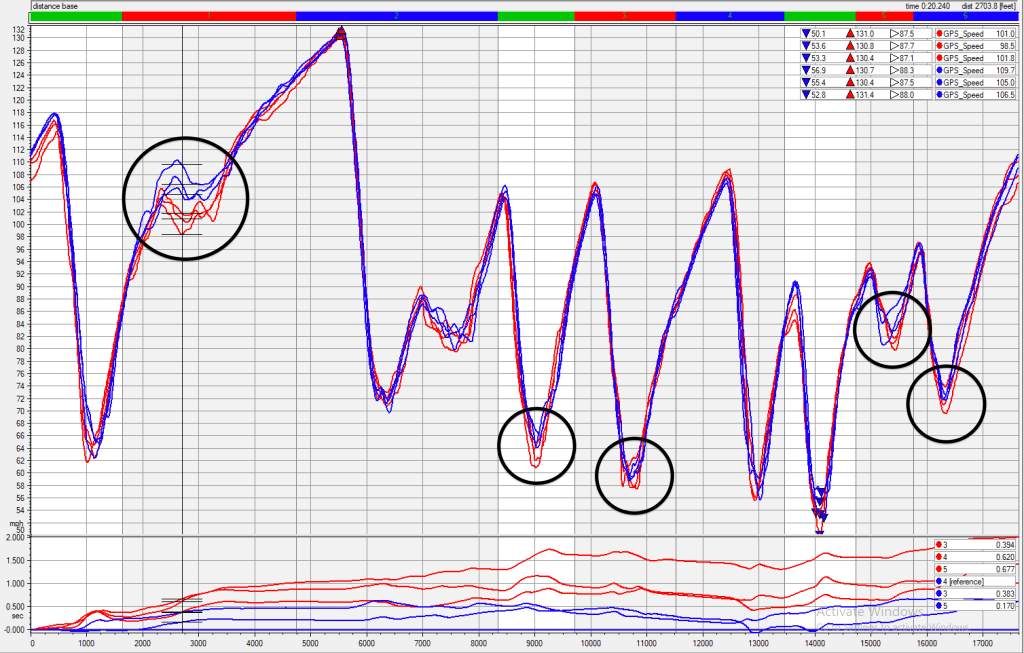
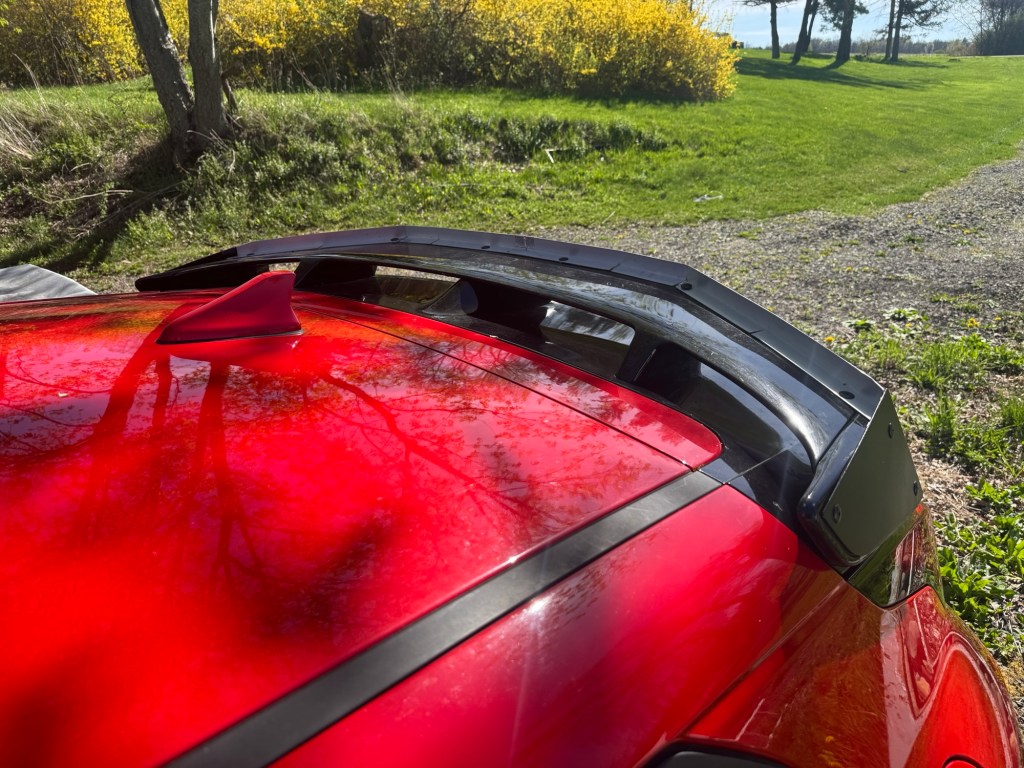
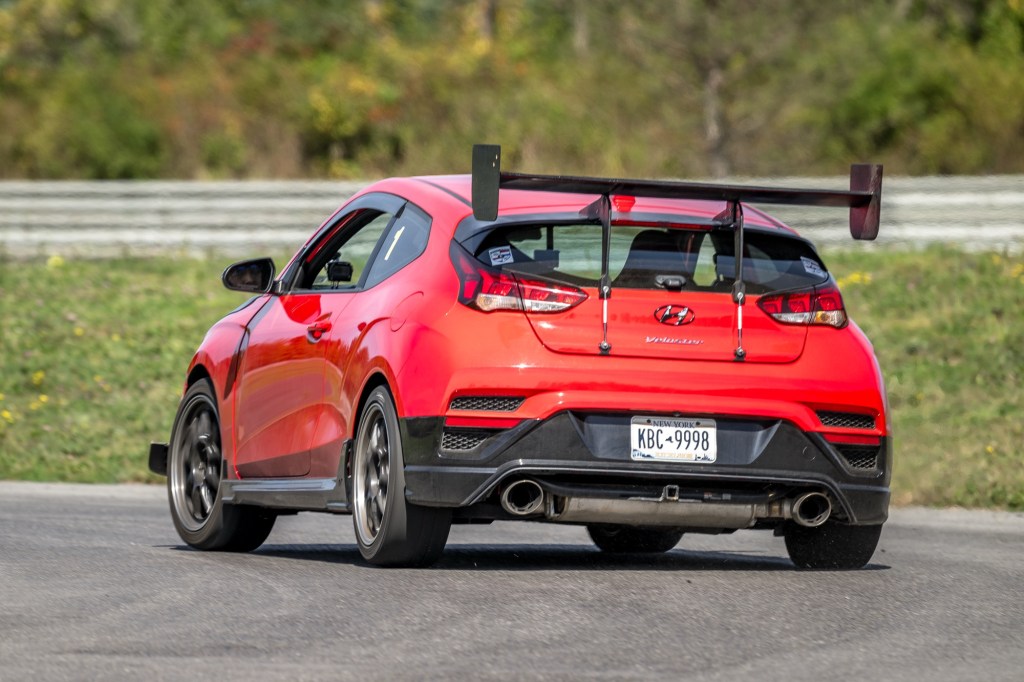
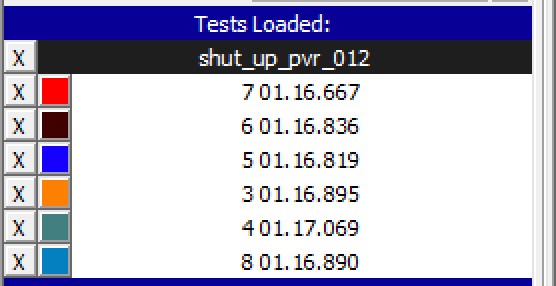

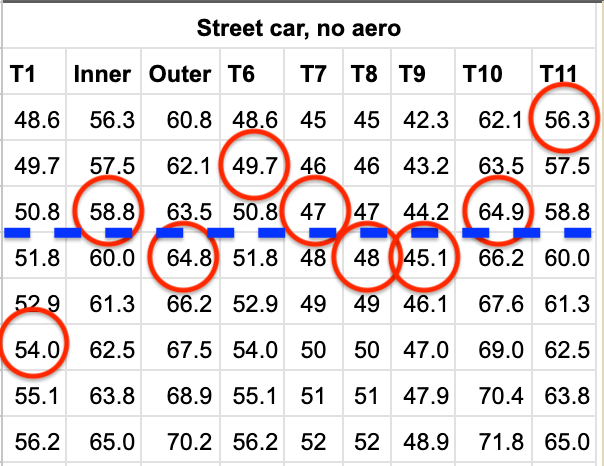

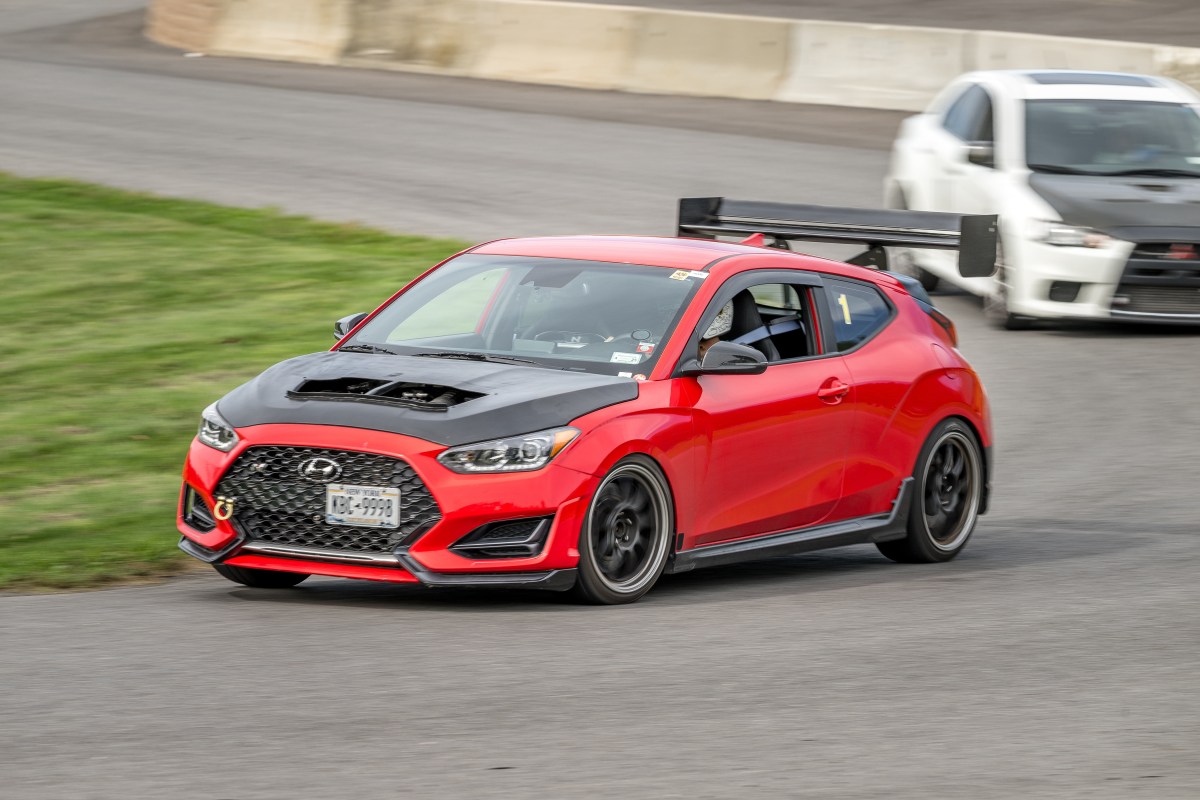
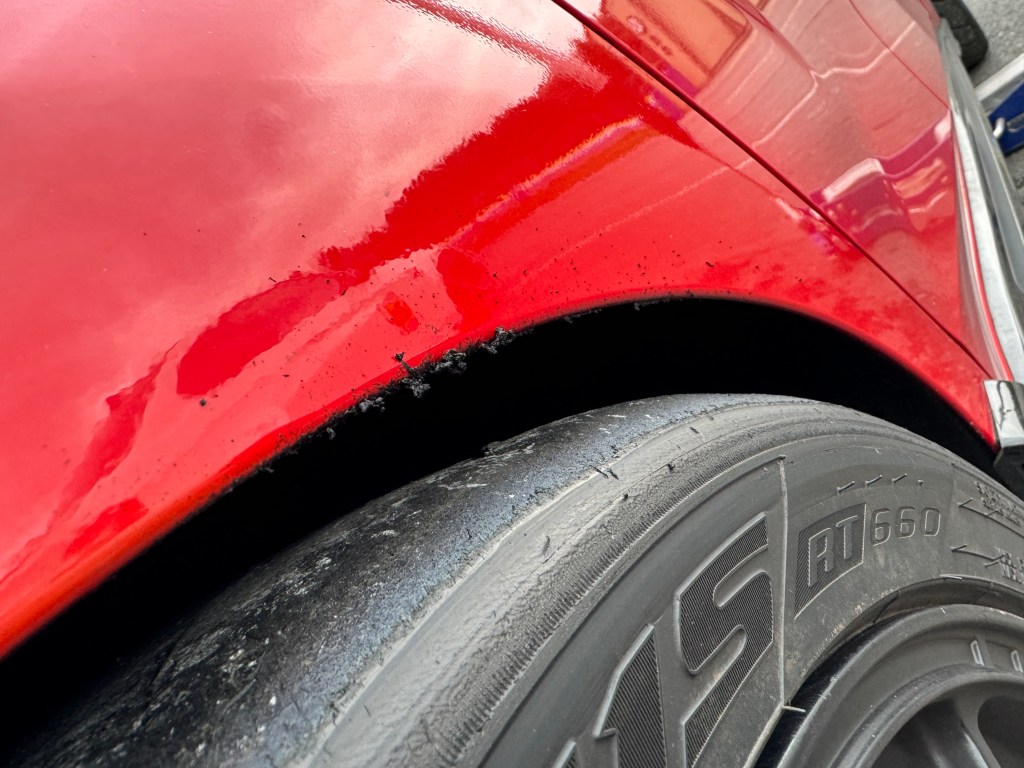


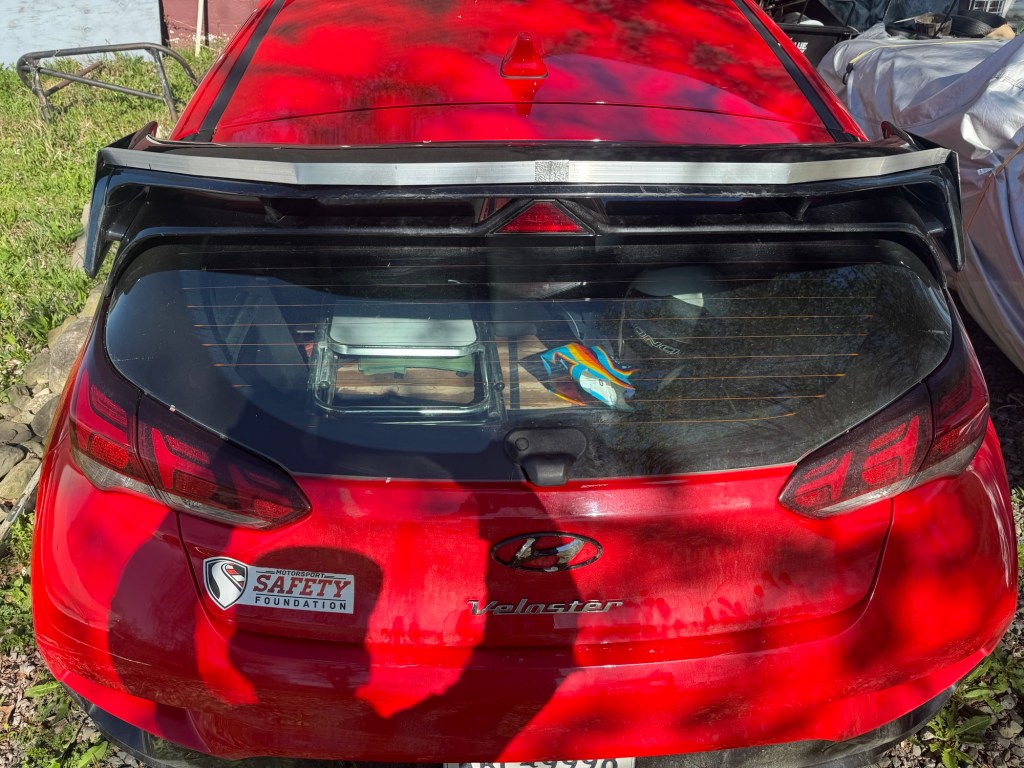


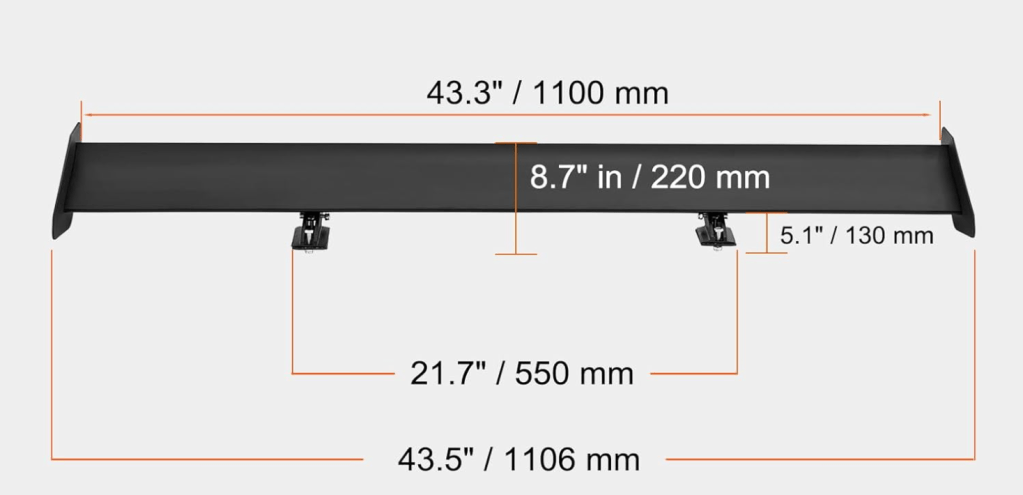
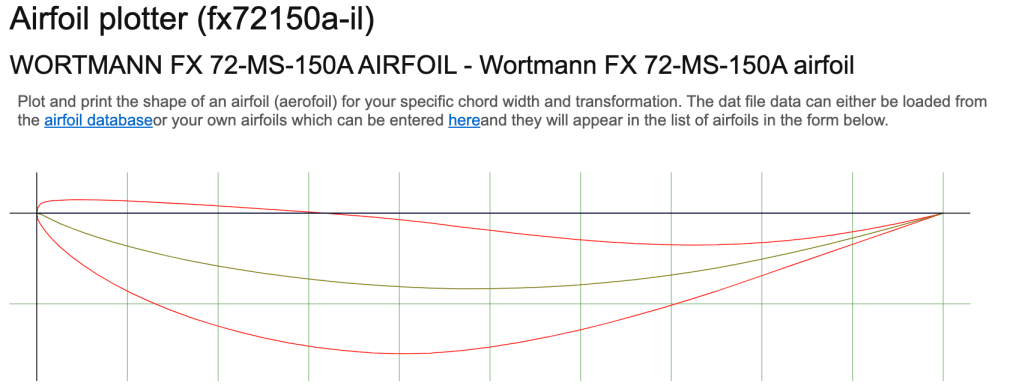

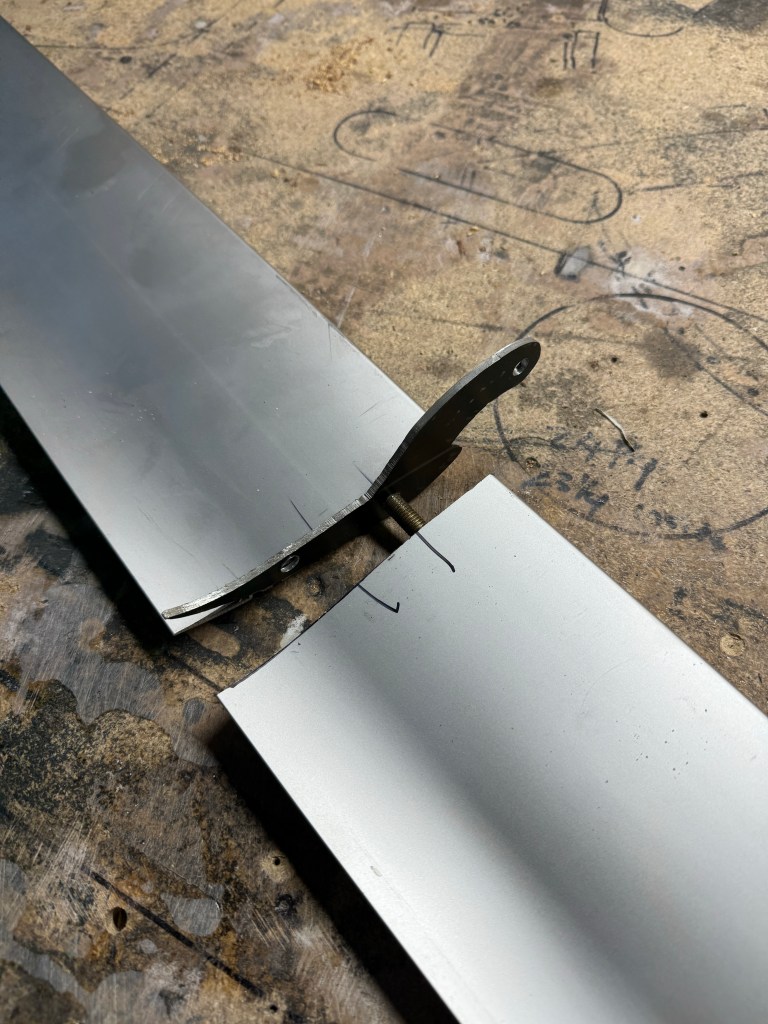


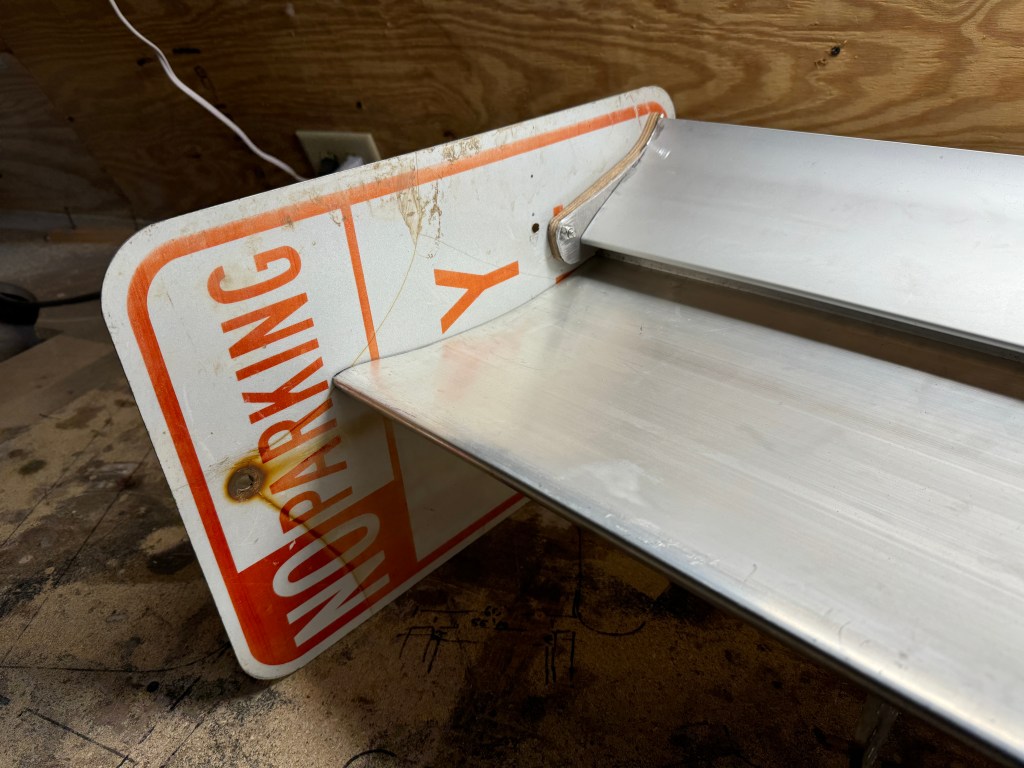
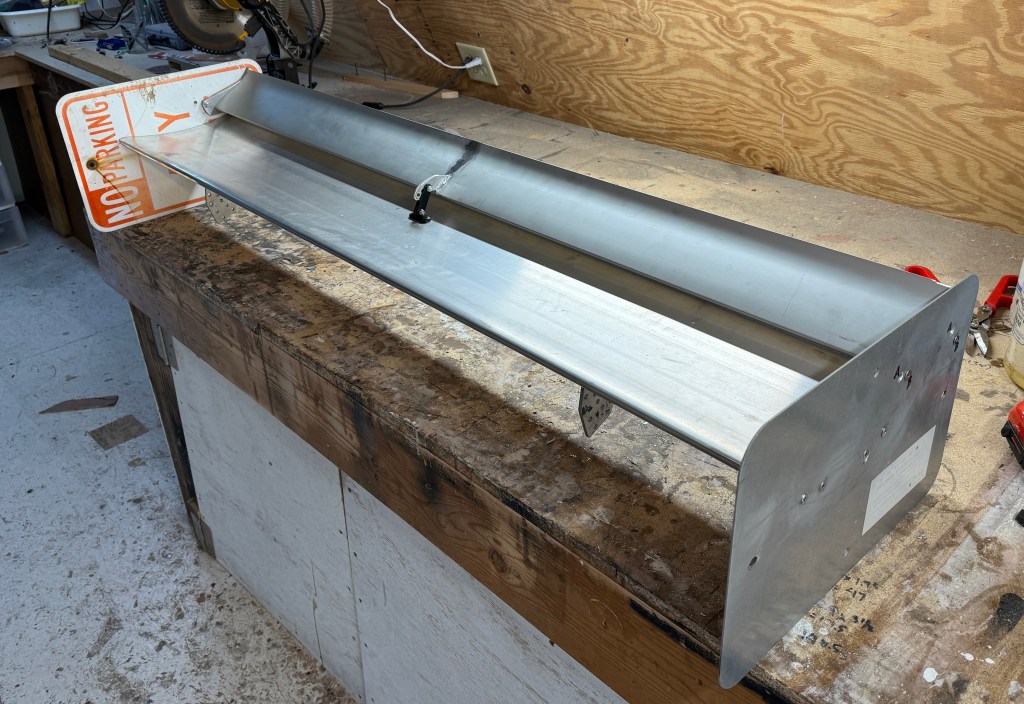
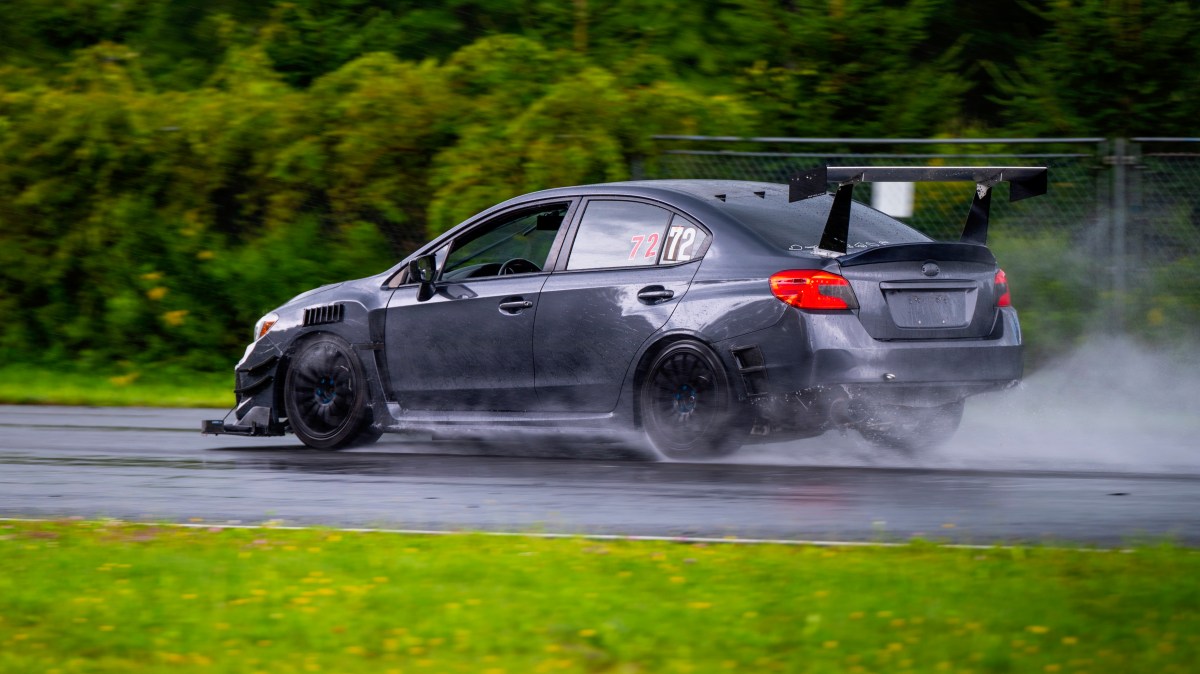

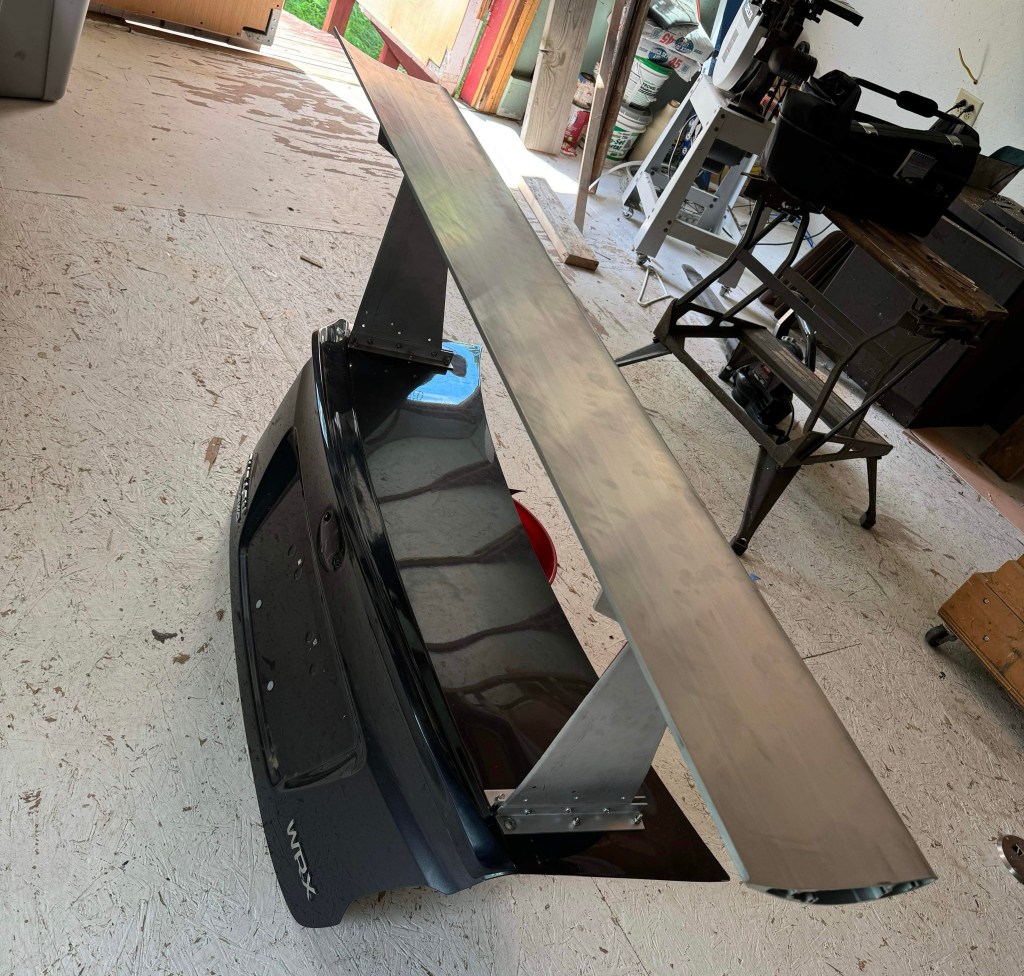
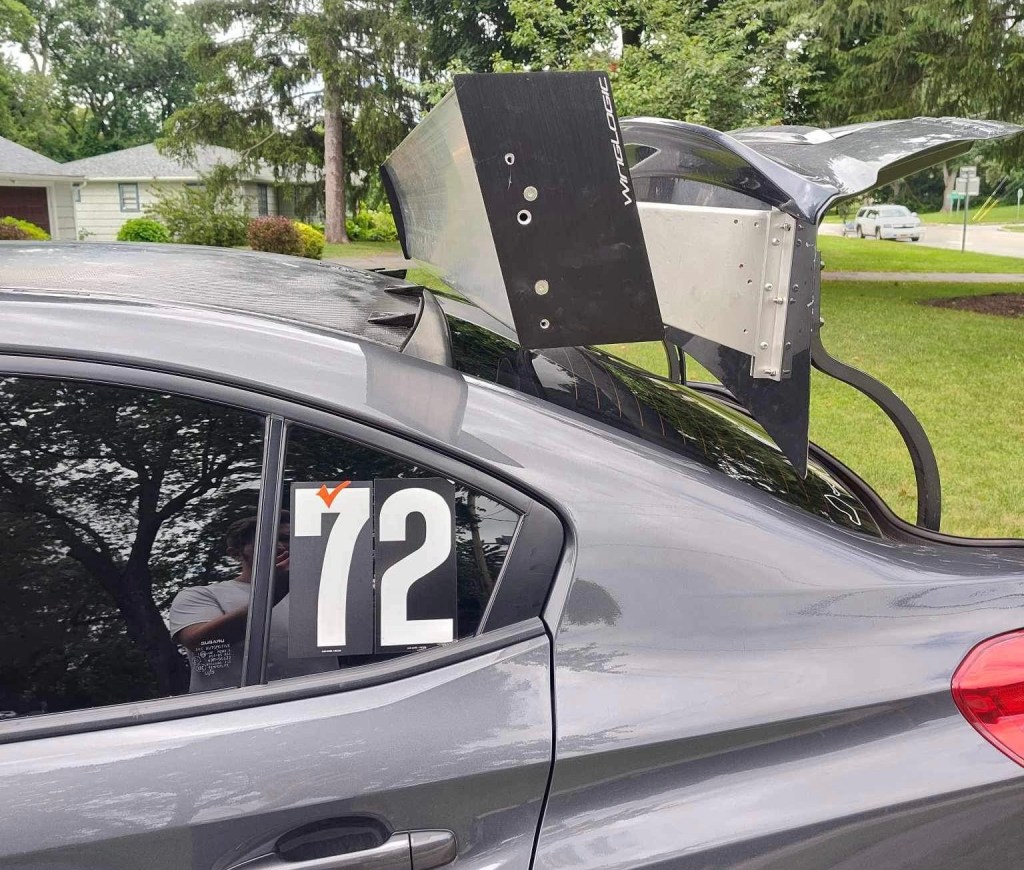


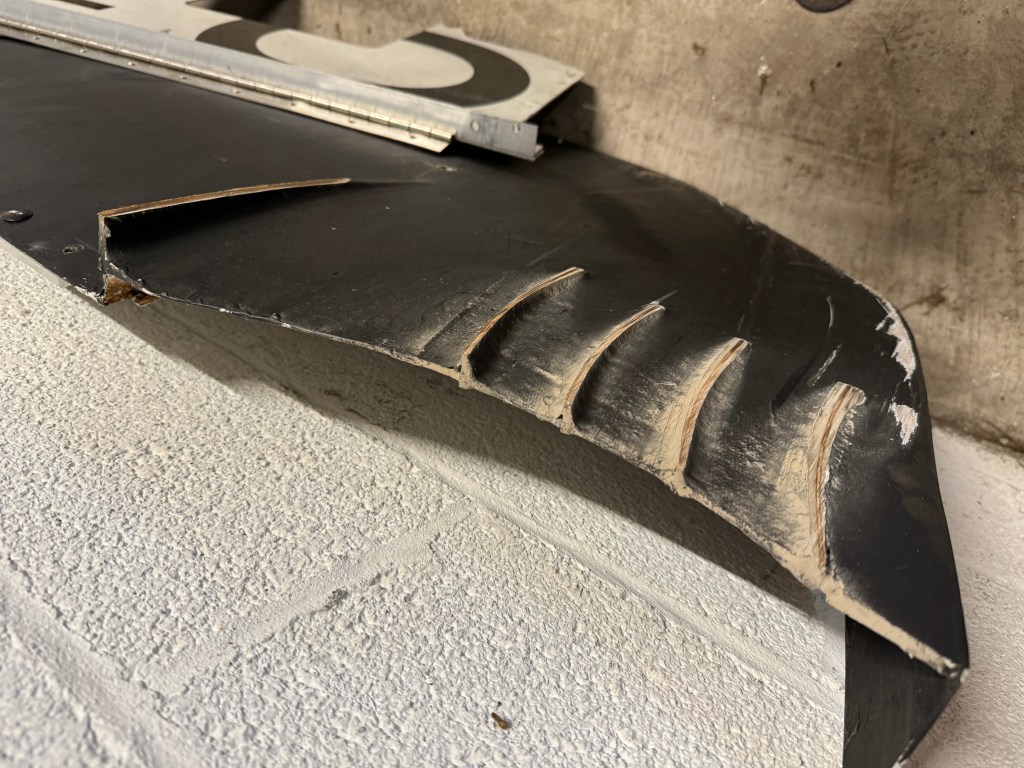


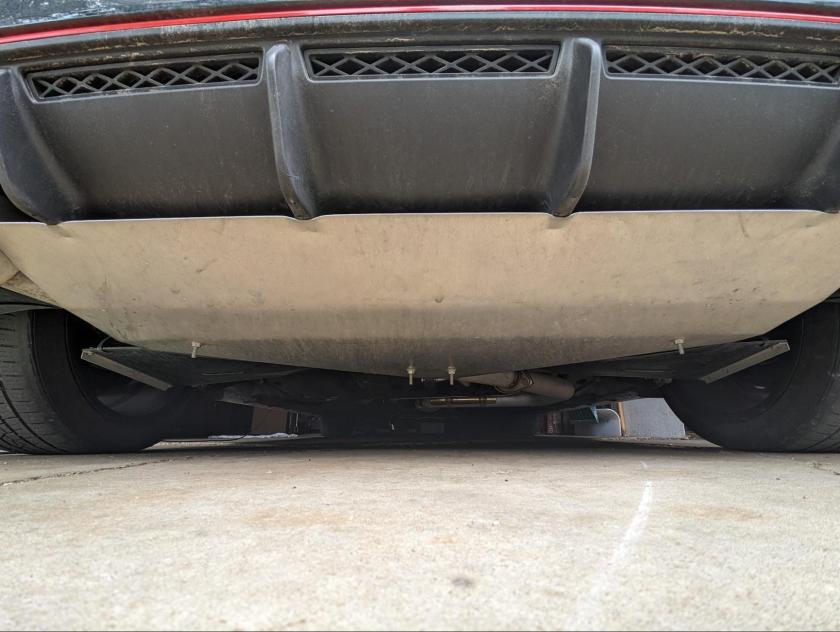


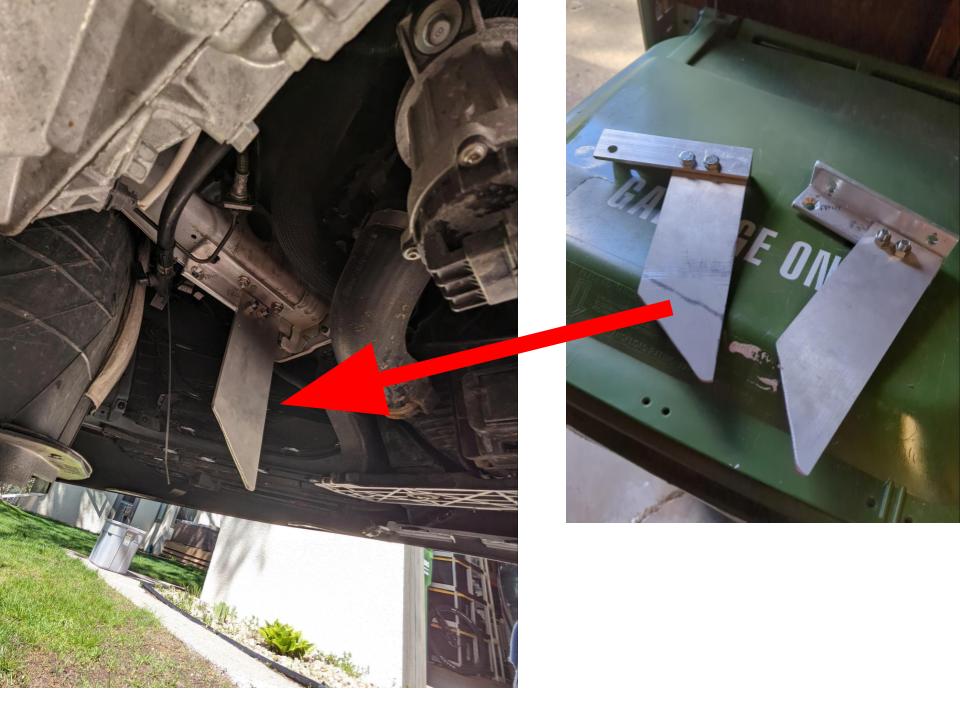
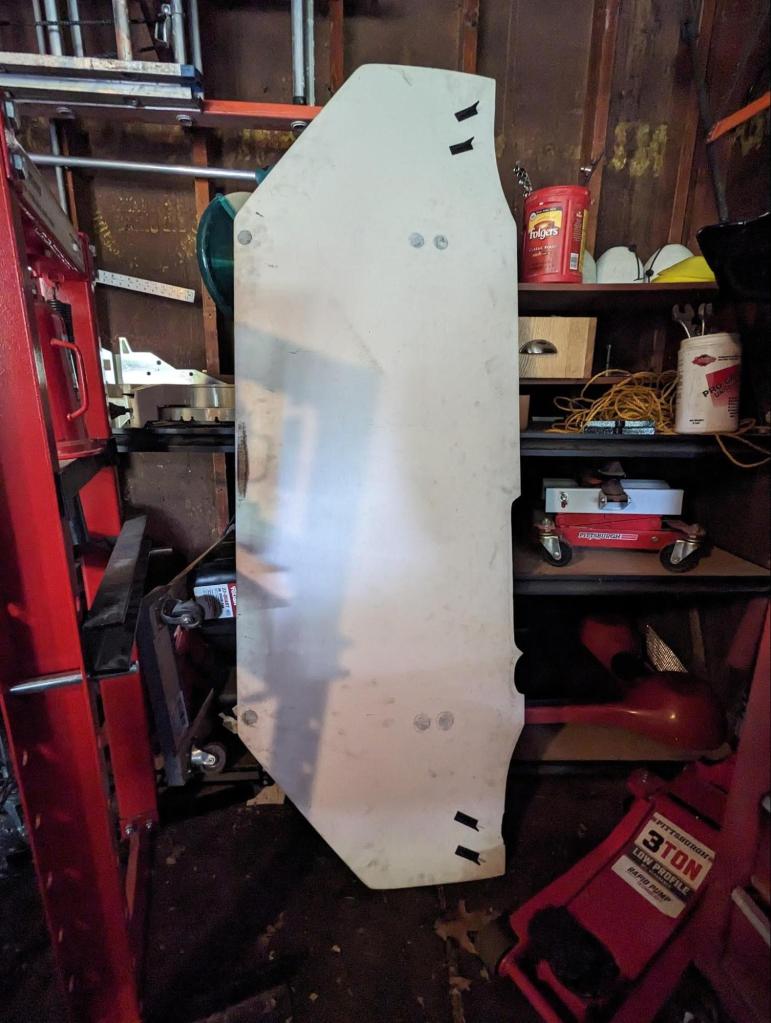
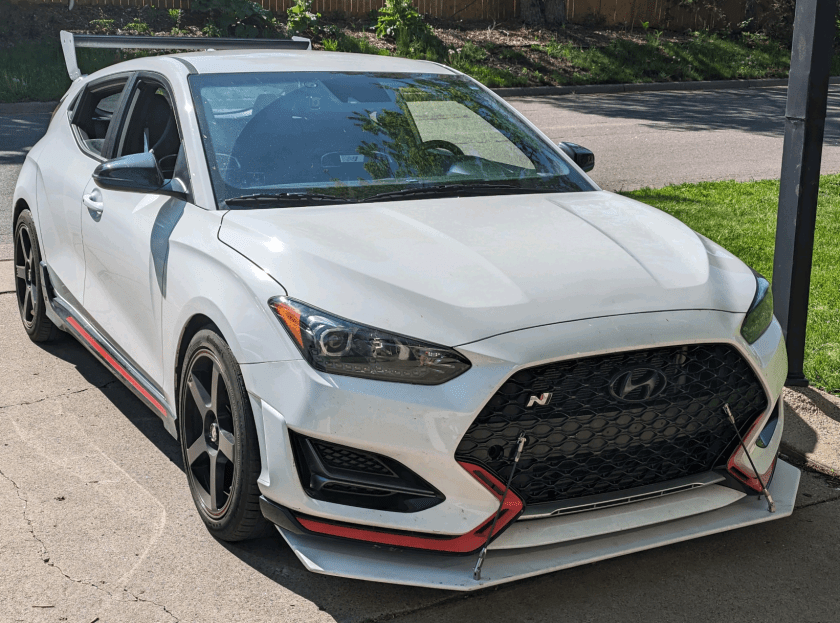


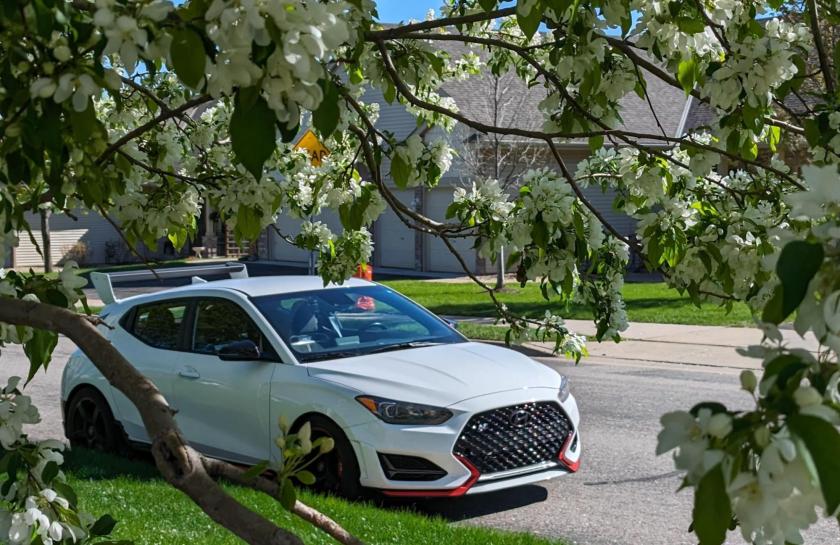

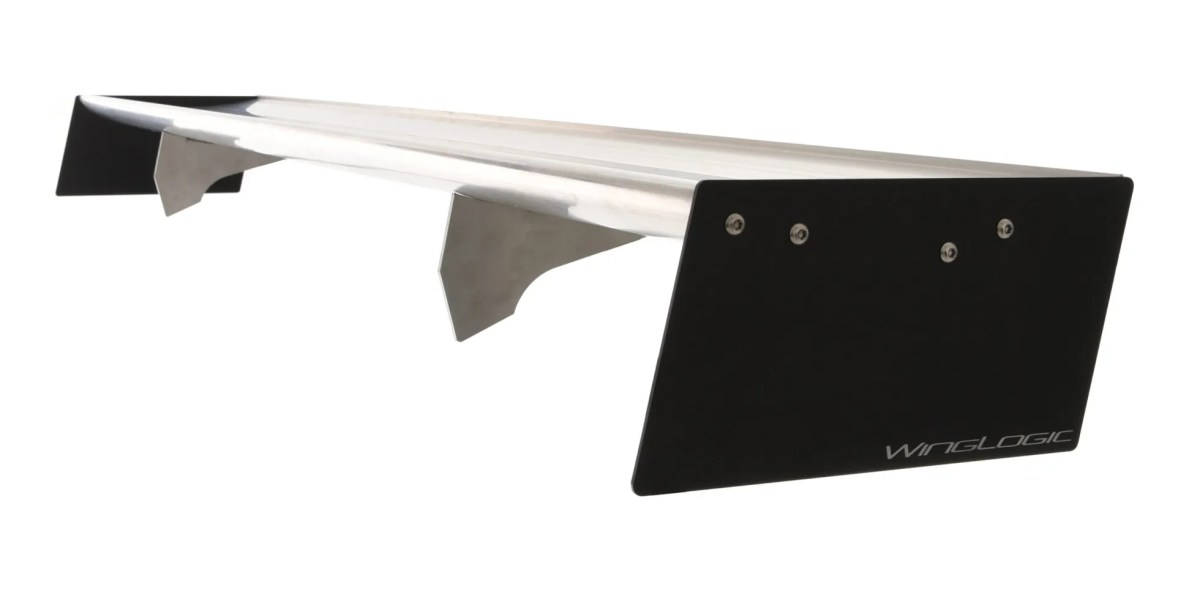
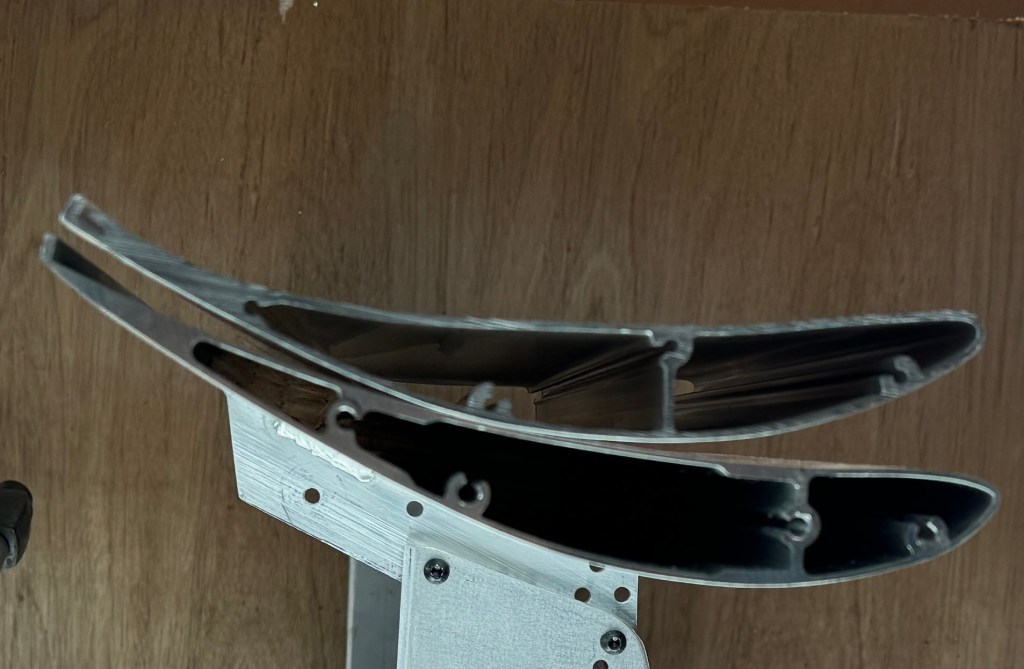
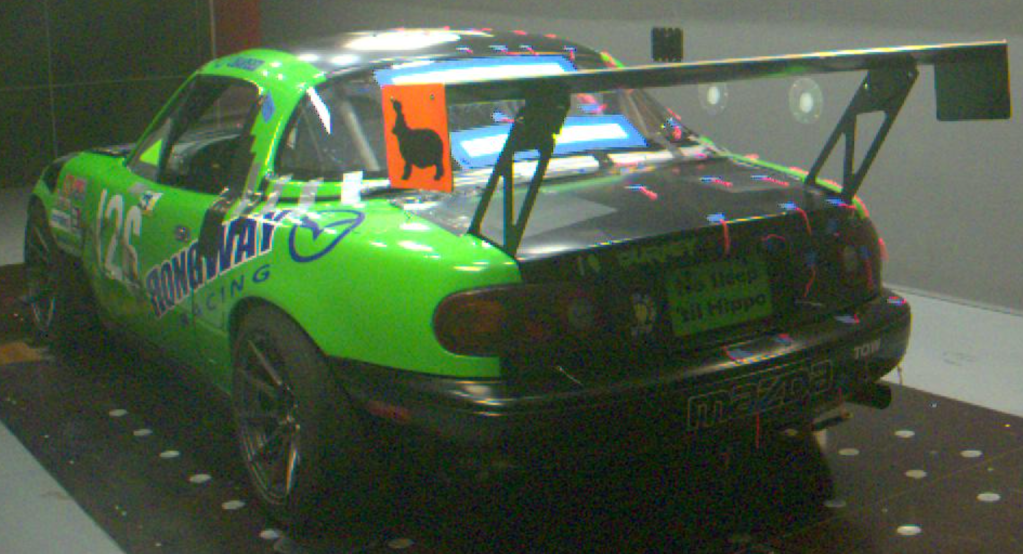
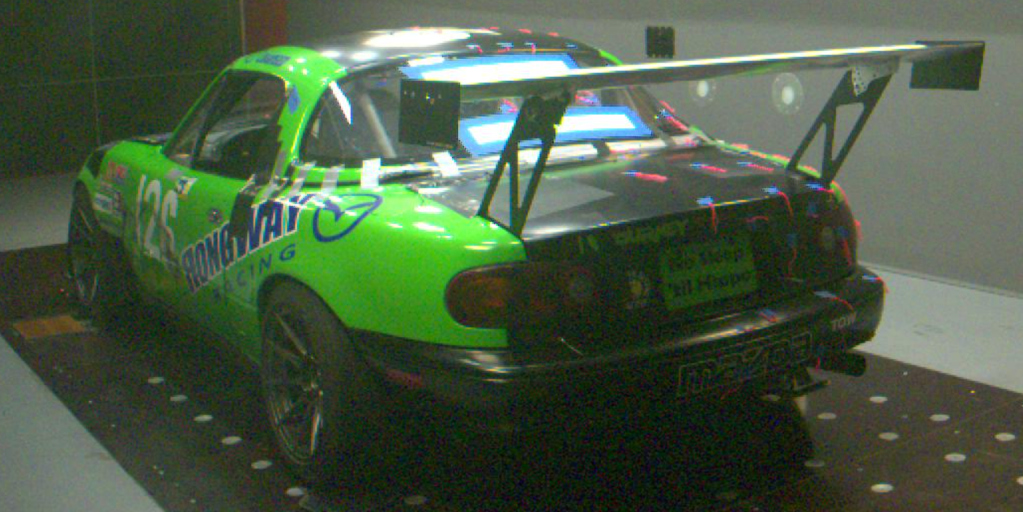
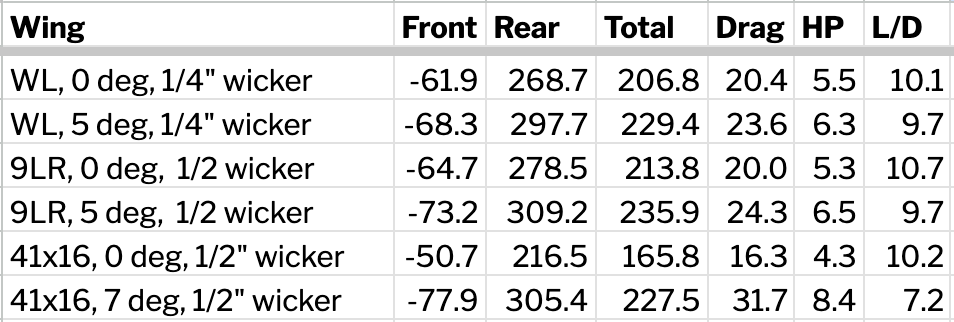
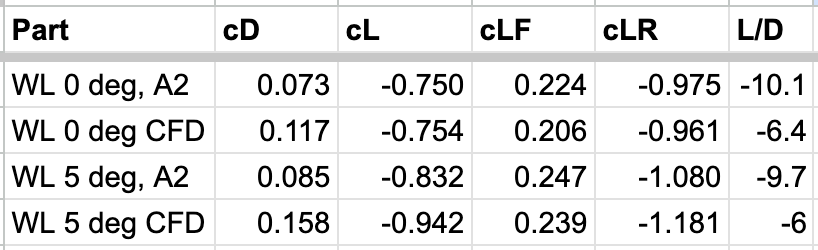
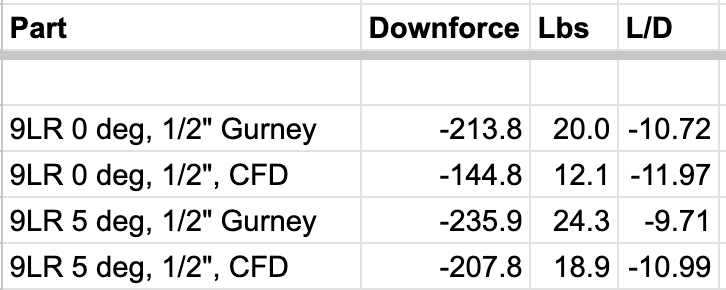








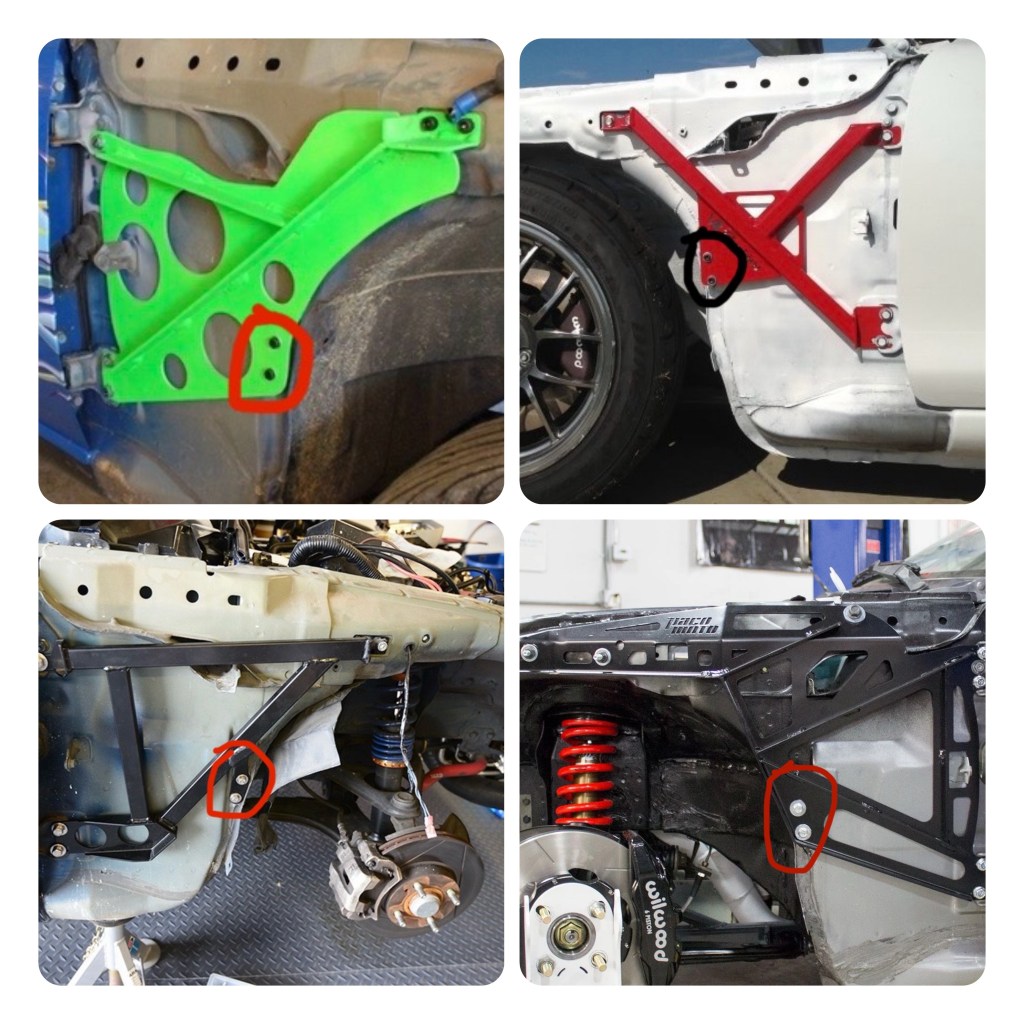


 Occam's Racer