Blog

Miata Fender Vents

A splitter makes the majority of its downforce through suction. If you’re fuzzy about what that means, read Top 10 Reasons Your Splitter Sucks. In that article, I beat to death the fact that it’s the underside of the splitter that does most of the work. To make a splitter work better, you need to expand the air under and behind the splitter. The most common way to do this is with splitter diffusers (aka splitter tunnels or splitter ramps).

Splitter diffusers dump air into the wheel wells, which is a convenient area with a lot of volume. But it’s also an area of chaos, with spinning tires that squirt a jet of air perpendicularly across the splitter diffusers, and suspension parts moving rapidly up and down. Getting air to move efficiently through this mess isn’t easy, and so pressure can build in the wheel wells, which reduces the effectiveness of the splitter.

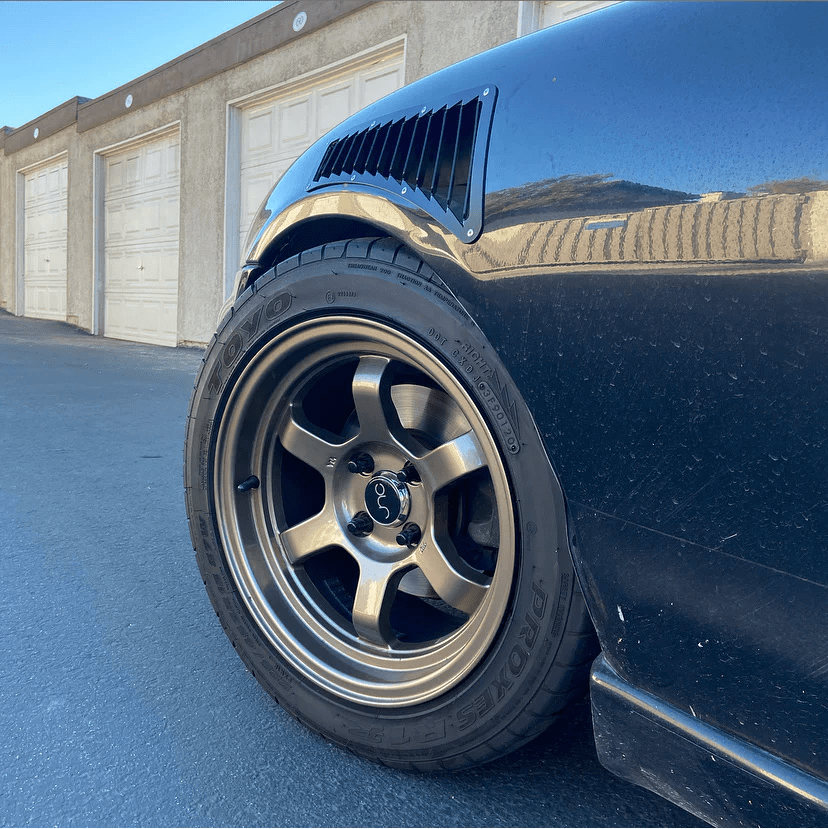
So anything you can do to get air out of the wheel wells will help the splitter make more downforce. As a byproduct, you’ll often get better brake cooling as well. The most common way to extract air from the wheel wells is by installing louvers on the top or sides of the fenders.

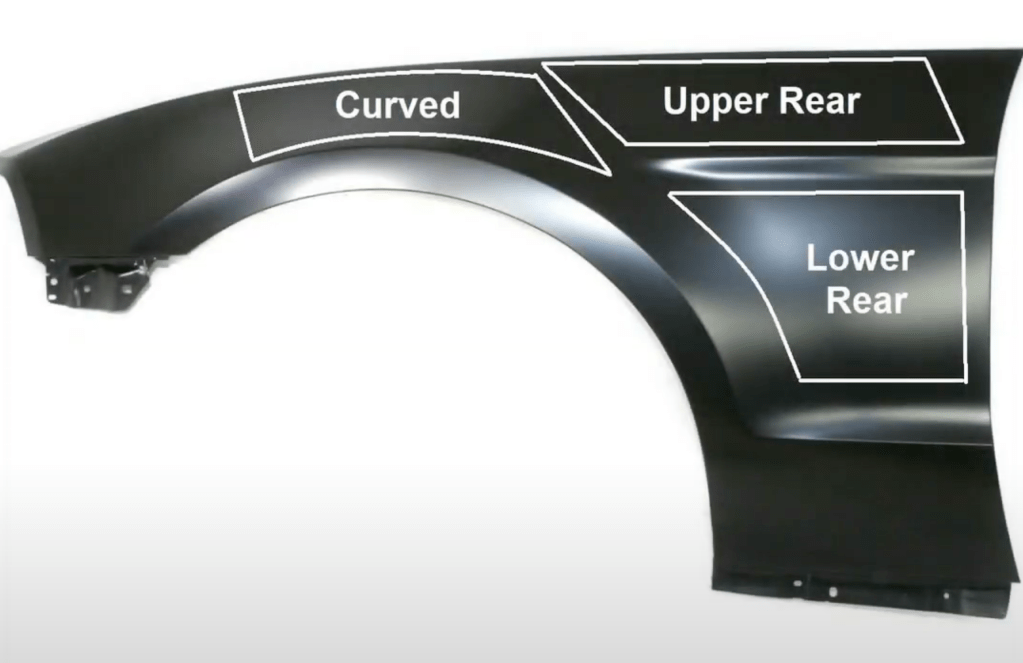
Three typical locations of fender vents. Image from Race Louvers.

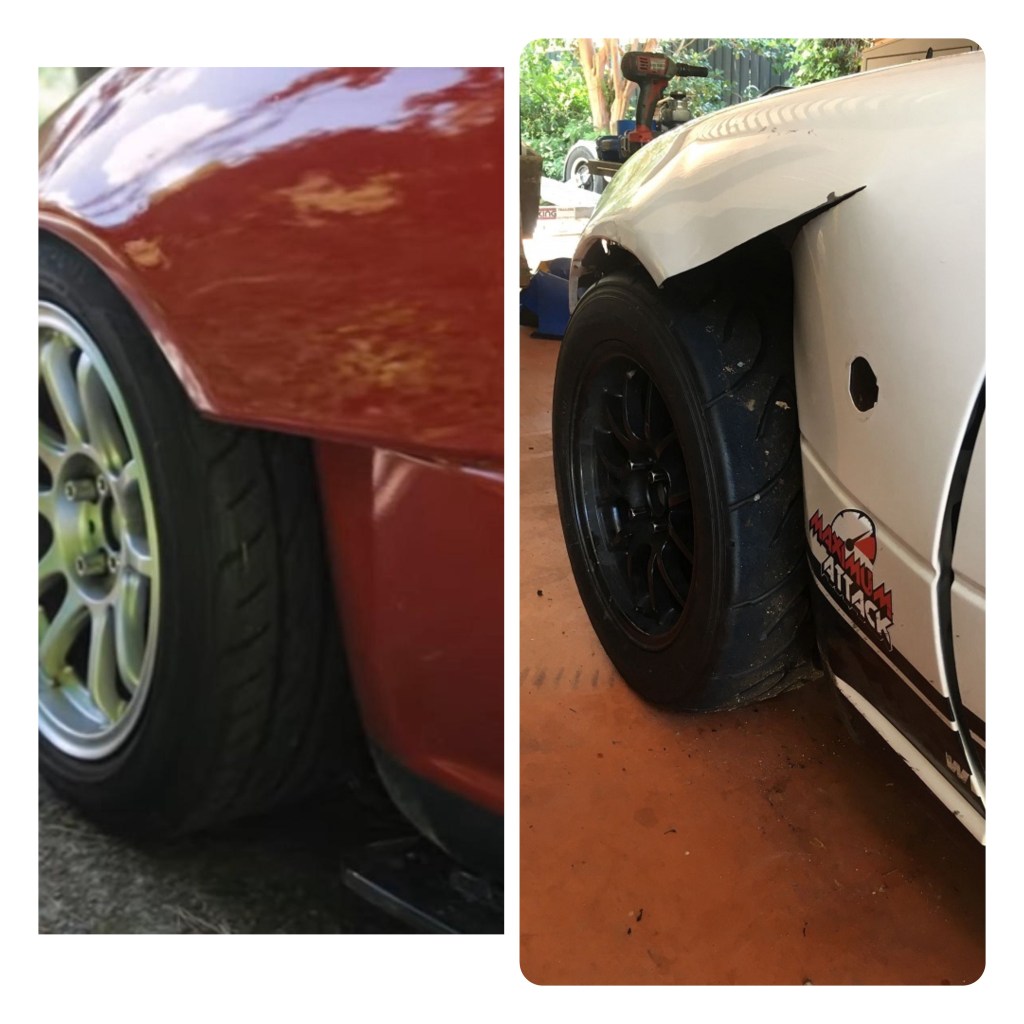
You can also cut a slit and push the fender inwards. Or some people pull the rear of the fender away from the body, and extract air from behind the fender.

However you do it, fender vents have been proven to be highly efficient and add downforce with very little drag. Race Louvers test data shows that a top vent alone is worth about 14-17 lbs of downforce at 100 mph, and only a pound or so of drag. Adding another vent behind the fender results in more gains.

But what’s interesting is that adding a third vent doesn’t seem to add any more downforce. Despite the fact that Race Louvers is a business that wants your money, they advise you not to buy a third vent. So there’s definitely a point of diminishing gains with fender vents, and I’ll address one solution to that in the future.

In this article, I’m going to review some of the popular Miata fender vents available, and some DIY solutions for the frugal. Most of these are universal in nature, and can be used on other cars as well.

Race Louvers

I’m going to start with Race Louvers fender vents, because Al from Race Louvers has done a lot of wind tunnel testing and publishes PDFs on his site. Much of this article is based on the testing and data in his articles and videos with AJ Hartman.

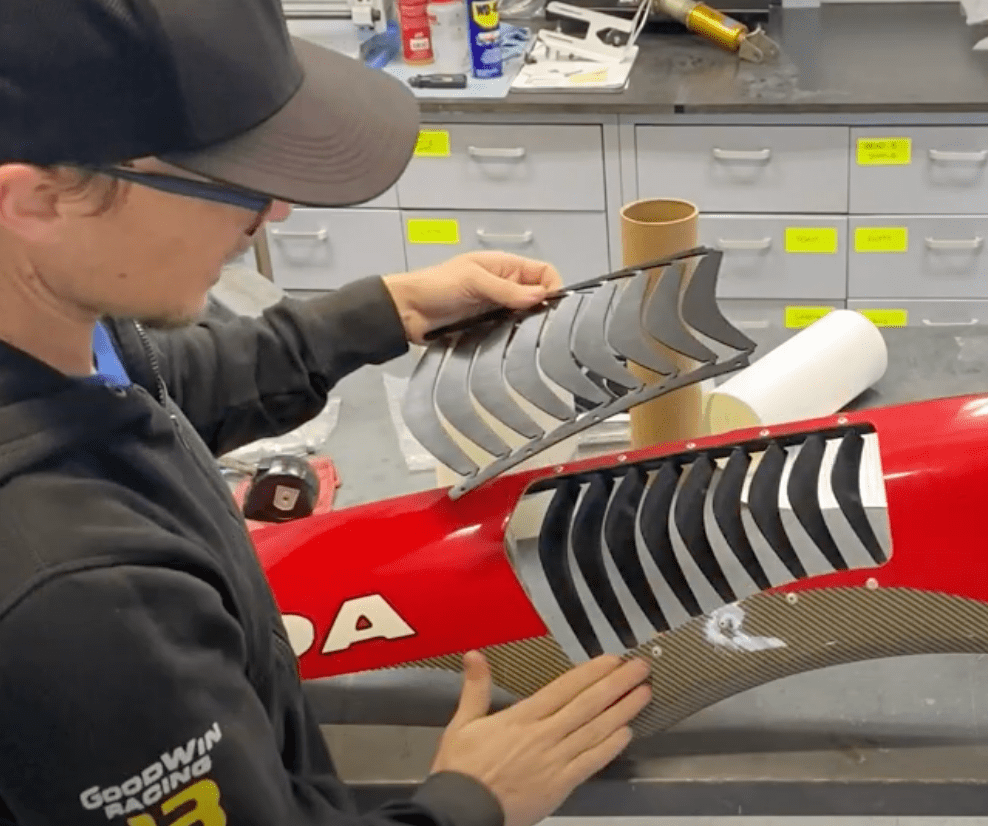
Al’s extensive wind tunnel testing shows that louver blades should extend both above and below the bodywork. This applies not only to fender vents, but hood vents as well. Louvers that were only on top of the bodywork, or were only recessed below the bodywork, didn’t work as well as louvers that extended both above and below the skin. Moreover, it appears that the depth below is more significant than the height above. This discovery seems lost on virtually every other manufacturer.

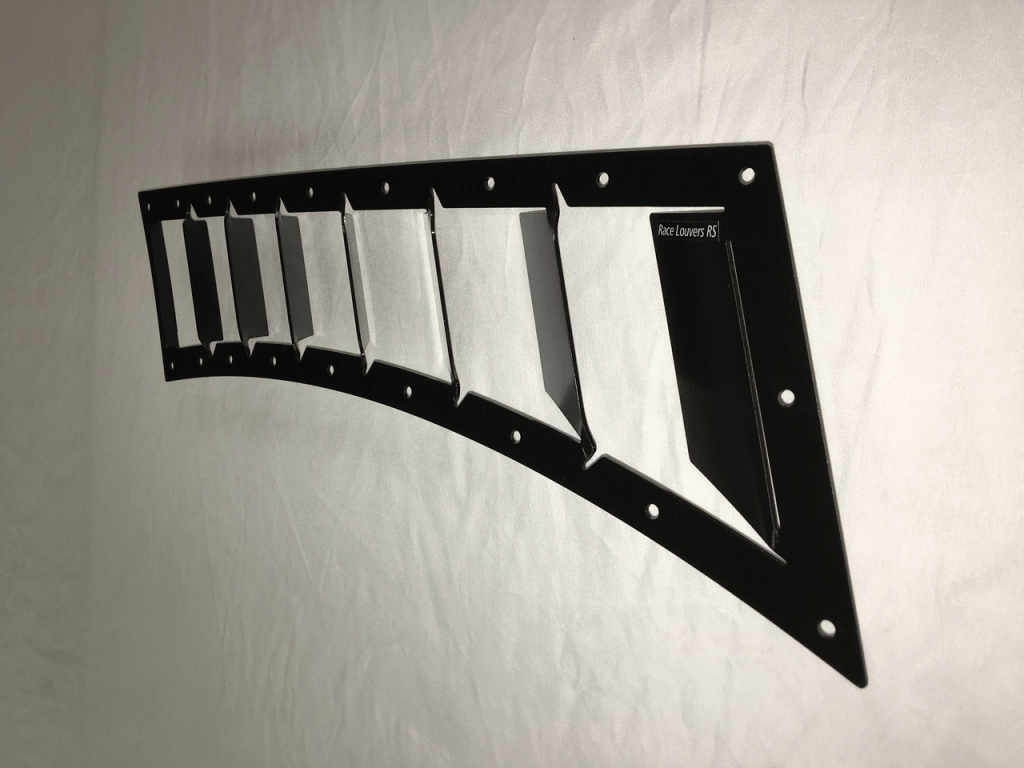
The biggest difference between Race Louvers and most other vents is that the louvers extend well below the surface. The data shows that this is important.

At $289 for the curved version you see above, or $279 for the straight version (less visually interesting), these do not come cheap. But then again, other louvered vents aren’t going to perform as well as these, so you get what you pay for.

On a NB Miata, these tested at 17 lbs of front downforce and virtually no drag. If that doesn’t seem like a lot of downforce, note that any gains you make in front downforce are typically matched with 100-150% more rear downforce. So you could think of this as a means of adding 42 lbs of total downforce.

Now this is just from a single pair of vents on top of the fenders, and more venting can be done behind the fenders. Race Louvers doesn’t have a rear vent for Miatas, but Left Lane Designs does.

Left Lane Designs

Left Lane Designs makes rear fender vents for NA and NB Miatas. NAs use two vents, one on either side of the style line, while NB Miatas have just a single big vent. These are priced at $279 and $289 respectively.

Upper rear and lower rear vents, with the rear of the fender spaced out as well. The door gets in the way of a smooth exit, so I wonder how much that helps.

Adding the Left Lane Designs vents to the Race Louvers fender vents could get you as much as 50 lbs of front downforce. At least that’s what Race Louvers got on another test using similar vents, and I think that data can be safely applied to Miatas and other cars. Again, add 100-150% because now you can add more rear downforce.

Singular

For $249 you can get Singular fender louvers, which are the same vents that are on Ryan Passey’s HyperMiata. These laser-cut aluminum vents are visually interesting, in that they have some curvature to the vent shape, rather than the more rectangular venting on the Race Louver vents. This curvature follows the countour of the Miata fenders, and while I haven’t found any data on them, it’s a great look. (I’ll be testing these in a wind tunnel soon.)

HyperMiata fender vents.

One interesting feature of these vents is that for an additional $40 you can get a partial cover so that these vents are legal for Grid Life Touring Cup. GLTC limits the size of fender vents to 45 square inches for some reason, and it seems as arbitrary and quizzical as SCCA Time Trials limiting splitter diffusers to 84 square inches, or NASA ST4-6 limiting hood vents to 3/8″ in height. Whatever people, whatever.

R Theory

For slightly less dosh than the Race Louver or Singular fender vents, you can get a similar looking vent from R Theory. However, the similarities are only skin deep. Literally.

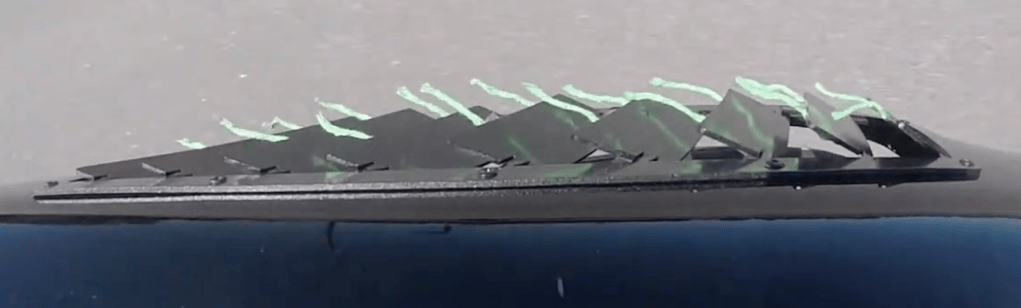
If you watch their wool tuft testing video, you can see that the louvers do not extend into the fender. Recall from the Race Louvers data that it’s probably more important to extend below the surface than above. The Singular vents are similar in this fashion, but at least those install below the surface, while the R Theory appear to install on top of the fenders (which not only looks less professional, but probably increases drag as well).

The R Theory vents in action.

While the $192 price is significantly lower than Race Louvers or Singular, I couldn’t justify the loss in performance of using these. If you want fender vents because they look cool, go for it. If you’re primarily looking for performance, I’d look elsewhere.

Spiked Performance

Spiked Performance sells an inexpensive aluminum fender louver for $169. Like the R Theory vents, they install on top of the fender skin. Spiked vents measure about 33 square inches, and appear to be the smallest here. Based on that, I would expect them to be the least effective (but still worthwhile).

Spiked makes simple fender vents with an attractive shape that follows the wheel arch.

Napp Motorsports made a great installation video, and it looks quite easy with the supplied cutting template and a few rivets.

DCN Performance

I’ve never heard of DCN Performance, but they have NB Miata fender vents that are inexpensive and appear to be properly engineered. You can buy all three vents directly from DCN and Top Miata.

I didn’t see a US supplier, but I did find the lower pair of vents available on Etsy and eBay. At $150 for the lower pair, these are worth looking into.

DCN louvers extend beneath the skin and allow for a fender cut.

Amazon plastic shit

Finally there are tons of universal plastic shit vents you can buy on Amazon or eBay. I’m not going to review any of them because I would rather put a stick in my eye than put these on my car. If you’re too cheap to buy decent vents, don’t buy plastic crap, make them yourself.

DIY options

If you think it’s ridiculous to spend nearly $600 on fender vents, or support crappy products made in China, I’m with you on both counts. This whole site is about DIY creativity, and I neither shill for nor take kickbacks from anyone. Let’s DIY us some fender vents!

Fenders holes

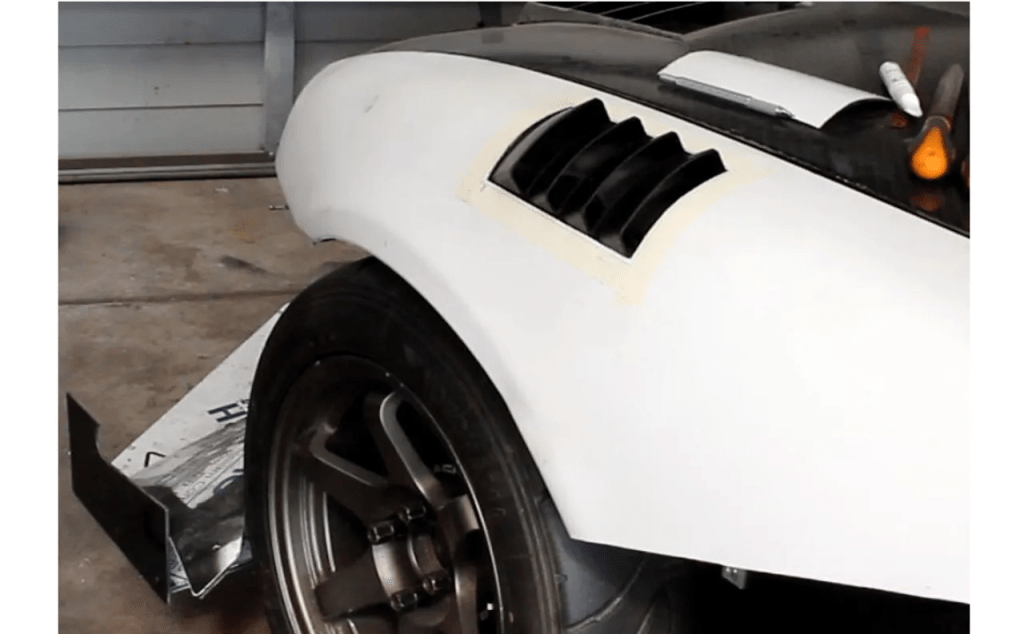
If you’re a cheap bastard or just an avid DIYer, then you can make your own fender louvers by just cutting into the sheet metal and bending louvers into it. Follow a pattern like Race Louvers and make them go both above and below the fender skin.

Another option is to say fuck the louvers, and cut a big gaping hole in the fender. In the course I took with JKF Aero, the CFD showed that a big louver-less hole made more front downforce than a fender vent with louvers. So if you’re after the maximum front downforce, and can accept a slight drag increase and loss in rear downforce, get that cutting wheel out grind you a big ass hole in your fenders.

Note that you should put a 3/8” Gurney flap on the leading edge. For hood louvers, you’d want up to 1” high flap, but apparently fender vents should use a smaller leading edge flap.

Fender cuts

Another easy modification is cutting a slit into the fender and pushing the bottom inward. On a NA Miata, a lot of people make a subtle cut on the belt line. But some people make a more aggressive cut higher up, and vent the entire rear of the tire.

Two variations on a theme.

I tested fender cuts versus Singular fender vents in the wind tunnel. That data, plus hood vents, wings, fastback, canards, and many other aero options are in my 54-page Miata Wind Tunnel report, which you can purchase for $35. Buying this report helps support this web page, aero investigations, and future wind tunnel testing. Thanks!

3D printed

If you have a 3D printer, Beavis Motorsports has a free STL file you can use to print a “time attack style” fender vent. These sit up quite tall, and you’d think they would be really draggy, but Race Louvers tested a 1 7/8″ tall time attack vent (not this exact vent, but something similar) and it made 14 lbs of downforce and 1 lb of drag, which was the second best of the vents they tested.

Time-attack style 3D printed fender vent.

I don’t love the look of these, but that’s purely a subjective thing. If you do, then something like this is a good option.

Installation advice

After reading all of the PDFs on the Race Louvers site, and watching too many of his videos, I’ve distilled the following advice, which applies generally to all fender vents.

  • Don’t place top-mounted fender vents too far rearward. The vents should end 6″ before the windshield to avoid high pressure air from the windshield interfering with the vent.
  • Airflow over a hood or fender is generally straight back, and louvers should be installed perpendicular to this flow. Don’t angle the louver blades more than about 15 degrees or it will reduce their functionality. (The louvers should be more vertical than swept back.)
  • Many people have removed their fender liners completely, which is often a mistake. But if you still have fender liners, you’ll get the most downforce by cutting a hole in the fender liner near the louver. If improved cooling is your primary goal, remove the front of the fender liner.

GT7 Aerodynamics

I’ve been playing Gran Turismo since the first version on the PSone, and I still grab my controller a couple times a week and get in 26.2 miles to earn my “daily disappointment” (a roulette prize wheel that always seems to land on the most worthless prize).

GT7 touts itself as a racing simulator, but its aero modeling sucks. I understand why they did this, to protect the game’s leveling system, called Performance Points (PP). In the real world, downforce benefits you in fast corners, the faster the corner, the more benefit. In order to balance that in the game using their PP system, every car would have a different PP value at every track. That’s too complicated, so Gran Turismo simply made aero less effective.

How much less effective? I’m glad you asked! To find out, I built four cars with exactly the same weight, power output, suspension, ground clearance, etc., but very different aero.

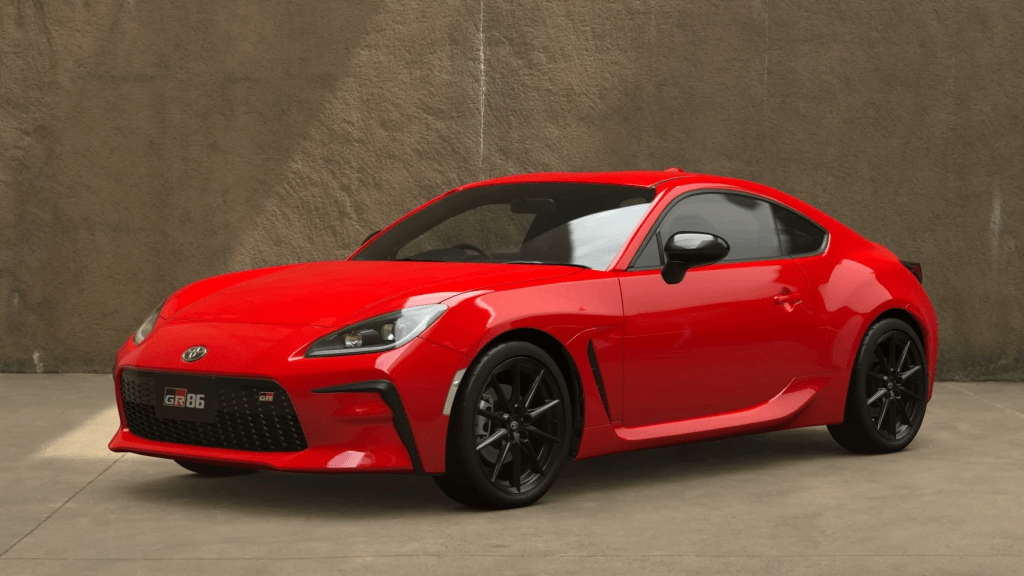
Vanilla GR86 with no aero.

I had to buy ECUs, power limiters, and ballast to make them all equal weight and weight distribution, and then I put them all on Sport Medium tires.

Group 4 has a splitter and wing.

I chose the Subaru BRZ and Toyota GR86 because there are a few different versions of the car, but one could do this experiment with a Mustang, C7 Corvette, or other car that has both street and racing versions.

Group 3 aero incudes much venting and a rear diffuser.

I used Watkins Glen for the race track, because it has fast corners where aero is effective. At least in the real world. In the Gran Turismo world, aero is virtually meaningless:

BuildFront / Rear DFGrip @ 75 mphLap
No aero 524pp0 / 0 1.18g2:06.845
Street aero 545pp200/3001.22g2:07.006
Group 4 532pp200/3501.21g2:07.076
Group 3 549pp500/8001.29g2:06.730
Car builds, downforce, grip, and lap times

As you can see, the car with the most downforce (1300 lbs), set the fastest lap, but only by a tenth of a second! In second place was the car with no aero at all, and it came in at 524 points versus 549 points for the Group 3 car. In the real world, you’d see a few seconds between a car with no aero and a car with a simple splitter and wing.

In conclusion, aero is meaningless in Gran Turismo, and that makes me sad. But are the aerodynamic values in GT7 totally worthless? No. I discovered that the downforce values listed for each car are fairly accurate, which means we have a large catalog of data that is otherwise very difficult to find!

Downforce values in GT7

In GT7 all cars with aero are given front and rear downforce listed in pounds. For example, a Toyota GT-One has 600 lbs of front downforce and 900 lbs of rear downforce. But in order for those values to have any meaning, we’d need to know what speeds those figures are based on. After some investigation, it appears to be at about 130 mph (210 kph).

I’ve come to this conclusion by comparing the real-world downforce values for several cars to the downforce values in the game. To get the real-world values, I went to Muslanne’s corner and noted the downforce values for every car (at 150 mph) and threw them in a spreadsheet. I then compared that to the same car in Gran Turismo, factored in the speed, and came out with 130 mph as being very close.

Another car that helped me figure out this value was the Porsche 911 GT3 RS, which reportedly makes 895 lbs of downforce at 124 mph. By factoring in a speed change to 130 mph, I got 984 lbs of downforce, which is close enough to GT7’s figure of 1000 lbs.

So here’s a smattering of cars in GT7 and their approximate coefficient of lift (cL), which is inverted here to mean downforce. If you’re not familiar with coefficients, check out my article on Thinking in Aerodynamic Coefficients to see examples of various cars and how much downforce and drag they make. Note that you can take any car in GT7 and divide the total front and rear downforce by 900 and get a close approximation to the (inverted) coefficient of lift.

CarFrontRearTotal DFcL% FDrive
Formula1500200035004.2042.9%MR
GT-R LM1400140028003.4350.0%FF
RB X20191000160026003.2038.5%MR
Valkyrie1000150025003.0540.0%MR
Gr 2, GT500750115019002.3339.5%FR
GT-One60090015001.8440.0%MR
BRZ GT300 50080013001.3738.5%FR
Group 345070011501.2139.1%FR
911 GT3 RS35065010001.0635.0%RR
Amuse S2K3505509000.9538.9%FR
Group 42003505500.6036.4%FR
RX7 GTO (real)5250.57FR
Street car aero2003005000.5940.0%All
RE-RX71503505000.5930.0%FR
RCR Civic2002504500.5344.4%FF
Miata touring703504200.5016.7%FR
LP 750-4 SV ‘151502504000.4237.5%MR
C7 ZR-11502504000.4237.5%FR
Gr 3 road car1002003000.3233.3%All
930 Turbo1001502500.2740.0%RR
Cayman GT4801602400.2633.3%MR
911 GT3 (996) ‘01301201500.1620.0%RR
C8 50801300.1438.5%MR
M2C 2040600.0733.3%FR
911 RS SC (993) ‘95060600.070.0%RR
NSX Type R2525500.0550.0%MR
WRX ‘99040400.040.0%FR
GR Corolla020200.020.0%FR
E30 M3, 190 Evo0000.000.0%FR
GT7 cars and downforce

I’ve also added the front aero load distribution (% F) and the drivetrain layout to the table. Many people say you should match aero distribution to weight distribution, but I don’t subscribe to that theory, and neither does Gran Turismo (or the real-world values in Muslanne’s database). You can see that aero distribution is typically around 40% front (meaning more rear aero), regardless of drivetrain layout. Even the front wheel drive Nismo GT-R LM car has a 50/50 aero distribution, despite having 65% of the weight on the front tires.

You’ll also notice that some cars that probably do have some downforce, such as the E30 M3 and 190E DTM cars are listed as having no downforce in GT7. And the Miata Touring car can somehow make 350 lbs of downforce, despite being a convertible. (In my real world testing, a convertible top made 40% of the downforce as a hardtop.) There’s also no concept of lift in the game, and as you might know, most street cars make lift, and cars with zero lift are rare. Anyway, it’s a game afterall, and I’m sure there are many other oversights and some mistakes (and that goes for this article as well).

Readers’ Rides: Dylan’s Northstar VVT ITB Stonker

If you’d like your car featured in Readers’ Rides, see the information on this page and then let’s get the ball rolling!

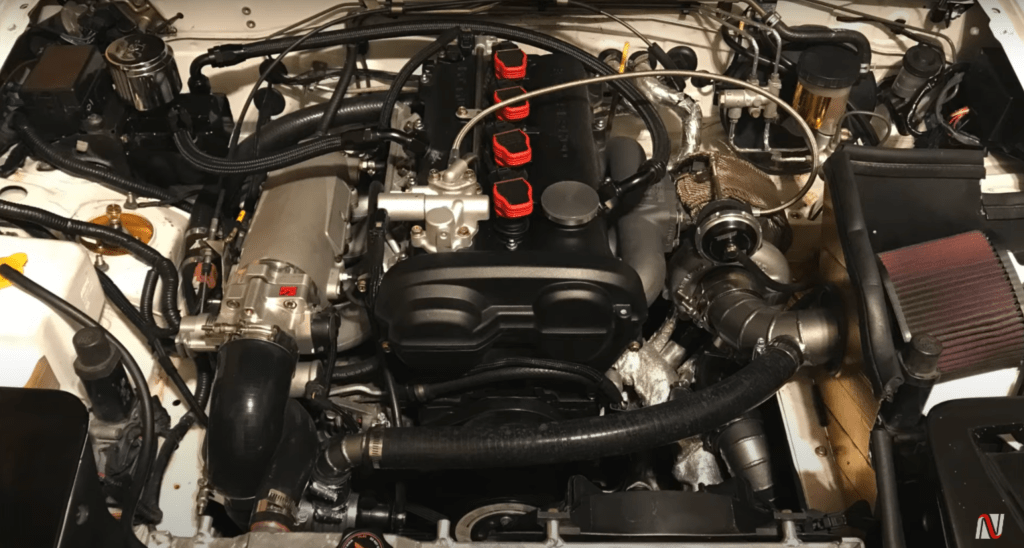
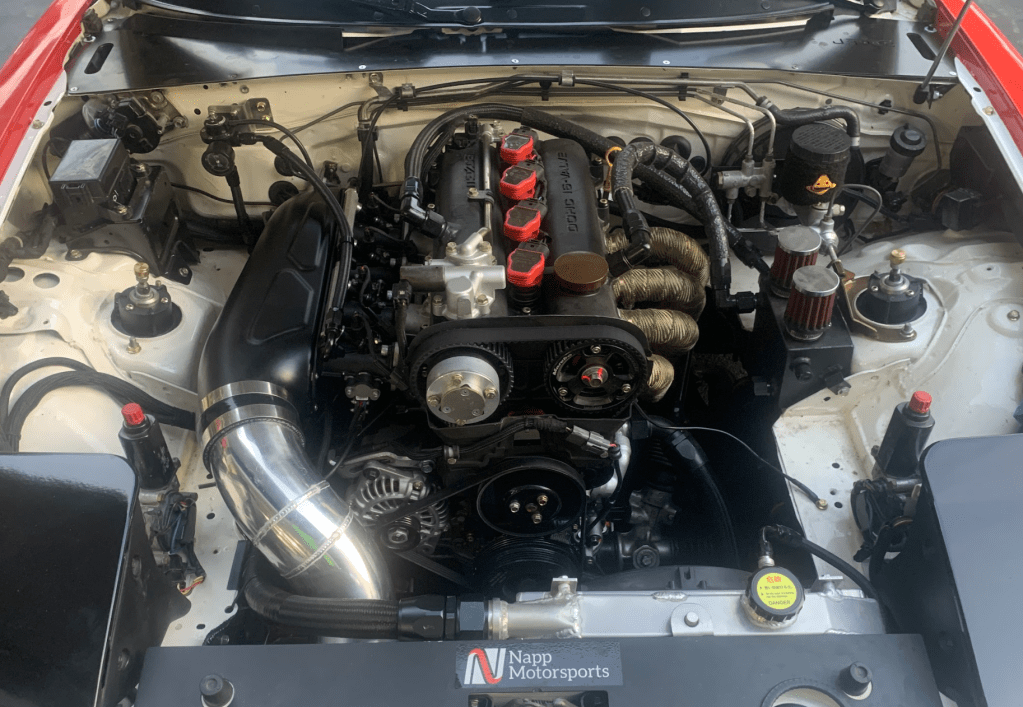
The first Readers’ Rides feature is Dylan Pudiak’s 1991 Miata. I’ve watched his car transform from average, to exceptional, back to average, and then to its current status as the northstar build for all normally aspirated BP engines. What began as an engine failure turned into a journey of epic proportions. It didn’t happen over night.

Dylan’s car build is documented in 24 episodes on the Napp Motorsports channel.

A Hero’s Journey

If you don’t know what the Hero’s Journey is, it’s a template for storytelling where a person goes on an adventure, is victorious, and comes home transformed, with knowledge to bestow upon others. Think of stories like Star Wars or The Hobbit. Dylan’s journey follows this template closely, so I thought I’d tell his story like this:

A hero ventures forth from the world of common day into a region of supernatural wonder: fabulous forces are there encountered and a decisive victory is won: the hero comes back from this mysterious adventure with the power to bestow boons on his fellow man.

The Call to Adventure

Our story begins with a Call to Adventure. For Dylan and many other driving enthusiasts, that call was autocross. But on his way home from dodging cones, our hero encountered Supernatural aid in the form of bad luck. Or as many early Miata owners know it, SNC Life.

The World is Yours! Right up until you shear the crank bolt.

When the Miata was released in 1989, the engine had a short-nosed crank (SNC) that could eventually wobble or shear the crank keyway. Half way through 1991, Mazda released long-nose crank engines to fix this problem. Fortunately for us, Dylan had the earlier 1991 Miata, and while driving home from his call to adventure, the crank bolt ejected itself.

The common solution to this problem is to find a later 1.6 engine with a long-nose crank and replace the whole mill. But that would be the end of the story, and a pretty boring one at that. Instead, Dylan recognized that the Threshold Guardians to a faster autocross time were the lack of power from just 1597cc and an open diff with a fragile ring gear. Luckily, these things can be easily remedied with parts from later 1.8 Miatas.

The threshold: from known to unknown

A significant part of the Hero’s Journey is the journey into the unknown, and for Dylan, this begins with swapping in a 1.8 (BP05, 1994-1997). Most people would have chosen a later model VVT engine, but a standard 1.8 was the easy button, because he could keep the 1.6 AFM and ECU, and do an exhintake cam swap as well.

The exhintake cam swap is where you take an exhaust cam, grind off one end, install it on the intake side, and re-time it. The exhaust cam doesn’t have any more lift than the intake cam, but it has more duration. When properly tuned, this can add up to 8 hp, which puts the engine close to what a VVT makes.

For simplicity, Dylan kept the ECU from the 1.6, as well as the air-fuel meter (AFM). The AFM is a flapper type valve that doesn’t flow enough for anything more than a stock motor. People with modified 1.6s often use a RX7 AFM, which instantly gives more power on the top end.

1.8 engine… but what’s that thing in the corner?

I don’t believe I’ve seen anyone swap in a 1.8 engine and keep the 16 AFM; most people splice the wiring to run a 1.8 ECU and much less restrictive MAF sensor, or better yet, go to a standalone ECU. The path less chosen probably cost Dylan a few ponies, and with this combination the car put out 102 hp and 100 ft-lbs on a Land and Sea dyno. These dynos read lower than Dynojets and after correcting by 112%, that’s something like 114 hp at the wheels. This is respectable, but if he’d done all of that with a Megasquirt, he’d be looking at something in the mid 120s.

Dylan lapping his 1.6/1.8 mutt at Toronto Motorsports Park

To put the power to the ground more evenly, Dylan had to address the other Threshold Guardian, the open diff and 6″ ring gear that can break on stock power. He found a 7″ ring gear and Torsen LSD locally from Stefan Napp, which brings us to the other important character in this story.

Han Solo, Gandalf, and Goldilocks

In Dylan’s Hero’s Journey, Stefan Napp plays several important roles, and is simultaneously Helper and Mentor. He’s like Gandalf, Obi-Wan Kenobi, Samwise Gamgee and Han Solo all wrapped into one. Later, he’s also Darth Vader and a drug-pedaling pimp, but that’s getting ahead of the story.

With Stefan’s guidance, Dylan swapped his 1.6/1.8 mongrel, to a junkyard VVT, and then threw the Napp-recipe at it:

  • VVT sourced from a junkyard
  • Head work, ported and shaved 0.040″
  • Custom bumper routed intake, Skunk2 intake manifold
  • Raceland header, custom 2.5” exhaust
  • Megasquirt 3
  • 150 whp, 127 ft/lbs on 93 octane, as measured on a Land and Sea dyno

All of those modifications resulted in 150 whp on Rick Gifford’s “heartbreaker” Land and Sea dyno. On a Dynojet, that’s probably in the neighborhood of 165 whp. It’s worth pausing a moment to mention Rick, because he’s a Gandalf-level engine tuner with a dyno at his house. He serves as another Mentor character in pretty much all the Dylan and Stefan stories. (Rick also tuned by 1.6 Miata).

So let’s call it around 165 (Dynojet) horsepowers at the wheels. Sounds perfect doesn’t it?

The Napp recipe for Goldilocks.

In fact it was perfect. I drove Dylan’s car at Pineview Run, and it was the Goldilocks of Miata motors: not too much power, not too little, just right. The power felt ideal for the chassis, retaining all of the characteristics of a momentum car, yet providing instant tractable power, and enough oomph to occasionally surprise.

I still don’t know that there’s a more satisfying combination of engine and chassis, it was magical. Stefan’s K24 Miata was there the same day, and I honesty liked Dylan’s more. That’s really saying something.

On a personal note, driving Dylan’s car at Pineview was also the moment I realized I was a complete dumbass. At the time I was being an iconoclast by trying to tune a 1.6 engine, and I thought cams and bolt ons could help my B6-ZE run with BPs. Three corners into driving Dylan’s car I understood exactly what a huge mistake I’d made.

From Goldilocks to Jenna Jameson

Speed is a drug. Napp is a dealer. Dylan saw the huge gains Stefan made, and was naturally tempted to take a bigger hit. Too much is never enough.

So the next stage in Dylan’s journey was to take Goldilocks and hook her on smack, then turn her out onto the street as a common hooker. OK, maybe that’s a little harsh, it’s just a turbo we’re talking about; but it sucks and blows just the same.

Modifications at this stage included the following:

  • Garret gt2560r turbo
  • Flyin miata exhaust manifold
  • Ported turbo exhaust housing
  • Flyin miata oil cooler
  • ATI Fluid damper
  • R8 Ignition Coil Kit
  • 252 whp, 221ft/lbs @14psi (same dyno)

I don’t pay too much attention to turbo Miatas, but it seems like ones putting out mid 200s at the wheels are a dime a fucking dozen. After all the work they’d done to get Goldilocks to dance like a ballerina on swan lake, it seems terribly underwhelming to wind up with a common skank twirling on a brass pole.

Hot. Also a lot of heat.

I didn’t get a chance to drive Dylans turbo at Pineview, but it wouldn’t surprise me if it was slower on that track. But I did get to drive Dylan’s car on the street on the way back from Watkins Glen, and I will say the acceleration was exhilarating. So fucking what.

Part 1 of a 10-part build mistake series.

Transformation and atonement

The next stage in the Hero’s Journey is the revelation that brings our protagonist out of the abyss, transforms him, and sets him on the path to atonement.

What set that off was typical turbo problems: heat. With rose-tinted beer goggles, Dylan looked back on the simplicity, reliability, and ease of driving that Goldilocks NA. And thus the revelation to go back to normally aspirated power. And then go completely overboard, boring the engine to the maximum displacement. And then add cams, shim-under bucket lifters, and ITBs. It has, well, everything:

  • 85.5mm Supertech pistons 11:1 (2L displacement)
  • Manley H Beam rods with ARP main and rod bolts
  • ACL Race main and rod bearings
  • Boundary oil pump
  • +1mm intake and exhaust valves
  • Supertech dual valve springs with titanium retainers
  • Tomei 252 10.8mm Intake Cam, Tomei 256 10.0mm Exhaust Cam
  • Shim under bucket lifters
  • Maruha adjustable exhaust cam gear
  • 0.040” head shave, 0.030” cometic head gasket, final compression 12.25:1
  • Full head porting
  • 3.6kg flywheel
  • Fluidamper 
  • Jenvey ITB’s and SPS plenum
  • Custom halfrad setup
  • Break-in tune without plenum: 184 whp @ 7400 rpm, 132 ft/lbs @ 6300 rpm
  • Estimated 200 whp @ 8000 rpm on E85
Glory.

The end result still needs final tuning, but it’s likely 200 whp on a Land and Sea (heartbreaker) dyno, and well over 200 on a Dynojet. This is about as far as you can go with a Mazda BP engine, and I want to personally thank Dylan and Stefan for reaching the limit.

Suspension, wheels, brakes

You don’t do all of that work and roll around on OE anything. Dylan did it right yet again:

  • Ohlins road and track coilovers, corner balanced
  • Custom extended top hats
  • Racing Beat front and rear swaybars
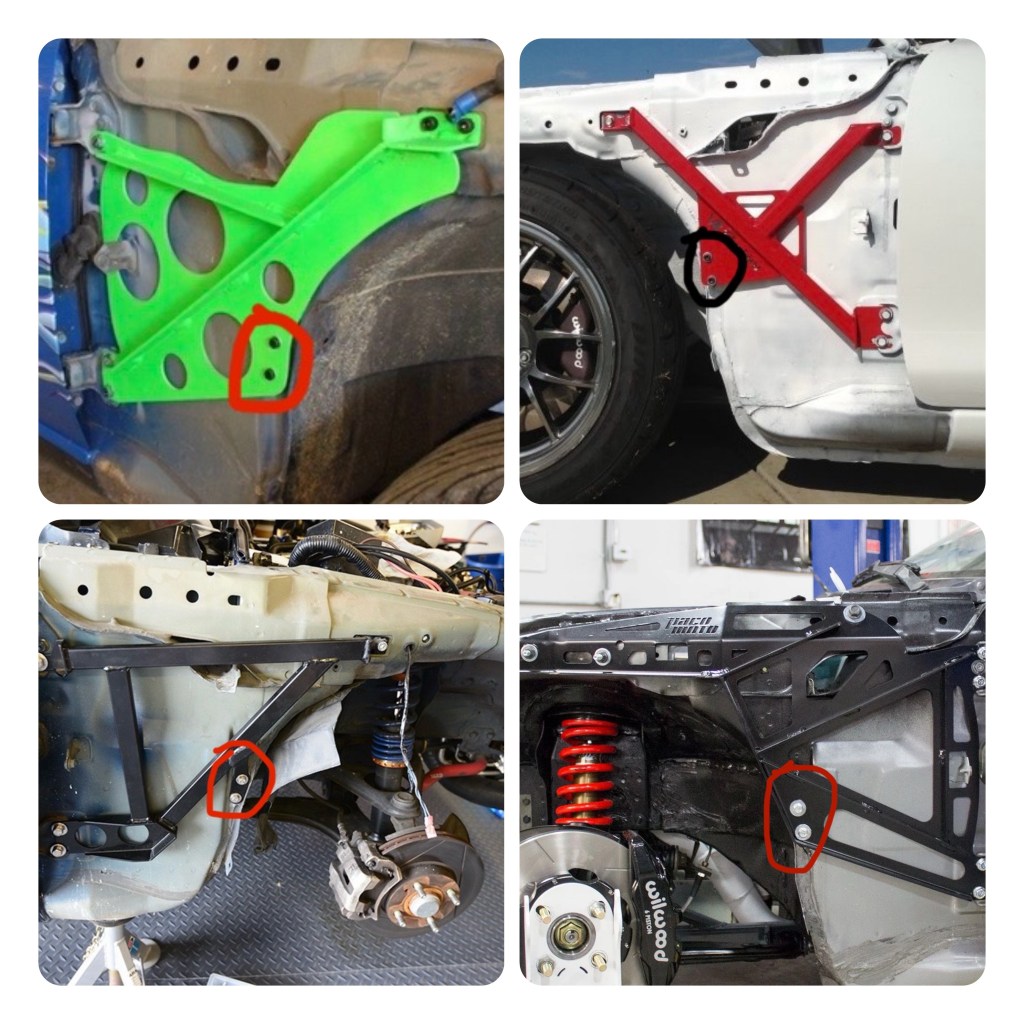
  • Paco strong arm fender braces
  • 4.1 Torsen diff
  • V8 roadster hubs
  • Full polybushing kit
  • Frame rails
  • 1.8 brakes
  • Hawk HP+ panda
  • 15×9 Konig Countergrams
  • RS4s 225/45
Chasing the dragon.

Aero

I’m an aero guy, so let’s take a look at how the air moves over and around the car. Starting at the front, Dylan has a SPS air dam, AG Limited front lip and custom undertray. The top is a standard Miata hardtop, but has a spoiler extension on the roofline. For rear aero, Dylan has two trunks, one with an Ikon Style duckbill spoiler, and another with a APR GTC200 wing.

’90s perfection

Judged against modern aero like a 9 Lives Racing medium aero kit, Dylan’s aero isn’t quite up to snuff, and probably has a little more drag and little less downforce. But I honestly wouldn’t change a thing! This is 1990s perfection. Visually, this is the pinnacle of Radwood-era aero, and “fixing” this would be as sacrilegious as fixing Jennifer Connelly’s overbite. For a dual duty car that sees more street than track, changing the aero would be pointless.

You’d grin like that, too.

It’s amazing to look back at this Hero’s Journey and appreciate the Gift of the Goddess. Thank you Dylan Pudiak and thank you Stefan Napp, for showing us the way.

A Five Year Journey; Changes Afoot

I started this website five years ago, with the aim of expanding my personal knowledge of motorsports aerodynamics, and conveying that to others in a non-technical way. At the time I was mostly concerned with filling gaps in the Miata knowledge base and making vanity posts about endurance racing, but the site has grown to be more about aerodynamics and DIY projects in general.

If you have been following my blog for more than a minute, you figured out that I’m not a professional aerodynamicist. I regularly drop Fuck bombs, I threaten my readers with dick punches, and I neither work for, nor show allegiance to, any manufacturer.

I write for the joy of it, and to blow off steam from my day job, which is also technical writing, but boring stuff I leave at work. Aerodynamics is a passion project, a side gig, and like a lot of modern media, created by an enthusiastic amateur, rather than a professional.

I feel like my role in this industry is the narrow middle-ground between math-heavy SAE papers and bromance novels. I try to mix data with humor, and be entertaining. I’m sure that this comes at the expense of being truly accurate. I also don’t have the education or patience to achieve that level of excellence.

As such, I don’t pretend to know all the answers. Honestly, sometimes I don’t even know the fundamentals! So I offer ideas and conjecture when I’m uncertain. I absolutely make mistakes, and when people comment on them, I do my best to correct them.

In a game where most players keep their cards close to their chest, I’m playing with an open hand. By openly documenting my ideas and DIY projects, I share my successes and failures so others can learn from that. By openly providing data, I give other people the means to unfuck whatever errors I make. This is all about expanding knowledge, and five years on, this is still true.

In the end, we live in a world full of too many thinkers, talkers, and shit talkers. The world doesn’t have enough doers. And because of that, I’m going to keep experimenting with, and writing about, aerodynamics. As a result, I’ll continue to move quickly and fail often, so if you find errors, I beseech you to make comments so that I can correct them. Sniping from a distance is cowardly and helps nobody.

Of the future mistakes I’ll be making, I’m really excited about my Rosetta Stone Project. The concept is a single source that translates between three ways of testing that often give different results: CFD, wind tunnel, and track testing. For the “stone” I’ll be using the the ubiquitous Miata (with 9 Lives medium aero kit). By getting data from all three areas and comparing them on the same “stone,” I hope to refine the existing CFD model, as well as fill gaps in wind tunnel data (errors from the boundary layer and wheels that don’t spin). In turn, the track testing data from steady state and coast down testing should help refine the drag and downforce numbers. This is a big project, maybe not entirely achievable, but I dream big.

And of course there’s all the mistakes, financial and otherwise, that I’ll make swapping a motorcycle engine into my 94 Miata race car. Expect quite a few articles on Falconet, and a lot of tears as I cut new teeth. But if it works out like I imagine, it’s going to raise some eyebrows, set a new benchmark for DIY aero, and smash a few lap records.

Both cars will be tested in the A2 wind tunnel, and both AJ Hartman and Johnny Cichowski will accompany me. I won’t shill for a manufacturer, my role is more of a canary in the coal mine, so I tend to ruffle feathers. It will be interesting to see how we fly together. (That’s definitely enough bird analogies already, but maybe I’ll get someone to take video and see who is the first one to take a peck at the other.)

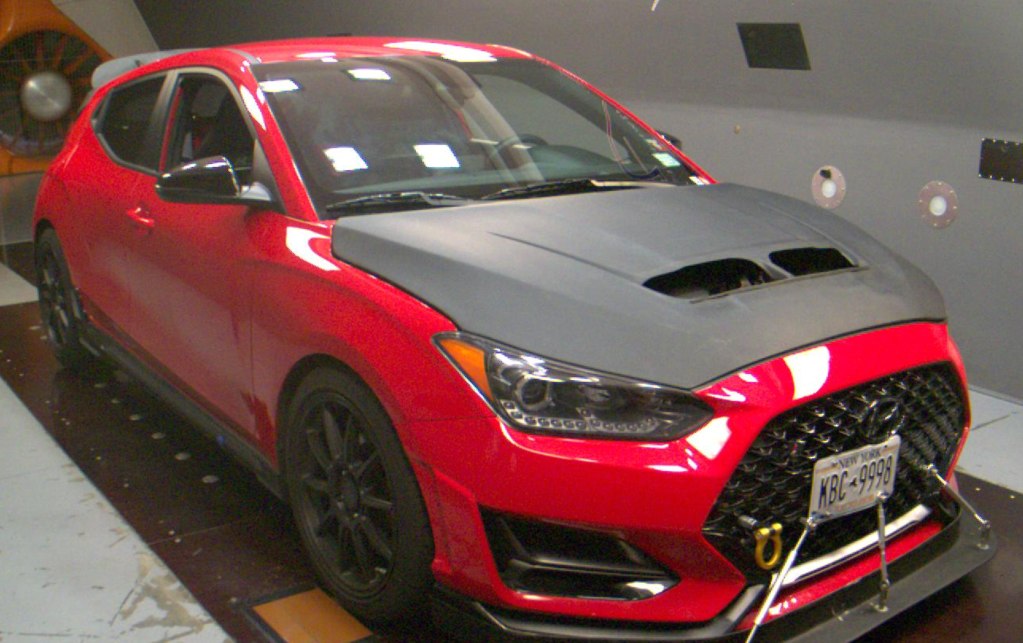
My Veloster N may or may not make another trip to the wind tunnel. While I have some aero parts still to refine, there’s just no market for a car with such low production numbers. But I will be offering canards for sale after I modify the design some more. I also want to make a wicker/kicker that turns the OEM wing into something more performant. Or make an active aero spoiler. These are Veloster N specific parts for the few; I don’t see myself making generic parts or wading into the aftermarket pool anytime soon.

As I reflect on this last 5 years, I’ve been largely a one-man band, the only elf in the shop, a lone wolf, etc. As much as my intentions are to benefit the entire community, I’ve done fuck-all to engage with any of you. As I kick off this next chapter, I’m going to start a new series of articles starring YOU! I want to hear what my readers are working on, and how your passion for aerodynamics has literally shaped your car. This has me more excited than either of the projects above, and so thank you ahead of time for anyone who will participate. See this page to submit your information. And if you have an idea for a guest post on any subject, contact me and let’s publish that shiz.

And with all that said about the past and future of this site, let’s keep playing this game of DIY aerodynamics. With our cards played openly on the table, and with data, of course.

Thinking in Aerodynamic Coefficients

Professional aerodynamicists mostly work in terms of coefficients. When they converse with each other, they talk in terms of points, decimals, and percentages. When I started writing about aerodynamics five years ago, I also worked solely in terms of coefficients. Not because I’m qualified to do so, but because I’m a cheap bastard who uses a free tool for racing simulations.

The only way I know to quantify lap time differences in aero setups is to use OptimumLap, and it requires coefficients for inputs. Thus, when I published the results of my aero testing at Watkins Glen in 2019, it was all numbers that were perhaps difficult for the average person to understand. I probably lost readers who don’t think in those terms.

These days I try to report things in pounds of downforce. I usually cite this at 100 mph because I like round numbers, and also because the A2 wind tunnel spreadsheet defaults to 100 mph. I’m still more comfortable talking about downforce in terms of (negative) coefficient of lift, but for the bulk of my audience who measures things in bananas and bald eagles, pounds of downforce is good.

But I also want to convert some of you to using coefficients, and also to using OptimumLap. So this blog post is my take on thinking in coefficients. (I’ll do a how to guide for OptimumLap in the future.)

Coefficient of drag

First let’s talk about the coefficient of drag (cD). Manufactures regularly publish drag numbers and I would guess that most car enthusiasts know that .20s is amazing (EVs), .30s is good (most cars), .40s is OK (SUVs), and .50s is terrible (trucks).

What people may not know is that manufacturer-supplied drag coefficients aren’t super accurate, because they cheat. They may adjust ride height and other things to achieve the best drag coefficient, so don’t take those numbers as gospel. Independent wind tunnel tests are perhaps better, but also not 100% accurate unless it has a rolling floor. Anyway, you can look up the drag coefficients of most cars (Ecomoder has a good list), and so I won’t spend a lot of time on that.

One thing I do want to mention is that you rarely see drag coefficients for cars with open windows. That’s how we track and race our cars in the USA, and it affects cars greatly. Every car is going to behave differently with open windows, so you’ll need to add somewhere between .03-.05 to your cD.

In my Veloster N, opening the front windows increased drag by 15%, and reduced rear downforce by 7%. The faster you go, the more aero balance shifts forward. This makes the car more prone to oversteer at high speed. In short, opening the windows is doubly bad for performance, so keep that in mind, as well as the drag penalty.

In the following table, the cars are all assumed to have closed windows except for the track car, which is a very rough estimate for a car with open windows and some aero bits added. I’ve listed pounds of drag and horsepower consumed by drag, just to give some hard numbers at 62 mph (100 kph). This is a rather low speed, but it comes up again when I examine coefficient of lift.

TypecDLbs @ 62 mphHP @ 62 mph
EV0.25110.728.55
Commuter0.33127.111.29
SUV0.40141.4313.68
Track car0.50161.917.1
Truck0.60182.3620.52

Coefficient of lift

While most people can wrap their heads around coefficient of drag (cD), they may have never seen values for coefficient of lift (cL). And that’s understandable, because manufactures seldom mention it. But they should! For going around a race track, cL is way, way more important than cD.

That’s because cars lift at speed, and most of that lift is over the rear. As the car goes faster and faster, it loses grip. If you want to go faster around a track, you need to reduce lift, or add downforce, which is essentially the same thing.

Note that OptimumLap inverts the coefficient of lift. So if your car makes downforce, use a positive value; if it makes lift, use a negative value.

So how much lift do most cars have? In the following sections I’ve divided cars into various groups based on their cL. These are general guidelines, to give you an understanding of how much lift or downforce typical cars have.

Low-drag cars (cL .20 )

A car that is streamlined for low drag usually has a lot of lift. The reason for that is the roofline is gradually curved and longer than the bottom of the car, so this creates low pressure above the car, creating lift. As such, most EVs have a lot of lift, but so do some sports cars that lack rear spoilers or wings.

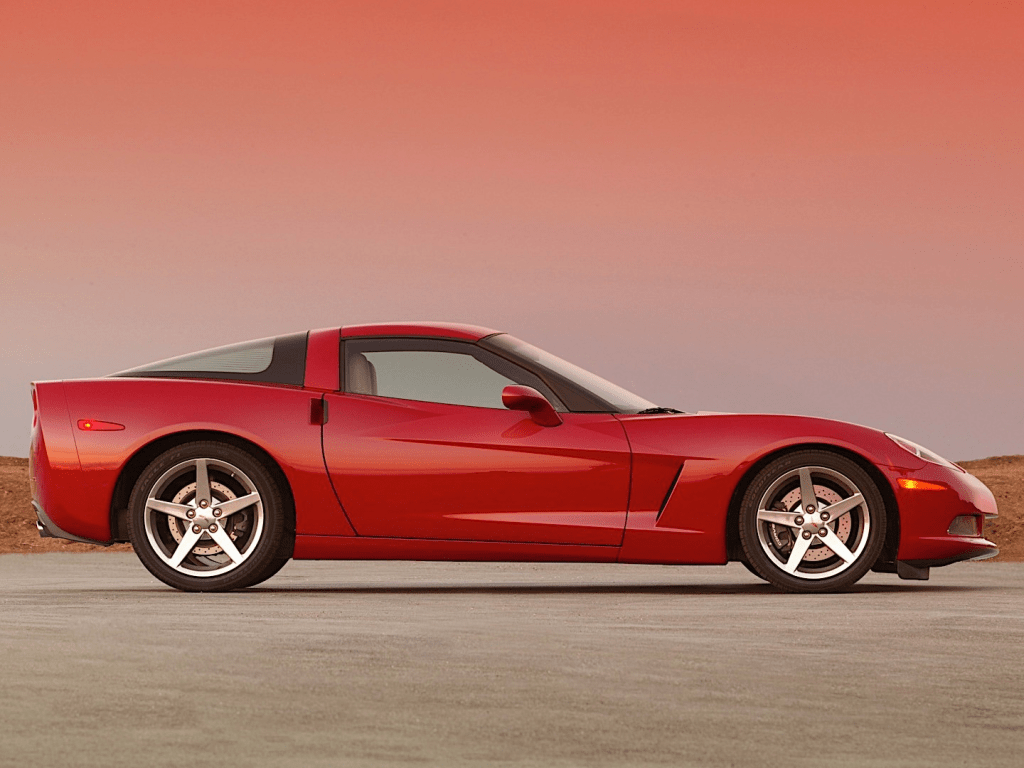
The C6 Corvette below, with a cL of .21, has significantly more lift than most cars.

Corvette C6: cD .29, cL .21, L/D .72

Typical street cars (cL .15)

Most passenger cars have a cL of around .10 to .20, with the average somewhere around .15. I think I’ve written elsewhere on this site that the average was around .3, but now that I have more data, I see it’s about half that value.

The best sports sedans (BMW M3, Mercedes AMG models) are in the single digits, and some even get close to zero lift, but not quite.

E92 M3: cD .33, cL .08, L/D .24

Ideal balance (cL 0.0)

A car with a cL of zero over both axles is ideal; the handling doesn’t change at any speed. To do get that balance often requires a big spoiler or wing, to cancel out the lift, which is mostly in the rear. You won’t see those accoutrements on family sedans, and so this category (with a few exceptions) is for true sports cars.

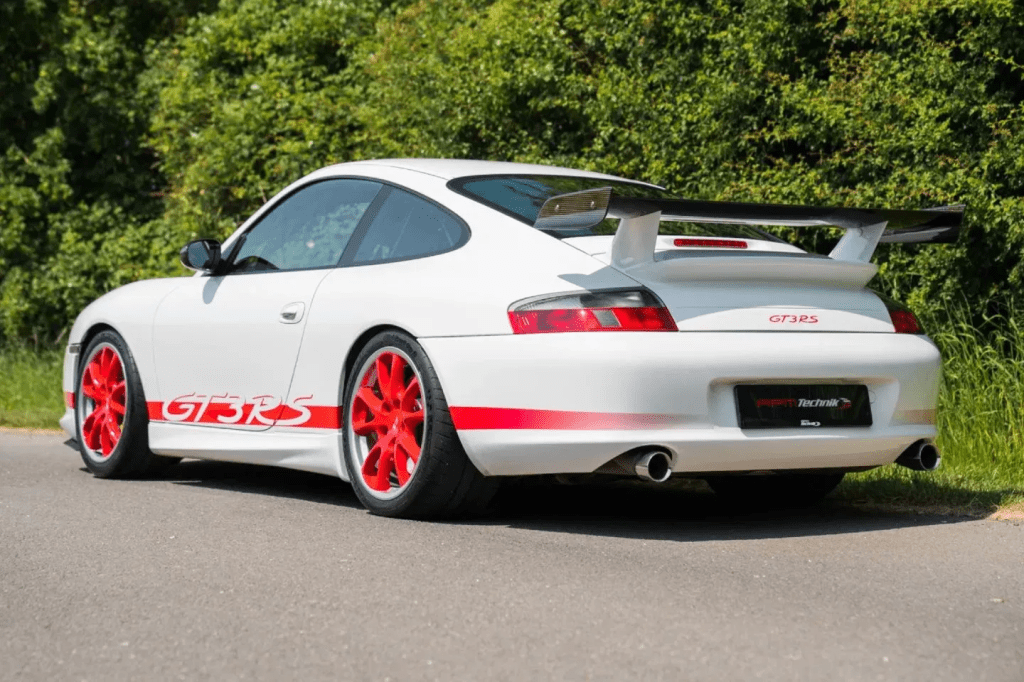
996 GT3 RS: cD .30, cL. -.02, L/D -.07

Cars that have around zero lift include the Audi R8, Koenigsegg CCR, Nissan GTR, and Pagani Zonda F, as well as most Ferraris and Porsches. You don’t really see many sedans that achieve zero lift, but oddly I know of two hatchbacks that do, the Ford Focus RS and Hyundai Veloster N.

Focus RS: cD .36, cL -.01, L/D -.03

Supercars (cL to -0.3)

There aren’t many production cars that have a cL in the negatives, and the ones that do are supercars. Dodge Viper SRT 10, Ford GT, Honda NSX-R, Mercedes MacLaren SLR, and Porsche 997 GT3, to name a few, and also most cars from Lotus.

Lotus Exige S1: cD .43, cL -.24, L/D -.56

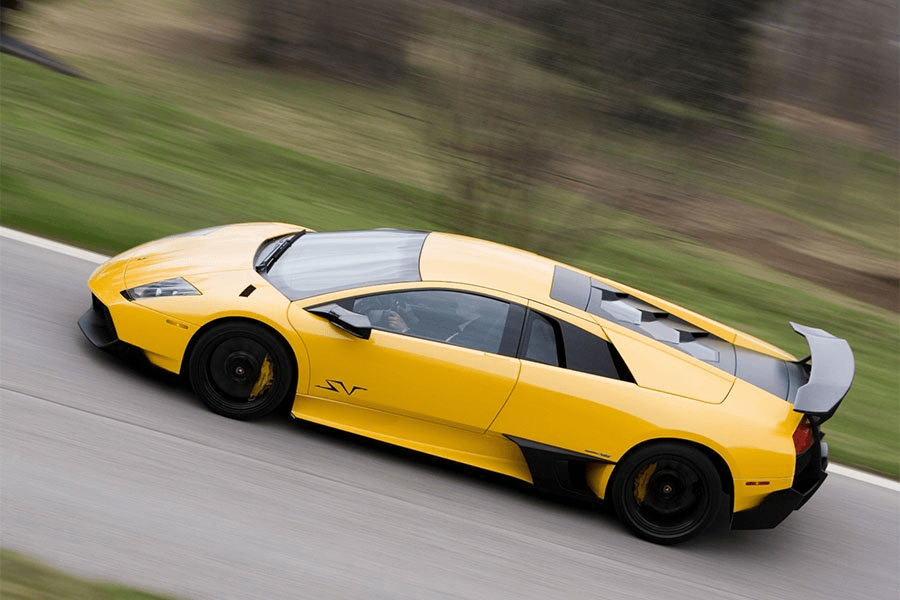
The production car with the most downforce (that I have data on) is the Lamborghini Murcielago L670-4 SV.

Murcielago L670-4 SV: cd .38, cL -.29, L/D -.76

Production cars end at around cL -.3, but this is where proper race cars begin. I don’t have numbers for the latest hypercars, like the Aston Martin Valkyrie, but that surely produces race car downforce.

DIY track cars, race cars with spoilers (cL -0.5)

Many DIY track cars with splitters and wings have a cL approaching -0.5. They should be better than that, but are limited by the average builder’s understanding of aerodynamics and average level of execution. Professional race cars with airdams and spoilers also come in around this number.

For example, NASCAR stock cars circa 2002 had a cL of -.46. These cars make look crude, but are highly developed aerodynamic missiles. This is about as good as you can do with an airdam and spoiler.

NASCAR: cD .39, cL -.46, L/D-1.1

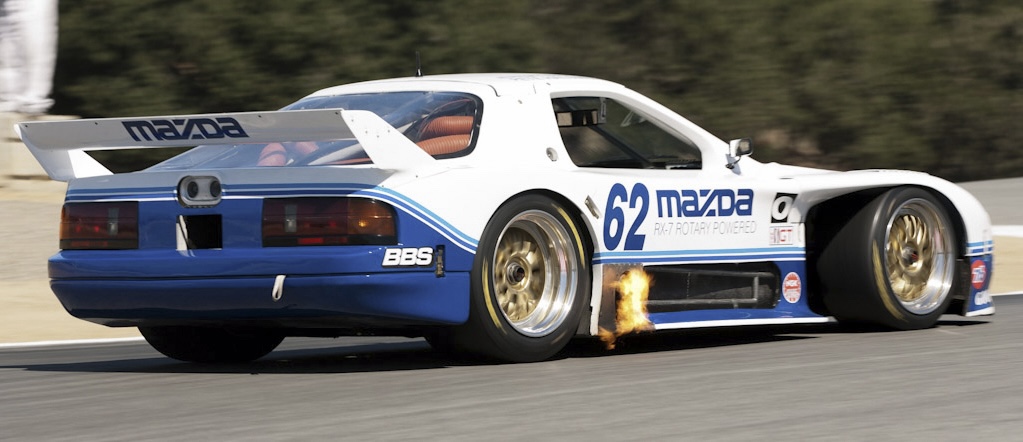
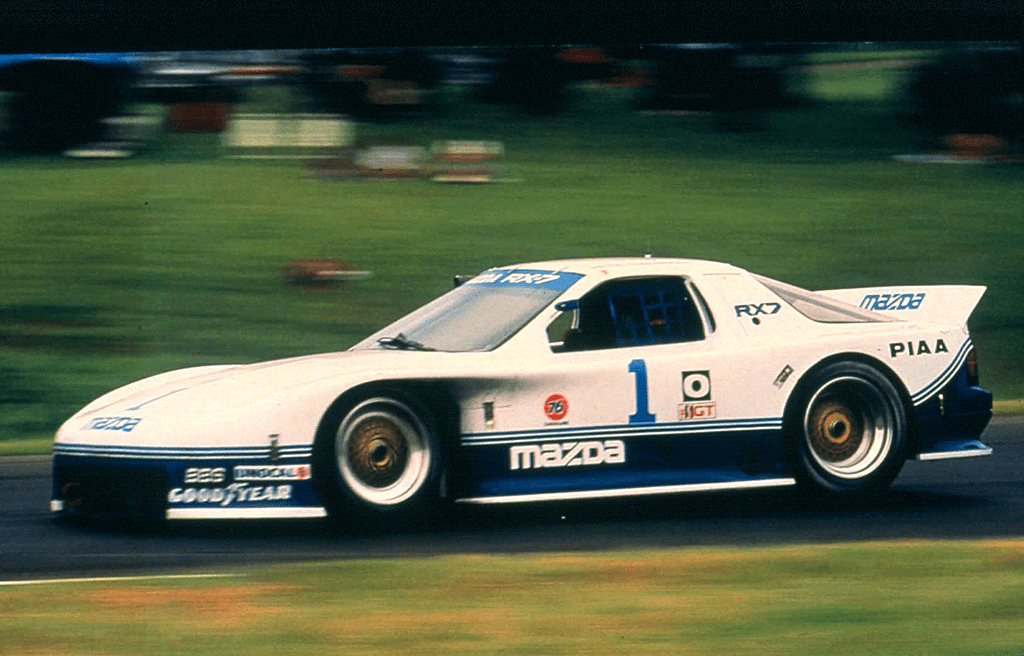
Another race car with a spoiler was the 1990 RX-7 GTO, which had a cL of -.44. The Mazda looks really slippery, but it doesn’t achieve the same level of aero as a stock car. The interesting thing about the RX-7 was they ran it with both a wing and a spoiler.

RX-7 GTO: cD .51, cL -.44, L/D -0.86-

My Hyundai Veloster N with the a flat splitter (3″ lip, 4.5″ height) and a big ducktail spoiler tested at a cL of -.43. I guess Hyundai got a few things right, because I was going for the crudest aero I could and somehow landed next to some pro race cars with spoilers.

Winged track cars (cL -.5 to -1.0)

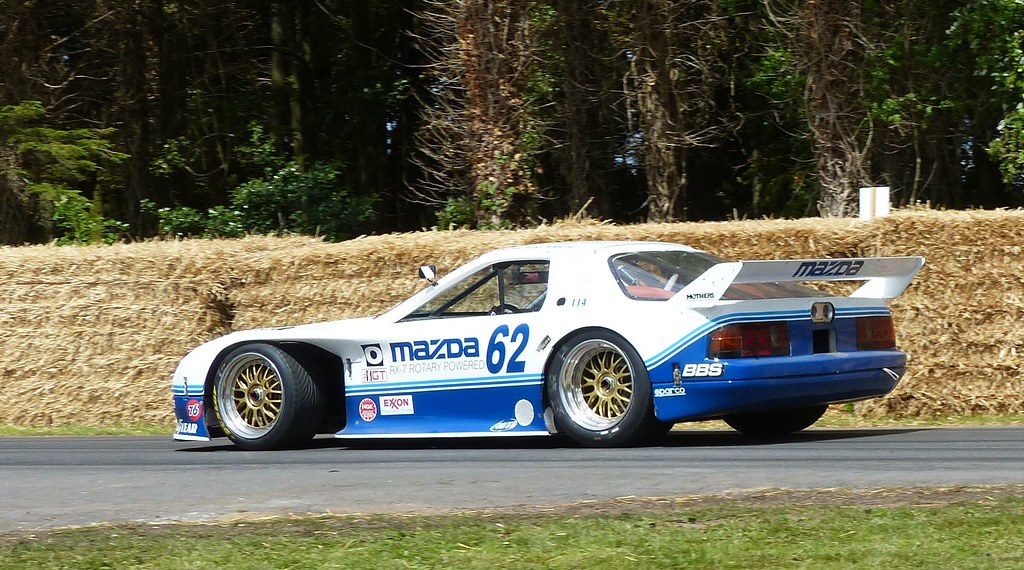
To get better than cL -0.5, you pretty much need a wing or underbody aero. Let’s start with the RX-7 with a spoiler and see what happens when they swapped to a wing. Drag decreased from cD .51 to .48, and lift went from cL -.44 to -.53. That’s a big difference in both directions, and resulted in a 128% increase in aerodynamic efficiency (more on that later). I don’t know if the rules limited wing height, but mounting the wing higher would probably increase downforce even more. In any case, the wing bumped the car above cL -0.5, which is where most race cars with wings reside.

RX-7 GTO: cD .48, cL .53, L/D -1.1

Another car with a similar cL was a GT2 car used in a scientific paper (pdf), which had a cL -0.5. Interestingly, the majority of downforce (85%) was from the rear wing, and it seems like they should have been able get more front downforce to balance that out. But GT2 is a highly regulated class, and so maybe there’s nothing they can do within those rules.

Most Miatas with an airdam, splitter, and wing will also be in this range. The 9 Lives Racing medium downforce kit typifies this build. I don’t trust CFD until it’s been validated in a wind tunnel, but these do seem like reasonable numbers.

From CFD: cD .64, cL -.77, L/D -1.2

My Hyundai Veloster N outfitted with a DIY splitter, canards, and wing also made its way into this category, with a wind-tunnel tested cL of -.68. The wing was rather short at 135cm (53″), and I didn’t optimize the angle or height (I was testing many other things). I also had the splitter at 4.5″ ground clearance, which was too high. But even if I had a chance to lower the splitter and optimize the wing, I’m not sure the car would break the cL -1.0 barrier. That’s serious race car territory.

Serious race cars (cL -1.0 to -2.0)

The average car enthusiast building a track car is going to have a difficult time getting below cL -1.0. To get into this category requires careful attention to details that the average DIY builder doesn’t know or care about.

Still, it can be done, and my fastback Miata with various tricks managed cL -1.2 as tested at Watkins Glen.

Occam’s Racer V1: cD .41, cL -1.2, L/D -2.97

Prototypes (cL -2.0 and less)

Any car that achieves a cL of less than -2.0 is likely a pro-level race car or a time attack build. It’s just very difficult to achieve this level of downforce. Katz cites a generic prototype racer at cL -3.0. The Audi R8 Lemans racer was around cL -2.6. At the top of my list is a Mazda RX-792P that was reported to be around cL -3.8.

Mazda RX-729P: cD .70, cL -3.80, L/D -5.43

Time attack cars don’t race wheel-to-wheel, and so their aerodynamic parts can be wider than the car. I’m quite sure these cars are well under cL -2.0.

Tadeu’s Miata should be in this category.

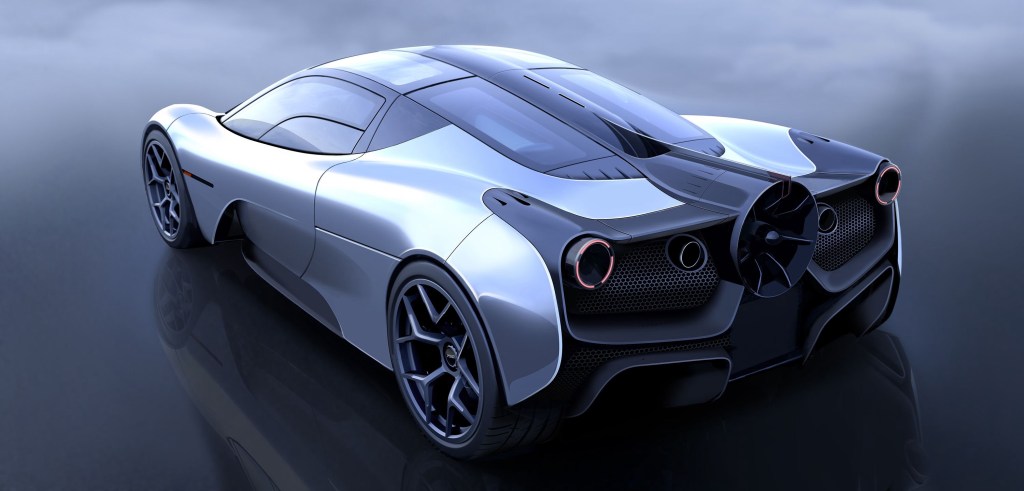
It’s also possible to achieve a cL of under -2 by sucking the car to the ground with a huge fan. The Gordon Murray T.50 does just that, and has a cL in the -2.2 range.

T.50 fan car.

The following table is based on a car with 2 meters of frontal area (21.53 square feet) and different cL values representing various cars. I chose a speed of 62 mph (100 kph) as OptimumLaps lists this in its vehicle report. It’s also a sensible cornering speed, and about where aero feels like it’s working. (Aero is always working, but this is around the speed where people feel it working.) The downforce value in the table is the cL inverted, which is how you’d put them into OptimumLap.

TypeDownforceLbs @ 62 mph
Sedan-0.15-31
Sports00
Hypercar0.2551
NASCAR0.4592
Track0.8164
Race1.3266
Time attack2.2450
Prototype3614
Different types of cars and pounds of downforce at 62 mph.

Lift/Drag ratio

I started by discussing drag and then moved onto lift, so now let’s divide lift by drag to get the L/D ratio. The L/D ratio tells you how effective the car is at making downforce, and it’s often referred to as aerodynamic efficiency.

If this is a positive value, then the car makes lift, and the bigger the number, the worse it is. Most street cars and Spec race cars (Spec Miata, SE46, 944 Spec, etc) have a positive L/D ratio. Any car with a negative L/D ratio makes downforce, and the mo negative, the mo better.

In the following sections, I sort cars into rough categories that represent different L/D ratios. I’ll ignore anything that doesn’t make downforce. Fuck those cars.

DIY track cars (-1:1)

Cars with a L/D ratio of negative one to one make as much drag as they do downforce. Most track cars with DIY splitters and wings are somewhere in this range with a cD 0.5 and a cL -0.5. Add canards and it might be cD 0.6 and cL -0.6. Add a dual element wing and it might be cD 0.7 and cL -0.7. You see where I’m going with this, as long as the drag and downforce values are about the same, the car is in this category of mediocre aero efficiency.

My Hyundai Veloster N with a ducktail spoiler, better splitter, and some aero tricks thrown at it was about -1:1.

Veloster, splitter, spoiler, etc: cD .64, cL -.67, L/D -1.05

Race and TT aero (-2:1)

Any car that achieves a L/D ratio of -2:1 or better I’m going to put into the very generalized category of race aero. It’s difficult for a typical home builder to achieve this for a number of reasons. One of which is that in the USA we have to run with the windows down, and this adds drag and reduces rear downforce, making it even harder to achieve aero efficiency. But it can be done if you know what you’re doing, especially if you consult a professional or talk to Kyle Forster.

I don’t have a lot of data on time attack cars, but because they are usually unbound by engine restrictions, they make enormous amounts of power. As such, they can get away with adding downforce and mostly ignoring drag. I would imagine a lot of time attack cars are in this 2:1 category as well.

V8 Miatas don’t need to pay as much attention to drag.

Professional aero (-3:1)

To get a L/D ratio of -3:1 you need to obsess about drag, and choose aero components that return a high L/D ratio. No, I’m not talking about choosing a wing for its efficiency, please stop with that nonsense. I’m talking about choosing components that give the entire vehicle the best aerodynamic efficiency (often this is running wing angle that’s close to stalling).

I don’t think you can get to this level without a lot of research and testing, and by that I mean a combination of CFD, wind tunnel, and track testing. I’m sure there will be a lot of time spent managing and manipulating vortices.

This is the level I’m trying to reach with my race car. I’m purposely not putting an image of a car here, because I’m reserving that for Falconet, after I come back from the wind tunnel and figure out how to squeak over the line with a L/D of -3:1

Prototype aero (-4:1)

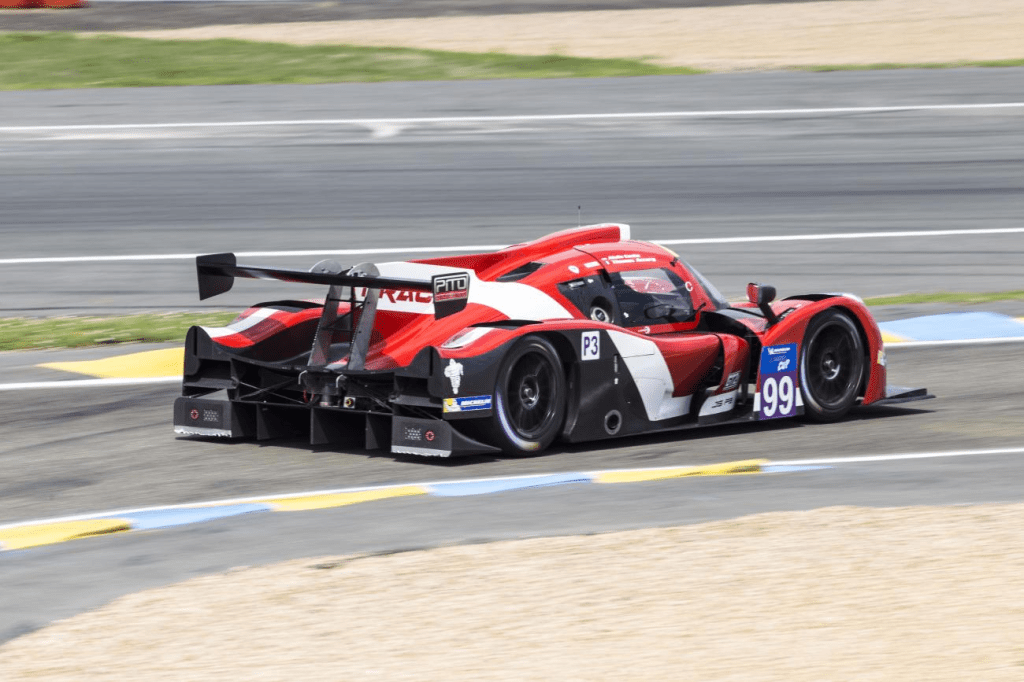
It’s difficult to achieve this level of aero efficiency, but it can be done, or even exceeded. In fact, Le Mans prototype cars are limited to L/D of 4.0, so you know that it’s possible to do better than that. But you or me? Nah.

Le Mans prototype. Forget about it.

From Corvette C5 Wind Tunnel Test to GLTC Win

Luke McGrew qualified on pole for the first Grid Life Touring Cup (GLTC) race at COTA this year, and then proceeded to win all the races. This isn’t super surprising, because he’s always a front runner. But Grid Life nerfed the flat-tuned cars even more this year. So how the fuck is Luke doing it in a C5 Corvette?

For starters, he’s a hell of a driver. He’s also really smart about the way he sets up his car. For example, he uses a small spoiler rather than a wing. But wait a goddamn minute, everyone knows wings work better than spoilers, right? Well, it depends on the car, and it depends on the rules.

GLTC is a pounds-per-horsepower series that allows some aero for free (small wings and spoilers, undertrays without splitters, hood and fender vents, etc), but penalizes or bans other aero parts. As such, a careful reading of the rules is important, and optimizing to those rules can confer a small advantage.

Luke knows what he’s doing, and part of that is doing the research. In that, he found an old wind tunnel test on a C5 Corvette. After reading that, he asked me to “check his math” so to speak, by running simulations in OptimumLap. After purchasing the wind tunnel report (to get the cL and cD data), I built several versions of his car, ran simulations, and verified his gut feelings were spot on.

No splitter and a spoiler instead of a wing.

There’s more backstory to this story, so let me elaborate.

The wind tunnel report

Back in 2002 a group of SCCA racers took a C5 Corvette to a wind tunnel and published a report on the results. It’s not a very long report, but the story is compelling, and the data speaks for itself. The report is available here for $37. I’m going to review some of what’s in that report, but without any specifics, because the author said not to reprint any of it without permission, and so I won’t.

The group did 26 runs in 10 hours, which is oddly the same number of runs I did at the A2 wind tunnel. They used a much larger wind tunnel at the Canadian National Research Center, in Ottawa, Canada, whuch measures 9 meters square by 24 meters long. This is quite a bit larger than A2 wind tunnel (which is 14 feet wide and 58 feet long), and so the Canadian results should be more accurate.

But how accurate is a wind tunnel compared to the real world? I don’t know. When I posted my wind tunnel data online, some internet pundit, without a shred of empathy or humility, puffed up said I made a major mistake in my report, because the wind tunnel optimizes to a constant Qrh, not V-100mph, so that my data was useless without the Qrh average for each run. I have no idea what that means, but I don’t see anything like a Qrh average column for this wind tunnel report either. And so I guess all this data from Canada is similarly worthless?

Well, I’m not a professional aerodynamicist, I’m a fuggin hack, but I’d have to think the differences from each test run are still important, even if the actual numbers aren’t 100% accurate. So let’s shove all the caveats and internet buffaloes aside and move ahead with what they tested, and the comparative data.

  • Drag – In the test they tried various things to reduce drag, from taping up the front grill to rounding the B pillar, to putting a hole in the license plate. Some things worked surprisingly well, some had no effect at all.
  • Rear wing vs spoilers – A couple different wings were tested, and since the baseline car used a spoiler, they included the data for that as well. But isolating the spoiler data is rather difficult.
  • Wings, end plates, and Gurney flaps – They tested three different end plates on the standard wing, and their results were somewhat similar to mine, which is that end plates are the least important part of the entire aero package.
  • Splitters – They tested a splitter with a flat undertray and one with diffusers. They call this a Laguna undertray for whatever reason, and I will say the design looks quite good.
  • Yaw – I didn’t test yaw, but they did, using both + and – 3 degrees for most of the runs, but they also tested higher yaw angles initially before settling on just 3 degrees for the rest of the tests.

  • Tire life – While tire life isn’t something you test in a wind tunnel, the report concludes with results from the race season, which showed tire life was considerably longer using downforce. This is something I wrote about before, that downforce increases tire life, and their experience was the same.

OptimumLap simulations

With all of this wind tunnel data in hand, I went into OptimumLap and built Luke’s exact car. I started with the basic specifications for a C5 Corvette, but used a 252 horsepower flat-tuned dyno chart instead. Detuning is what allows a Corvette to compete in GLTC, and a result of that is a very flat torque curve. This is recognized as an advantage, and flat-tuned engines are penalized for that. Cars are also penalized for aero.

To see which aero version was fastest, I created nine versions of his car, each with different aero parts. I used the coefficients of lift and drag from the report, and swapped out every version of splitter, wing, spoiler, etc. This may sound easy, but the the table that shows the coefficients has low resolution, which made isolating the individual aero components a little tricky. Anyway, I persevered and had my nine different cars, giving them different weights to match the rules.

Grid Life Touring Cup is a pounds per horsepower series, and penalizes cars for using aero, by making them heavier or less powerful. For example, if you use a spoiler or wing that’s larger than 250 square inches, there is a penalty depending on how large you go. Likewise, a splitter carries a penalty over an airdam, and there are penalties for various combinations of wings with splitters.

Because it’s easier to adjust a car’s weight than its engine tune, I simply changed the weight of each aero build to match the GLTC rules. Thus, the car would weigh between 3213 lbs (free aero) to 3371 lbs (splitter and big wing). Note that these weights may be off by a season, as GLTC again nerfed the flat tunes. And also, don’t take too much into the lap time itself, OptimumLap can’t really predict lap times without a lot of fudging, so this is just comparative data you’re seeing.

I then ran all nine cars around various the race tracks GLTC goes to, to see which would win. The winner wasn’t the same at every race track, but a few builds bubbled up to the top, and some sank to the bottom. The following image shows a speed trace and lap times of five of those builds at COTA. I’m not going to reveal which one was the fastest (that’s between me and Luke), but I will tell you which one was the slowest.

Speed trace of five C5 aero builds for GLTC.

See that black line that has the highest top speed? That’s the OEM aero version, essential a base trim model (BTM) off the showroom floor. It might have a 5-10 mph advantage on the back straight, but it posted a 154.44 lap time, which was the slowest at COTA, and also the slowest at every other track. In the end, cornering speed matters more than top speed.

To get back to what I was saying earlier, Luke uses a spoiler and not a wing. GLTC allows you to use a small wing (less than 250 square inches) for free, and so wouldn’t this be better? Not always, and it’s actually quite close. I go through this investigation in my own wind tunnel report (a $25 bargain), showing that there are times when the wing is faster, but sometimes the spoiler wins.

Falconet #2: Necessary Mistakes

It’s been a little while since I announced that I would be teaming up with Spec13 to Busa-swap my 1994 Miata. I can pretty much assure you that looking back on this years from now, that this was both a necessity and a mistake.

A necessity because the motor allows me to do things I couldn’t have done with any other engine. And this has nothing to do with the power output, ram-air system, 11k redline, or sequential shifting, and everything to do with weight and packaging, and how I can exploit that.

A mistake because I was just about to get out of Miatas entirely, and concentrate on other things in my life. But the availability of this motor swap is creating so many opportunities for radical change that there will be no going back to a standard Miata! This is a one-way trip to the dark side of aerodynamic madness. So, what’s happening?

The engine and transmission are out, and the PPF has been removed. The Spec13 kit doesn’t use the PPF, and so the diff is supported by a rear bracket (I got mine from K-Power, but Spec13 will also offer a version of this).

I bought a V8 Roadsters subframe, which isn’t necessary, but should create more space to mount the engine. Not that the Busa engine needs a lot of room, it’s tiny. What excites me about the tubular subframe is what I can do with all the extra space.

Room for an extractor hood…, and then some.

The area in front of the engine block will be used for a radiator and extractor hood. That won’t take up much room, and I should be able to run the headers in front of the engine, put a hole in the firewall, and make a side exit exhaust.

This is a lot of work, and it’s extra work considering that Alyssa scanned the engine bay and is designing the header pipes right now. The engine sits longitudinally, and the pipes exit like a standard Miata under the car. Well… that’s what the swap kit comes with, but like I said, I want to make a side exit exhaust, and so my headers will likely wrap around the front of the engine.

The reason for that is threefold:

  • Side exit exhausts are cool looking. I like the idea of a motorcycle muffler set into the door and visible on the passenger side of the car.
  • A side exit makes it easier to make a flat bottom, because I won’t have to worry about heat management. I may still need to cool the diff with a NACA duct, but that’s a minor thing compared to cooling an exhaust.
  • With one less item in the transmission tunnel, I can dump air into the empty chamber and make a front diffuser. Huh?

Because the Hayabusa transmission is within the engine case, this leaves the trans tunnel mostly empty. Typically you have a PPF, driveshaft, and exhaust sharing the trans tunnel, but with two out of three of these removed, there’s a lot of air space in the tunnel.

Red arrow shows location of output shaft. With no Miata transmission, there’s so much room for activities!

My plan is to diffuse air from the center of the splitter into the transmission cavity and make downforce in front of it. This is an area that a standard car can’t exploit, and because the diffuser is so far forward, it should create front downforce.

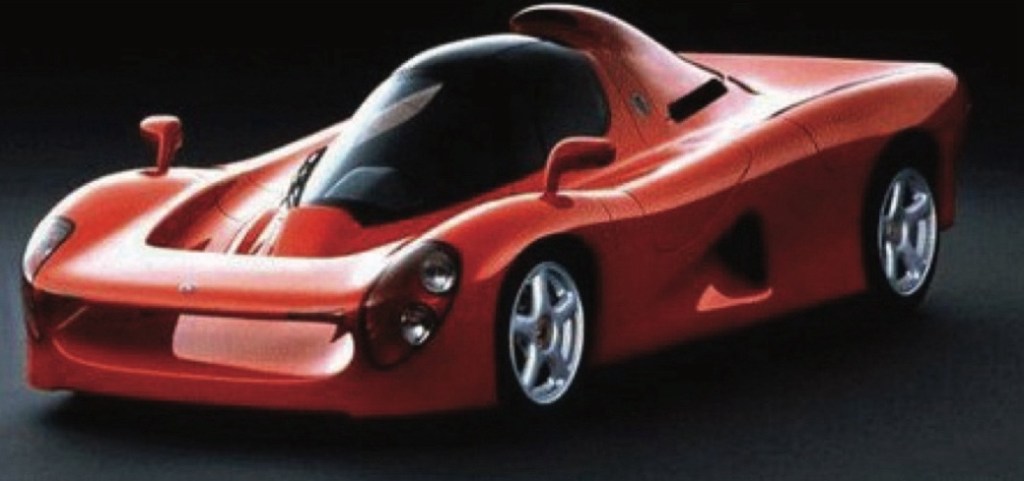
The Toyota GP-One used a front diffuser, but sends air to the sides, rather than into a central tunnel.

Toyota GP-One inspiration.

The Miata chassis doesn’t allow me to do the same thing, which is why I’m sending some air down the center tunnel. But I’ll also be sending some air to the sides via what I’m calling rocker vents.

Rocker vents

There are many options for fender vents, from expensive laser cut aluminum, to budget eBay plastic, to the cheapest solution – simply cutting a hole in the OE fenders.

Vents on the top of the fender are important, but so are vents behind the front wheel. The budget solution is to make a horizontal cut and then push the fender into the wheel well. Or some people will pull the bottom of the fender away from the body and vent air between the chassis and quarter panel. And finally some people will cut into the quarter panel and install Left Lane Designs fender vents.

All of these are good solutions to venting the front wheels and making the splitter work better. I like the following picture, which is a great example of NA Miata fender venting.

A big vent in the top of the fender and an aggressive cut behind the wheel is about the best you can do on a Miata.

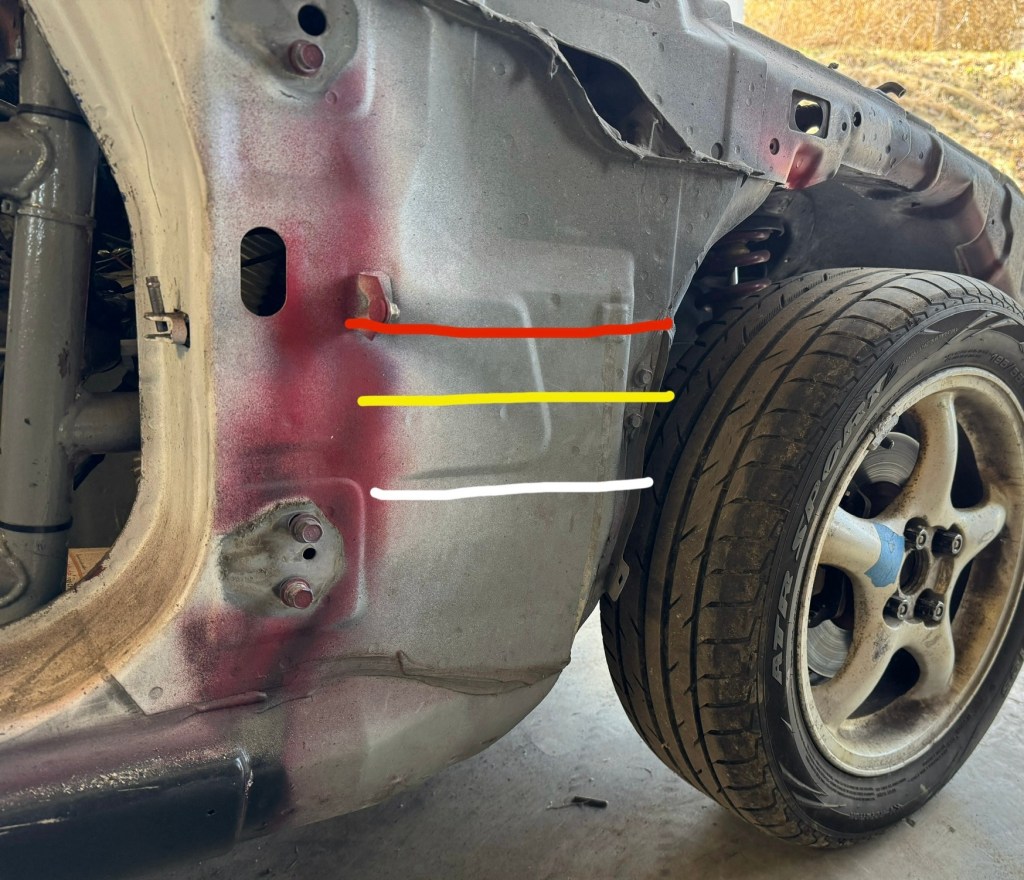
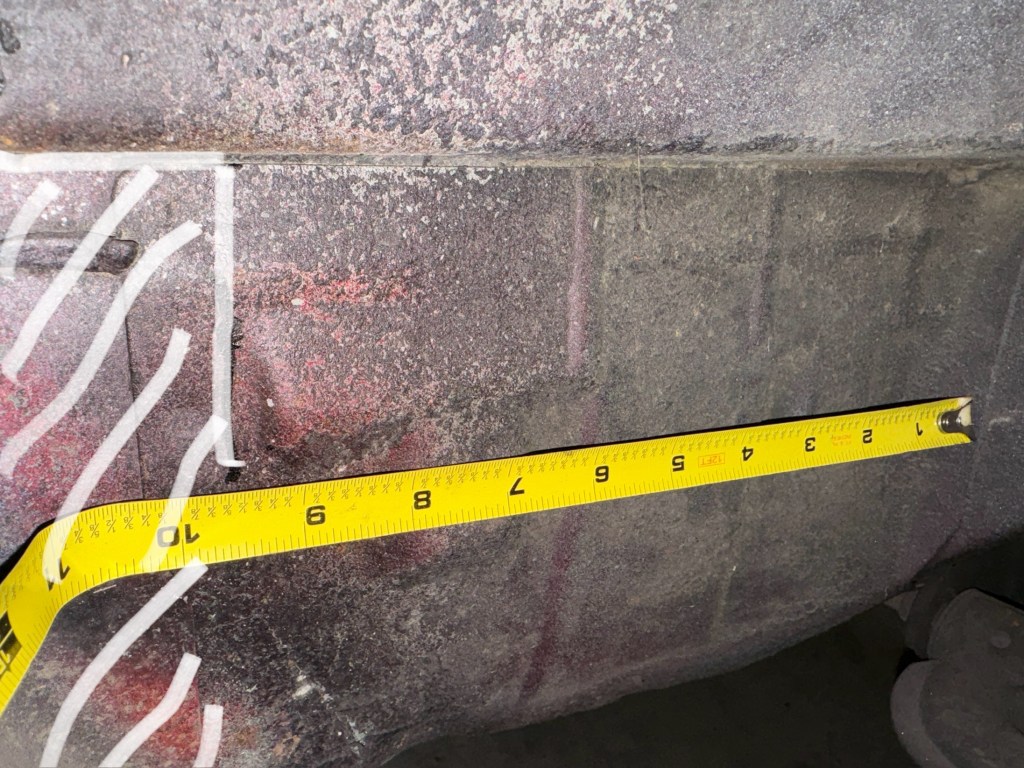
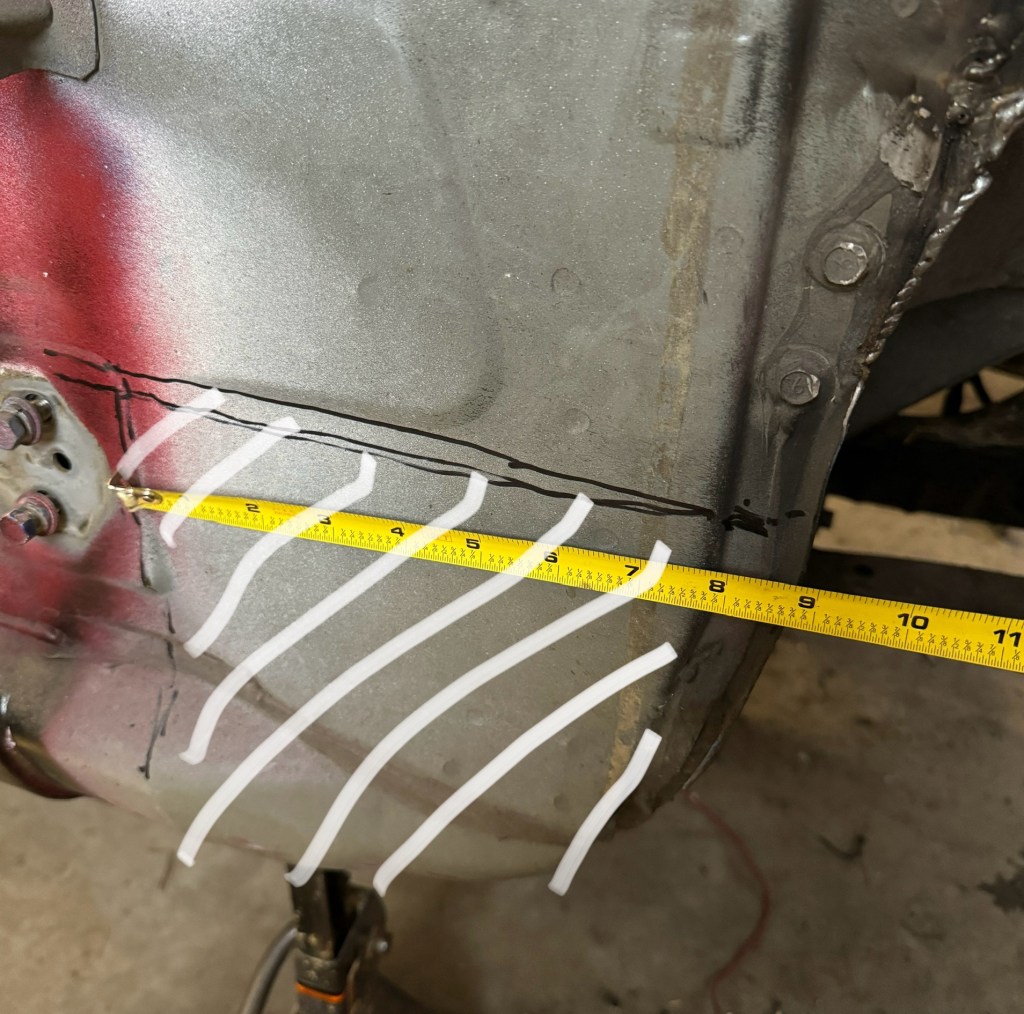
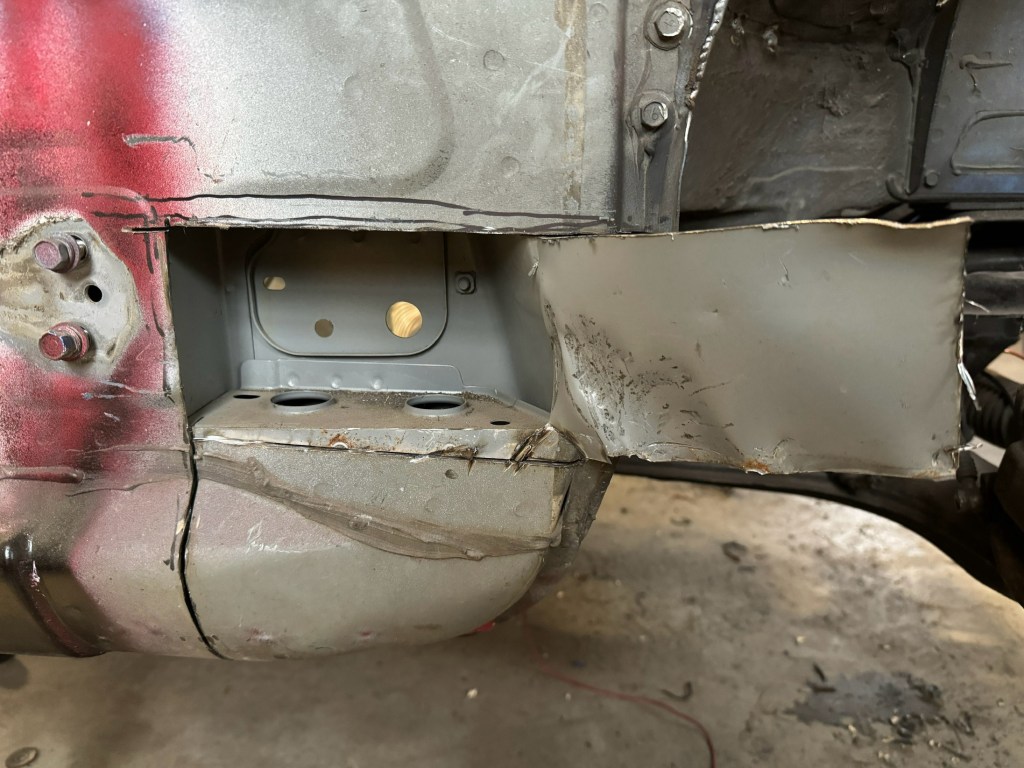
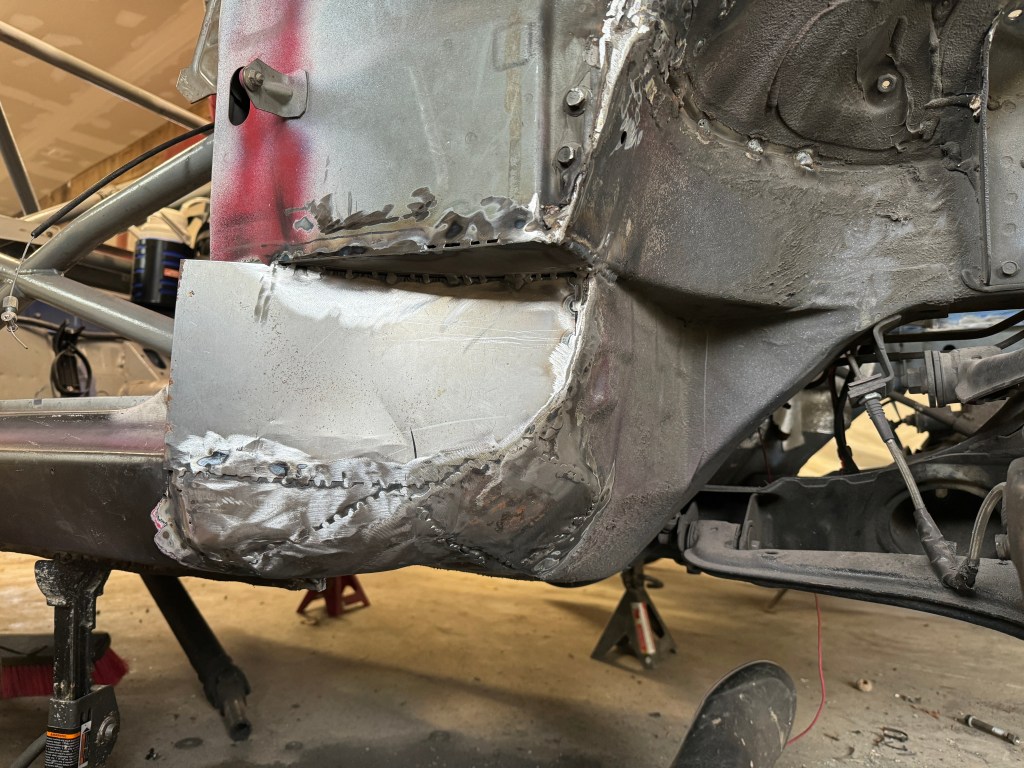
That’s good venting, but it’s not enough for Falconet’s front diffuser, so I’m cutting into the chassis to get even more extraction. My front wheel extractor vents will start about 3” further inside and exit into the bottom half of the doors. Say what?

Cutting into the chassis for fender extractor vents. It’s fucking madness.

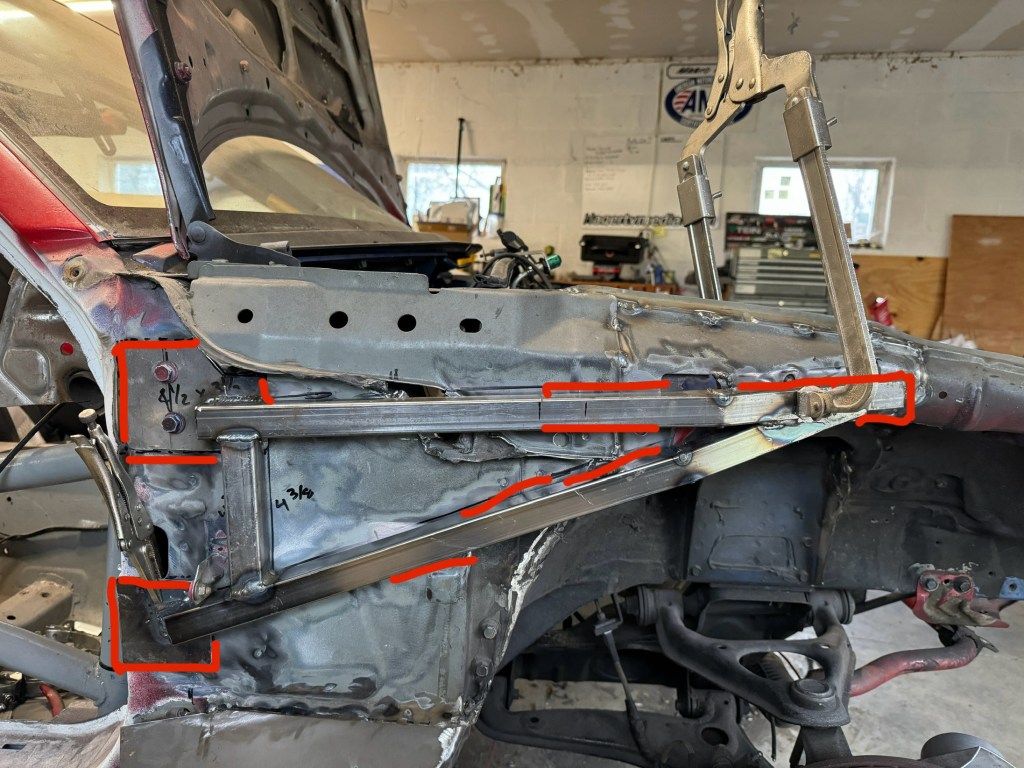
I’ve been looking at DTM cars and Japanese GT500 cars (similar chassis), and they all have extreme front vents that exit in the rocker panel. Unfortunately I can’t do that without seriously compromising the unibody. My car has a full cage, but there are no tubes that connect the cage to the shock towers (yet), and so unless I weld those in, I’ll have to limit the amount of venting I can do.

Would love to vent the whole rocker panel, but not going this far.

I’d like to start the vent as near to the center of the car as possible, but I can’t get too aggressive with it, because if I cut into the footwell, I lose space for the dead pedal. I can live without that, but if I go further, I’ll lose space for the clutch pedal as well. So unless I mount the clutch lever on the steering wheel or shifter, there’s a limit to how centrally located the extractor vent can go. (The motorcycle transmission allows clutches upshifts, so this isn’t an insane idea.)

A lot of small exploratory cuts were required to find out where I could remove material.

So for the time being, I’m going to stop the fender vent at the footwell, keeping all of the sheet metal in the cockpit intact. In the image above, that inner wall with the holes in it is the vertical wall that makes the side of the footwell.

I had originally thought I’d cut out the bottom door hinge completely and continue the extractor vent into the rocker panels. But I don’t want to turn my car into a noodle. There’s a vertical support at the hinges which ties into the rocker panel, and so I’m leaving all of that intact. This makes the exit of the duct much shorter and a harder angle than I’d like, but I’m just not feeling brave enough to cut a hinge into the middle of the car and then re-brace it.

This is already a lot of work, and you might be wondering, what’s all of this venting going to be worth in terms of downforce? I honestly don’t know. It’s not just fender venting we’re talking about, it’s a front diffuser.

I will A/B test the rocker vents in a wind tunnel on 6/20, but without spinning tires, I don’t know how accurate it will be. But I can at least compare the rocker vents with other fender vents I’m testing, and see how they compare. I took a bunch of pictures and will do a how-to post in the future.

I can tell you that the idea of the whole aero package occupies my thoughts from the moment I wake up. I’ve drawn and re-drawn several ideas, and I’m not ruling out a front wing molded into the bodywork.

The engine is short enough that I might be able to integrate a front wing into the bodywork.

Instructor Fest 3/2/2024

The Motorsports Safety Foundation (MSF) is an instructor accreditation organization that is trying to standardize HPDE driving instructors nationwide. I have a MSF Level 2 certification, and felt that program (taught by Hooked on Driving, in my case) was great, and I learned a lot. MSF was supposed to have an instructor event this year, but that somehow fell through. Mass Tuning either picked up the ball or already had it rolling, so kudos to them.

Who is Mass Tuning? A bunch of cowboys, that’s who! I’m joking of course, but in the realm of HPDE, they feel like the disruptors. In just a couple years they’ve grown massively to become the HPDE organization with the most events in the northeast. Then they started adding time trials to their HPDE events, and this year they are even starting their own racing series, Northeast GT.

So given their rate of expansion and innovation, it doesn’t surprise me that Mass Tuning is also making waves in HPDE instruction. On March 2nd and 3rd (this coming weekend), they are hosting the first Instructor Fest (register). I believe you have to be a coach or aspiring to be one, but it’s FREE, so get on it!

You can see the full agenda below, but the important part is that I’ll be teaching a class on Saturday, on how to read a speed trace. The session is a little odd, because it’s a hands-on exercise using pens and paper. You won’t learn how to navigate a difficult app (ahem, Race Studio), instead you’ll learn the following things which you can apply to any motorsports data app:

  • Look at the squiggly lines on a speed trace and know what they mean
  • Recognize common errors in braking, cornering, and acceleration
  • Describe “backing up the corner”
  • Explain why vMin may be the most important data point
  • Contrast two laps for for time gained or lost

Why data? Because most HPDE organizations don’t have a data coaching program, and don’t have enough right-seat coaches for intermediate drivers. Those drivers tread water in a pool of conflicting information, with little guidance after they’ve been soloed. I’d like to be one of the people that turn that situation around. As part of that, for the past two years I’ve been data coaching for the Niagara Porsche Club of America, and I can pass along my experience so that you can read data as well.

Even if you have no desire to be a data coach in the future, it’s important to understand data. I mean, everyone uses data already, from knowing what gear they are in, to what braking marker they use, and of course their lap time. If we did everything by butt dynos and “you know, I think that felt faster,” we’d get nowhere in life. Objective measures are the only way we can quantify anything, and data is the foundation of that.

So if you’re not doing anything this weekend, and are in the vicinity of Thompson Speedway, register for Instructor Fest. See you there!

Agenda

12:00pm – Lunch Meet & Greet

1:00pm – Instructor’s Meeting

1:15pm – “Survive Your Student” by Nick Fontana (Corner Faster)

2:15pm – “An Introduction to Data Coaching: Reading a Speed Trace” by Mario Korf (Occam’s Racer)

3:00pm – Break, Break, BREAK

3:15pm – “You, Me and the Journey to MSF Level 3” by Eric Kaul (Motorsport Safety Foundation)

4:15pm – “Trends in Causes of Claims & How to be a Safer Instructor” by Steve Katz (OnTrack Insurance)

5:00pm – Dinner & Cash Bar Social

10:00pm – Checkered Flag
 

Sunday:

8:00am – Breakfast Meet & Greet

9:00am – Instructor’s Meeting

9:15am – “Insurance Concerns for Instructors and Tips to Avoid Incidents with Students” by Ryan Staub (Epic Brokers)

10:15am – “Data Guided Coaching” by Matt Romanowski (TrailBrake.com)

11:00am – Break, Break, BREAK

11:15am – “A Guide to HPDE Instructing” by Matt Leblanc

1:00pm – Lunch Meet & Greet

2:00pm – “Taking Your Instructing Over the Top” by Bill Stevens (BnS Racing Services)

2:45pm – “Communicating with your Student” by Paul Balich

3:00pm – Questions & Answers

4:00pm – Checkered Flag

Miata Wind Tunnel Test Ideas

I wrote this post a while ago, and since then I made it back to the wind tunnel and tested a lot of things. Sadly, Falconet wasn’t ready for that trip, and so instead I took a Miata with the full 9 Lives Racing medium downforce kit. I was able to test everything that’s been modeled in CFD, and the entire 9LR catalog, as well as many other options, such as fastback, hood and fender vents, and various things to reduce drag and add downforce.

I’m going back to the A2 wind tunnel this summer and I’ll test a bunch of stuff on my Hayabusa-swapped Miata, Falconet. Wind tunnel testing is expensive, and it’s an 11-hour drive each way, so I need to be ultra prepared so that I’m not wasting time and money.

As part of that preparation, I want to know what other people are curious about. Do you have some parts to test? Send them to me and I’ll send them back when I’m done. Do you have some ideas you want to test, but can’t implement? Maybe I can cobble something together in time. Please drop me a comment at the bottom or use my contact form to email me, and I’ll do my best to test what’s important to the Miata community.

One of the benefits to wind tunnel testing is the parts don’t have to be race spec, they just need to survive a couple runs. So a lot of parts go on with the minimum number of fasteners and the maximum amount of duct tape. This allows me to do so a lot more fabricating and testing than would normally be possible.

Anyway, here are some things I’ll be testing.

Canards

I’ll be the first to admit I was wrong about canards, and so this is one area where I’ll be spending a lot of time money. Before I tested my Veloster N in the wind tunnel, I thought canards were poseur junk, but after finding out that changing the height by 8″ made a 700% increase in downforce, I realized I knew jack shit about canards.

I’ll test height to find out the optimal position on the lower canard. I’ll also test size, shape, angle, profile (blade vs airfoil), and end treatment (wicker sizes).

I will not be testing these canards.

Splitter

On my Veloster I tested flat vs curved splitters and found massive gains (150% more downforce) using a splitter that curved upwards at the trailing edge. This is essentially that same thing as using splitter diffusers, but instead of diffusing air into the wheel wells, the air is diffused over the entire width of the car. So I’d like to test this vs a flat splitter with splitter diffusers.

Laminating a splitter with a full width diffuser on the trailing edge.

I also added vortex strakes in front of the wheels and this reduced drag quite a bit, but because those strakes were only on one splitter, I didn’t do a proper A/B test. So I’ll test these again on the same diffuser to see how worthwhile that is.

I’ve seen some online conjecture on the drag from splitter rods, and it doesn’t make a lot of sense to me. I’ll double the number of splitter rods (they’ll be fake) and see what happens.

There’s already published data on splitter length, but I might test this if enough people are hungry for that data. Likewise splitter height has been tested and published (but not on a Miata). Just the same, it’s easy enough to put blocks under the tires and test changes to height and rake, and how that affects downforce and drag.

And I might get around to testing an airdam with an undertray and no splitter lip. I think I can get the undertray to make a lot of suction, even without a splitter lip. This test isn’t a high priority for me, because I’m not personally going to set up Falconet like this, but with enough community whining, this test could go higher up the list.

Underbody

When it comes to underbody aero on touring cars (especially Miatas), I’m a confirmed naysayer. But, just like it was with canards, I might find myself eating my own words after this test!

Some of the things I’ll be testing are a flat bottom, a partial flat bottom (trans tunnel exposed), barge boards, and at least one diffuser. Falconet uses a motorcycle transmission, and so that whole transmission tunnel is open. I’ll diffuse some air into that area and see what happens.

Vents

Al at Race Louvers has some of the best wind tunnel data on the web, and I see no reason to duplicate his efforts. But I have some ideas to get more extraction out of the wheel wells, and these haven’t been tested by him yet. I’ll also be testing a hood extractor vent, which is specific to Falconet, but the data may be interesting to others.

Wings

I’ve already tested and published wind tunnel data on five wings, four end plates, and Gurney flaps, but I have a few things still to test.

I have an oddball wing I made with a short 41″ wingspan with 16″ of chord. It seems absurd, but the additional chord was shown to be very efficient in previous testing, with a clear top-speed advantage. I want to try this as a single and dual element.

There are big wings and big wings. This is the latter.

I’ll compare that wing to a Wing Logic, and that in turn to the industry standard 9 Lives Racing wing. Wing Logic appears to be a CH10, which has less camber and thickness than a Be 123-125 (which is about what the 9LR wing measures). If both wings were the same size and had the same Gurney flap, I’m fairly certain the 9LR would outperform Wing Logic. But this isn’t apples to apples, since the latter has more chord and a built-in Gurney flap. Anyway, interesting comparison.

I may also test my MSHD wing as a dual element. It’s designed as a 3D wing, but unlike many, the trailing edge is a single flat line across the span, and so I can add a second element pretty easily. And I kinda want to make a 2D MSHD, this one will be 63.5 x 11 with a built-in 1/2″ Gurney flap.

MSHD 3D 500 sq-in outperformed all other wings in my testing.

Tops

I tested the first version of my fastback at Watkins Glen, and I’d like to correlate the results from real-world track testing to wind tunnel testing. So I’ll bring an OEM roof and trunk with me and I may as well do one run without the top as well. I wish I still had a Chop Top, that would be worth testing again.

The one time I tried my race car’s fastback on my street car, the engine dropped a valve. But notice how narrow it is at the B pillar.

Open windows

Open windows add drag and reduce downforce, and so I’d like to test various things that may help. I’d like to test a wicker or vortex generator on the A pillar, smoothing airflow out the B pillar, using a longitudinal strake along the top of the window, and large NASCAR-style window nets (which are mostly fabric and not a lot of holes).

Mirrors and mirror stalks are another thing that might affect open windows, or downforce in general. By forcing air downwards, it’s possible to move air away from the windows (and wing). Conversely, moving air upwards may add downforce. And how would these trick mirrors compare to OEM mirrors or no mirrors at all? Gotta find out.

And you?

So that’s at least $4000 worth of testing and I haven’t started on your tests yet. What’s keeping you up at night?

The Dumbest Aero Rules? Splitter Rules

As someone who is building a car to fit into multiple racing classes, I need to keep up with the aero rules in different series. It’s important to know not only what is allowed in each class, but how various aero components are weighed vs other performance modifications. I gave a broad overview of several aero rules in Aero Rules… but OMG the Fecking Rules!, but wanted to dive deeper in one area.

Through this journey, I’ve leaned that most rules are written by people who have a Childs understanding of car aerodynamics. That’s not a typo; let me explain.

I used to read the Jack Reacher series of novels by Lee Childs, and in every book the author would make a dumb technical error relating to firearms. I know firearms because I was a nerdy reloader for several years, and in this field, where things can literally blow up in your face, as Jack Reacher would say, “details matter.”

As a character, Jack Reacher understood this, but his creator did not. After the author incorrectly referred to a trio of Thompson submachine guns as “grease guns” I emailed Lee Childs and said that while I enjoyed his writing, he needed a technical editor. I offered to copyedit his next book for free.

Not the same.
Note #1: The M1928A1 “Tommy gun” and M3 “grease gun” fire the same ammunition and perform the same role, but they look nothing alike and even someone who knows nothing about firearms wouldn’t confuse the two. I mean, one of them looks like a tool for squirting out grease, the other one is in gangster movies.

Note #2: Writing the author directly and offering my services may seem like a bold move, but this is exactly how I became a globe trotting motorcycle journalist for Moto-Euro magazine.

I wasn’t surprised when I didn’t receive a reply from Mr Childs. And so I also wasn’t surprised when he fumbled again in a later book referring to to a rifle as a “M14 Garand”. <sigh>

There’s no such thing as a M14 Garand. I own a M1 Garand, and I’ve shot a civilian M14, and while they are similar rifles, they don’t even use the same cartridge. Calling a rifle a “M14 Garand” is as idiotic as saying that Reacher’s new car is a “Mustang Corvette.” Yes, it’s that stupid.

To make matters worse, in the same story Reacher gets a ride from a woman in an enormous pickup truck. Astounded by the size of the truck, Reacher notes that it’s a Honda. Come on now!

Honda doesn’t make an enormous pickup truck, and now I was certain about two things: Childs knows as much about firearms as he does trucks. These are man’s-man topics, as baked into Jack Reacher’s DNA as the fisticuffs he engages in. After these two gaffes I let out a guffaw and could no longer read anything from that charlatan.

Let’s bring this back to aero rules. It’s difficult to write a racing rulebook, it takes the input of specialists with specific knowledge on suspension, tires, safety, engines, and aero. For whatever reason, rulebooks, like the Reacher books, get published with a Childs understanding of aero. And this results in some silly rules.

Of all the nonsensical rules I’ve seen, from banning fastbacks on convertibles, to equating wings with spoilers, to allowing diffusers but not flat bottoms… the most Childs-like rules are the splitter rules.

Flat splitter nonsense

Splitters separate the air above and below the splitter blade. They create downforce via a high pressure zone on top of the splitter blade, and a low pressure zone below it. You know what else creates downforce in the same manner? A wing.

Just like a wing, a splitter creates much more downforce through suction than from pressure. You can vastly improve the performance of a splitter by adding camber. Most people do this by installing splitter diffusers (splitter ramps), which add curvature over a small area in front of the wheel wells. Time attack cars often curve the entire rear of the splitter’s trailing edge upwards, thereby creating a splitter diffuser across the full width of the car. And some cars also curve the front upwards as well.

However you do it, adding curvature creates a Venturi, accelerating air under the lowest part of the splitter. This in turn drops the pressure, resulting in suction and downforce.

Given that this is how a splitter works, it’s surprising how many rulebooks specify that a splitter must be flat (or horizontal, or without curvature). A rule that states that a splitter must be flat is akin to a rule that states that a wing must be flat! I think we can all agree just how well a wing like that would work.

Class legal; shit performance.

Splitters without side plates

Because splitters behave similarly to a wing, they also benefit from some attention paid to the outer edge. Look at any wing and you’ll see end plates. Look at any pro-level race car with a splitter, and you’ll see various things on the end of the splitter, which I’ll collectively refer to as side plates. These devices trap high pressure air, change the stagnation point, promote extraction, or in other ways improve the splitter’s functionality.

AJ Hartman’s side plates add over 60 lbs of downforce at 100 mph.

If there’s room on the end of your splitter blade, side plates are a no brainer. And yet, how many racing rules state that splitters can’t have anything on the ends of them? Many of them! Just for fun, I’ll pick on the SCCA autocross rules:

Front splitters are allowed but must be installed parallel to the ground… The splitter must be a single plane with the top and bottom surfaces parallel… A front splitter and its associated features shall not function as a diffuser… Splitter fences or longitudinal vertical members that serve to trap air on top of the splitter by preventing it from flowing around the sides of the car are not allowed.

You see the same verbiage from NASA, SCCA road racing, and numerous other club racing rules. Given that the splitter rules don’t allow side plates, I find it surprising they allow wings with end plates. I mean, it’s the same damn thing.

Splitter width and length

Time attack cars don’t race wheel to wheel, and so rear wings and front splitters are often much wider than the car. For example, in the Global Time Attack rules, in the Limited class, you’re allowed to use a splitter that extends 10″ in front and is 14” wider than the body.

Looks like it could fly.

On the other hand, most wheel to wheel racing rules limit the span of wings and splitters to body width. This is understandable, as you don’t want aero parts to hit each other on track. However, there’s no standardization on the length of the splitter lip. When you consider how few racing rules mention the chord of a wing, it’s amazing how many rules there are on splitter length. Again, this is the same thing! Here’s a smattering of splitter lengths:

  • 12” Champcar
  • 6″ – NASA ST1-ST4
  • 5″ – SCCA Time Trials Nationals, SCCA GT1, GT2
  • 4″ – NASA ST5
  • 3″ – Grid Life Touring Cup, SCCA STU
  • 2″ – SCCA STO, GT3, Super Touring, T1
  • 0″ – SCCA Street Prepared

I’ll make fun of the SCCA autocross rules one more time, because it’s such low-hanging fruit. Did you see that last item on the list? The SCCA autocross Street Prepared rules allow you to have a splitter, but it can’t stick out past the bumper. Here’s the exact wording:

A spoiler/splitter may be added to the front of the car below the bumper. It may not extend rearward beyond the front most part of the front wheel well openings, and may not block normal grille or other openings, or obstruct lights. Splitters may not protrude beyond the bumper.

WTF? You can have a splitter but it can’t protrude beyond the bumper? How is that possible? Perhaps when this rule was written (1973?), all cars had underbite bumpers, but show me a modern car that you can fit a splitter to that doesn’t extend beyond the bumper!

You could fit a splitter to the Mustang Corvette on the left, but not on the right.

I don’t want to just pick on SCCA autocross rules, because splitter rules across most car racing rulebooks show a misunderstanding of how splitters work. Whoever is writing these splitter rules could have easily written the following rule for wings: “Cars may use a rear wing, but the wing must be completely flat, installed horizontally to the ground, and with no curvature. Vertical members that serve to separate air above and below the wing are not allowed.”

I’m curious, who was the first rules lawyer that decided to castrate splitter performance? I feel like they have a lot to answer for. Some may argue that cost cutting is the reason, but you can make splitter diffusers and side plates for $10. Heck, you can make a fully curved splitter for free by selecting a warped piece of plywood!

But in the end, I guess it doesn’t matter who started this, because virtually every other rules writer copied and pasted the same absurdity into their rulebooks. That’s on all of them for having a Childs understanding of aerodynamics.