Updated March 2025
I originally wrote this in 2024, but the 2025 classing rules have changed for both NASA and SCCA time trials classing. Changes below are in italics.
I’ve been thinking about taking my car to a time trial race, and as part of that, researching all of the time trials rules. But one thing that may throw a spanner into my plans is that I don’t want to turn any spanners myself. So if racing in time trials voids my warranty, I’m not racing.
But I have other options. If you’ve been following my blog, you know about Falconet, my Hayabusa-swapped Miata. It’s a serious race car that can do wheel to wheel or time trials. It will compete next year.
Anyway, as this is towards the end of the track season, I’ll ruminate on which series and classes my Veloster could compete in, if and when that happens.
NASA TT5
NASA time trials divides cars into classes by weight and horsepower. Power is averaged over a range of RPMs, so that peaky (low torque) motors have more parity with engines that have a broader spread of power. And there are modifiers for many things from aero to suspension to tire width. On paper, it’s all very fair, although some of the rules are questionable.
If I use the class calculator at 3200 lbs race weight, and specify that my car is FWD, has narrow tires, uses a splitter and wing, the car is allowed 256 average wheel horsepower. My car makes 244 peak horsepower at the wheels, and so you see it fits into the TT5 class with some room to spare (12 hp) for a cold-air intake and an exhaust. If I were to remove the splitter and wing, and use the base trim aero modifier (BTM), the car is allowed 275 average wheel horsepower. Since I’m not going to modify my engine, that puts my car 31 whp under the class maximum, and I’d have a hard time being competitive.
Now here’s the problem: TT5 has a maximum factory horsepower limit of 270 hp. So even though my car is 31 hp under the class limit, I can’t race in it! If I had the non-PP version of my Veloster N, at 250 crank hp, then I could tune the shit out of it, up to 275 at the wheels and be class legal. But my engine, which is 244 peak horsepower at the front wheels, is somehow illegal.
I’d like to see the logic behind this power cap in a lbs/hp series. Are they just trying to keep out the heavy cars? How does that even make sense in age when every new car is north of 3000 lbs?
Other cars that should be able to race in the TT5 class based on lbs/hp, but can’t because they have more than 270 hp, include the BMW 135i and 335i, Ford Mustang (EcoBoost), Dodge Challenger and Charger SXT, Hyundai Elantra N, Kia Stinger, Mitsubishi Lancer EVO, Nissan 350Z, Subaru WRX, and a slew of others. These aren’t popular track cars anyway, so who cares, right? And so instead of TT5 my Veloster N and the aforementioned cars all have to race in the next class up, TT4.
In 2025, NASA changed the maximum factory (crank) horsepower to 264 hp for AWD and RWD cars, and 275 for FWD. This makes the Veloster N legal, but the Elantra N isn’t, even though it’s heavier and ends up with the same power to weight ratio. While I don’t get the reasoning, I’d like to thank NASA for making my car legal for TT5, and also thinning out the competition. I may be racing with you sometime in the future!
If I’m going to nitpick the other rules, the other thing I don’t like is they don’t allow aero items from other classes. I mean… just use the point system you already developed, and instead of making canards, fender vents, diffusers, etc., illegal, make them cost points.
Grid Life
My Veloster can race in the Street class, which allows 4-cylinder turbos and 6-cylinder normally aspirated engines. Performance wise, there are some ringers in the class, but the Veloster isn’t that far off the pace. I wouldn’t be able to use any aero, or that would put me in Street Mod, which I could never be competitive in.
My Veloster also fits perfectly into GLTC, but that’s a wheel to wheel race class. However, COM has a GLTC-spec class in time trials, and I’ll get into that later.
In Canada, I could also race in Canadian Time Attack Challenge, which uses Grid Life’s rule set.
SCCA Time Trials Nationals
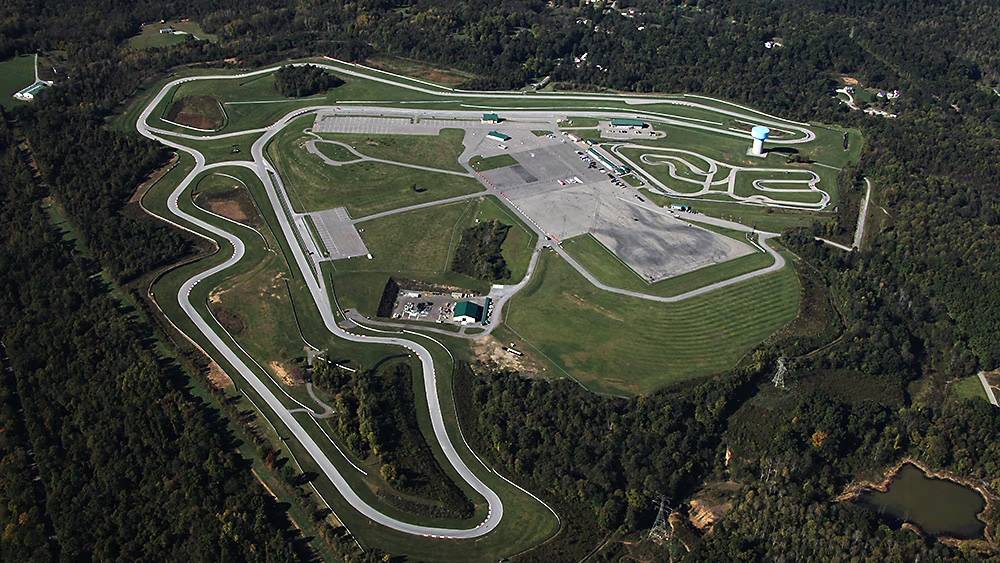
SCCA Time Trials Nationals (or is it Time Attack Challenge in 2025?) is moving their home track from National Corvette Museum to PittRace, and will hold the Nationals competition on Sept 18-21 2025. This is exciting for me, because PittRace is one of my favorite race tracks, and it’s a lot closer than NCM.
There are three classes I could race my Veloster in:
- Max 3: This class allows a lot of aero, suspension, and engine tuning. I could use all of the aero I’ve built for my Veloster and race in this class, but for reasons I’ll explain in a minute, the car would be considerably down on power.
- Tuner 3: This class has the suspension mods and engine tuning of the Max classes, but no aero mods. I won’t be racing in this class. (Side note, I feel like cars that are prepped to the Sport level should be able to use aero mods if they don’t take any other Tuner mods.)
- Sport 3: This class allows minimal modifications, like lowering springs and intake/exhaust plumbing, but that’s it. It would be easy to prep for this class, but the Veloster isn’t at the higher end of the performance spectrum.
But that was in 2024, and now in 2025, instead of Max 3, Tuner 3, and Sport 3, my car goes into Max 4, Tuner 2, and Sport 3.
Max 3 Max 4
I’m an aero guy, and so my first thought is to race in the Max classes because the Sport and Tuner classes don’t allow aero. The aero rules in Max are quite good and show a constant evolution, losing some of the silly restrictions (flat splitters) that the legacy rules had. Therefore, I could use all of the aero I’ve developed in the wind tunnel, without making more parts to a different rule set. Kudos to the TT rules makers for their willingness to adapt and change.
The Max classes use engine displacement to determine classing, and unmodified 4-cylinder turbos up to 2.46 liters go into Max 4. My 1998cc Veloster gives away displacement to engines like a 2.3 Ecoboost, resulting in a 75 hp deficit. So that puts me at a slight disadvantage to some turbo cars, but I shouldn’t complain, as 3-cylinder engines are only allowed 1.9 liters (?).
N/A engines are allowed up to 4.5 liters. In this category you have cars like the E92 BMW M3 and 718 Porsche Cayman GT4, both putting out 414 hp. That 140 hp deficit would be OK if my Veloster had a handling advantage, but these are pedigreed German sports cars I’m up against. Even worse, a 911 GT3 makes 500 hp from a naturally aspirated 4-liter flat six, and is in the same class as my Veloster. Grumble grumble.

All said, if I want to be competitive, the Veloster doesn’t look like a great choice in Max 2. But I could also build the car with aero and not care about how I place, and do this race just for fun. That’s compelling, but also exactly what HPDE is for. Why enter a competition if you’re not going to be competitive?
Tuner 2
I never really considered the tuner classes, but I did notice a lot of cars moved from Tuner 3 to Tuner 2 in 2025, including the Veloster N.
Sport 3
Given that a stock-engined Veloster is way outclassed in Max 3, let’s see how it fares in Sport 3.
Unlike the Max classes which were based on displacement, the SCCA uses a list to determine which cars go in the Sport category. The rules say that the list of cars in each class is not based on a balance of performance, but on a “balance of popularity.” But I feel like that explanation is selling themselves short. The SCCA time trial board has done a great job of re-classing cars annually, and there’s better parity every year.
For example, the Acura NSX was originally classed in S2, but has been reclassed to S3, and is now considered an equal sparring partner to my Veloster N. The NSX is lighter and more powerful, but the 20-30 years between the cars may be significant. Other cars that moved from S2 to S3 include the Chrysler Crossfire (310 hp), Dodge Challenger R/T Scat Pack (470 hp), Kia Stinger (368 hp) Lexus GS-F (467 hp), and Nissan 370Z Nismo (350 hp). While all of these cars are more powerful than my Veloster, they are also heavier. Maybe it’s a fair fight?

As of this writing, the following cars are in S3:
Acura Integra Type S 2024, NSX 1990-2005; Alfa Romeo Giulia Ti 2016+; Audi A3 2.0T All 2015-2018, S3 2013-2020, S3 Quattro Wagon 2006-2013, S4 2009-2016, S5 3.0T FSI 2008-2017, TT S 2009-2018; BMW 135i 2008-2013, M235i 2014-2016, 330i xDrive Sport Wagon 2017-2019, 335D 2004-2013, 335i All 2006-2013, 440i xDrive 2014-2020, 535i RWD 2004-2010, 650i Base 2005-2010, M3 2001-2006, M5 1998-2003, Z4 Coupe M 2006-2008, Z4 35i M 2009-2016, Z4 35is M 2009-2016; Cadillac ATS 3.6L V6 2013-2015, CTS V 2004-2007, CT4 V 2022; Chevrolet Camaro SS 1998-2002, Corvette Z07 1984-1991, Corvette Base 1984-1997, Corvette Non-Z06 1997-2005, SS 2014-2017; Chrysler Crossfire SRT6 2004-2008, Dodge Challenger R/T Scat Pack 2015-2022; Ford Focus RS 2016-2018, Mustang Ecoboost 2015-2023, Mustang GT 2011-2014, Taurus SHO 2010-2018; Genesis G70 3.3T 2019-2022; Honda Civic Type R 2016 +; Hyundai Elantra N 2022, Genesis R-Spec (All) 2013-2016, Veloster N 2019-2022; Kia K5 GT 2021-2023, Stinger GT 2018-2023, Stinger GT2 2018-2023; Lexus GS-F 2016-2020, GS350 FSport 2016-2020; Lotus Evora Base – NA 2010-2014; Mercedes C450 AMG 4MATIC 2015-2016, C55 AMG 2004-2007, CLK55, AMG 2003-2006, SL550 All 2007-2013, SLK55 AMG 2005-2011; Mitsubishi Evo All; Nissan 370Z Nismo 2009-2013; Polestar 2 Dual Motor, Performance Pack 2020-2024; Pontiac Firebird Firehawk/Formula/Trans Am 1998-2002, GTO 2004-2006; Porsche Boxster S 2005-2012, Cayman S 2005-2012, Cayman Base 2009-2012, Cayman Base 2014-2016, 911 Carrera 2, 2S, 4, 4S 1999-2008; Subaru WRX ALL 2009-2021, WRX STI All; Toyota Supra GR 2.0 2021-Current, Corolla GR 2023-Current; Volkswagen Golf R 2015-2021; Volvo V60 Polestar 2016-2018
I’m not super interested in what the SCCA thinks about a balance of popularity, what I really want to know is, how do these all compare in performance? Hello COM.
COM
Corvette Owners of Massachusetts (COM) has perhaps the fairest time trials rules in existence. They calculate a car’s performance using the weight of the car divided by its power and then factor in a Performance Adjustment (handling).
To calculate power, COM uses an average of horsepower and torque, which is smart because the torque curve is hugely important. COM then modifies the power-to-weight score using Performance Adjustment points that range from -25 to +28.5. This factor takes into account things like suspension, brakes, tire width, aero, etc. Those two numbers are added together, resulting in a Showroom Assessment score, and from this the cars are placed in classes ranging from T30 (the slowest) to T110 (the fastest.)
The Veloster N is listed at 71.7 points, at the bottom of class T70. I could compete fairly in COM taking modifiers to aero or tires and come right in at the class limit.
But the other thing COM is great for is comparing the relative performance of different cars. And so I did that for all of the cars on the SCCA Sport 3 list, and the average is 72.5 points. So on first blush, it looks like the Veloster is right in the middle of the performance range.
However, there are a lot cars that are ranked higher, including the aforementioned Nissan 370Z Nismo, several BMWs (E46 M3, 135is, M235i, and Z4M), and every generation of Mitsubishi Lancer EVO or Subaru WRX STi. Given that every one of these has a better power to weight ratio, and that they are AWD or RWD vs the Veloster’s FWD… I have to think I’d be on the back foot against them. But I also feel like I’m a decent driver and my car is close enough in performance that I’m up to the challenge.
But there are even faster cars in Sport 3, and at the pointy end of the class are several cars that COM puts in T80, meaning they have more than 80 points. Among these is the Veloster’s nemesis, the CTR.

When the Veloster N came out, it was regularly pitted in comparison tests against the Honda Civic Type R (80.2 COM points). The CTR beat the VN every time, but it was close. In the comparisons, many YouTubers would choose the Veloster for the fun to drive aspect, but the fastest lap times were all owned by the Civic.
Some of the Type R advantage is Honda power, with +31 hp and +35 torque out of the same displacement. But COM also rates the Performance factor at 8.3 vs 7.5 points. So not only does the CTR out power the VN, it out handles it as well.
Which I find surprising because I think the Veloster is the best handling FWD car I’ve driven. Admittedly, I haven’t driven a Civic Type R, but I think the Performance Adjustment discrepancy comes down to the size of the wheels and tires. The Veloster comes stock with 8″ wide wheels, and 8.5” is about as wide as you can fit. Ergo, most people are using a 235 width tire.
Conversely, the Civic Type R comes stock with 9.5″ wheels, and you can go wider still. So it’s quite possible to fit 265 tires on a CTR, and maybe even go all the way to the class maximum of 285? The Elantra N isn’t on the COM list as of this writing, but like the CTR, it has more power and wider tires than a Veloster.
But my competition doesn’t end there, the overdogs in the S3 class are the 987.2 Cayman (80.4 points), 992 Carrera (82.3), Ford Focus RS (82.5) and non-Z06 C5 Corvettes (83.1). These T80 cars are higher performance than anything else on the Sport 3 list, and might even stomp a CTR.

So even if my Veloster N is in the middle of the COM performance window for SCCA’s Sport 3 class, it’s likely that a majority of the cars will have a better power-to-weight ratio, and significantly wider tires. The question is, can a 275 hp FWD hatchback on 235 tires beat a 350 hp RWD on 285 tires or 350 hp AWD on 265 tires? To find out, let’s see some historical results.
Sport 3 lap times
SCCA TT lists the results for every race, and after dumping them all into a spreadsheet (and correcting the fact that they don’t put the fields in the same place each time), I got an idea of which cars are the fastest and most popular in Sport 3.
At the top of the list is the FK8 Honda Civic Type R, with seven wins and lots of podiums. The next most popular is the 2017+ Camaro SS with five wins. After that you have a pair of German sportscars, the Porsche Cayman and BMW E46 M3, with four wins apiece. The Ford Focus RS is the first of the AWD cars and nets three wins, and then you have a contrast of early Porsche 911 vs modern Ecoboost Mustang with a pair of wins each. Finally there’s a smattering of cars with just one win, such as a 2014 Cadillac CTS, 2012 Audi TT, 2022 GR86, 2006 350z, 2015 M235i, and finally a 2021 Veloster N. Which is especially poignant because it won the 2021 Sport 3 class at PittRace.
PittRace lap times
SCCA Time Trials has been to PittRace a couple times, and looking at the results, it appears that I should be aiming for a 2:05 lap if I want to be the fastest ever Veloster, or a high 2:02 if I want the fastest all-time S3 lap (yeah, right). I’m sure that people will up their game for Nationals, and so I don’t doubt that someone will make a new lap record, weather permitting, but can someone go under the 2:00 minute mark?
| Year | Driver | Car | Lap |
| 2019 | Thomas Edward Philipps | 2018 Civic | 2:02.997 |
| 2021 | James Avellina | 2021 Veloster | 2:05.397 |
| 2021 | Shelly Avellina | 2021 Veloster | 2:06.767 |
| 2019 | Randall Prince | 2017 Camaro | 2:08.580 |
| 2019 | Fausto Sarmiento | 2016 M235i | 2:10.817 |
| 2019 | Jared Romanyak | 2009 370Z | 2:12.012 |
| 2022 | Christopher Schimmel | 2009 370Z | 2:12.190 |
I also looked at the Tuner 3 lap times at PittRace, and most are a couple seconds faster, with one car going under 2 minutes. Meanwhile, two FK8 Civics did 1:58s in Max 3. So the delta between Sport 3 and Tuner 3 is a little over two seconds, which is about the same gap between Tuner 3 and Max 3. Comparing Sport 3 and Max 3, I would need over 4 seconds from aero to make my Veloster competitive in Max 3, and I have a hard time seeing that happening.
Racing and Sim racing
I’ve raced at PittRace a few times in 24 Hours of Lemons and Champcar, and I’m slated to race a B-Spec Honda Fit this year with the Garage Heroes in Training. The event is is a Lucky Dog endurance race, and so with no mechanicals or mishaps, I’ll get a decent amount of track time. Which is important, because by next year, I need to know PittRace like the back of my hand.
To that end, I’m also doing some sim racing. My brother Ian (yousuckatracing) set me up with a sim rig, and I do a few laps every morning. I’ve been playing Gran Turismo since GT came out, but with a controller, and so it’s taking me a while to get the feel of a wheel and pedals. I’m currently only racing Assetto Corsa, because it has the PittRace track. A lot of my friends seem to be on iRacing, but that costs money and doesn’t have PittRace, so….
I’m just getting started sim racing, so I’m not too proud of these times, but in the spirit of transparency and learning from others, this is where I’m at:
| Car | Tires | Lap |
| Miata NA | Street | 2:17.9 |
| Alfa Mito | Semi-slick | 2:07.8 |
| GT86 | Street | 2:09.0 |
| Giulietta QV | Street | 2:08.2 |
| Audi S1 +200kg | Semi-slick | 2:07.8 |
| Abarth 500 s1 | Semi-slick | 2:07.8 |
| GT86 | Semi-slick | 2:07.6 |
| Miata ND1 | Semi-slick | 2:07.6 |
| Audi S1 | Semi-slick | 2:05.5 |
| 370Z | Semi-slick | 2:01.0 |
Unfortunately I don’t have a car that approximates at Veloster N, but Ian is good at modding things, so I’ll get him to make me one eventually.
 Occam's Racer