It’s been quiet on the Occam’s Racer site for a couple months. Most of that is the aftermath of knee surgery. Meds, physical therapy, lack of sleep, and persistent pain, have kept me away from my computer entirely. On top of that I tore my rotator cuff (downhill mountain bike injury, just before knee surgery), and I am going under the knife again in December. This has also compounded my inability to sleep, which makes writing or doing anything quite difficult.
Boo hoo, so what else is going on? Falconet.
The Hayabusa is a Japanese falcon, and many people know that name from the legendary motorcycle that was inspired by it. The smallest bird of prey is called a falconet, and that seemed like an apt moniker for a Miata with a Hayabusa motor. That’s right, I’m not getting out of Miatas after all, I’m putting a motorcycle engine in my race car and going after track records.
Mike Smith of Spec13, who is the engineer responsible for Hayabusa swapped Miatas (and soon for other cars), is the guilty party here. I was completely ready to sell everything Miata related and live the easy life with my Veloster. But after being a passenger in his test mule (1600 lb Miata with Busa swap), and doing a little napkin math, I’m back in.
The Hayabusa engine and transmission are about 200 lbs total, and this should get my race car below 1900 lbs. More importantly, there’s a lot of empty space in the engine compartment, which will allow me to do some unique things with front aero.
I’m fairly confident that Falconet will make more front downforce than any Miata in existence, and that means I can also add a shit ton of rear wing. Downforce in a lighter car means more grip, because grip gains are relative to the weight of the car.
Let me explain. Let’s say you have a modern track car (BMW, Camaro, Mustang) that weighs 4000 lbs with the driver, and you add 400 lbs of downforce. This will get you nearly 10% more grip, because grip goes up fairly linearly with weight (not exactly, though, see How Downforce Affects Tires). Now add the same amount of downforce to a car that weighs 2000 lbs, and you get almost 20% more grip. Lightweight cars benefit more from aero than heavy cars, and that’s where Falconet will shine.
It won’t be the fastest car at horsepower tracks, but at places like Lime Rock and Nelson Ledges, where there are long, high-speed corners, I expect Falconet to swoop in on some lap records. And on low speed tracks, where it’s difficult for big V8s to get all the power down, I imagine Falconet can prey on heavier cars as well.
Personally, I think I can do a record lap at Pineview, but probably not any other track. Not only do I know Pineview very well, but I’ve kind of lost my nerve on big tracks. But Mike Smith is a very fast Spec Miata driver, and Occam’s Racer teammate Alyssa Merrill has uncanny speed herself, and being all of 120 lbs, she’s probably the one who will break hearts and records.
Alyssa’s job also includes adding BMW-sourced antilock brakes, an onboard telemetry system, and general chassis setup. I’ve driven her car, she knows what she’s doing far better than I do. She also has mad skills in 3D design and will be making custom aero pieces like canards, wings, and vortex generators (kidding!).
Mike’s job is, of course, building a Busa engine and fitting it to the car. But not just any engine, it’ll be a stroker. He’ll also install paddle shifters, reverse gear, a taller drive ratio, and anything else required in the drivetrain.
My job is providing the car and doing all the aero. The top will be my fastback version 2, which is a single piece that connects from the front windshield frame to the trunk. The previous version of my fastback reduced drag by 20% and added 30% more rear downforce. Some of this can be attributed to improved backlight angle, but even more might be the width at the B pillars.
The extra width of the factory hardtop, or any street-based hardtop that has to seal the side windows, is wider than the windshield frame. Therefore, air gets shoved into the cabin, and causes downstream turbulence and drag. This effect is compounded when the car is cornering. Unfortunately every fastback I’ve reviewed, from 3D printed to curvaceous fiberglass, has the same problem at the B pillar, and will never perform as well as mine.
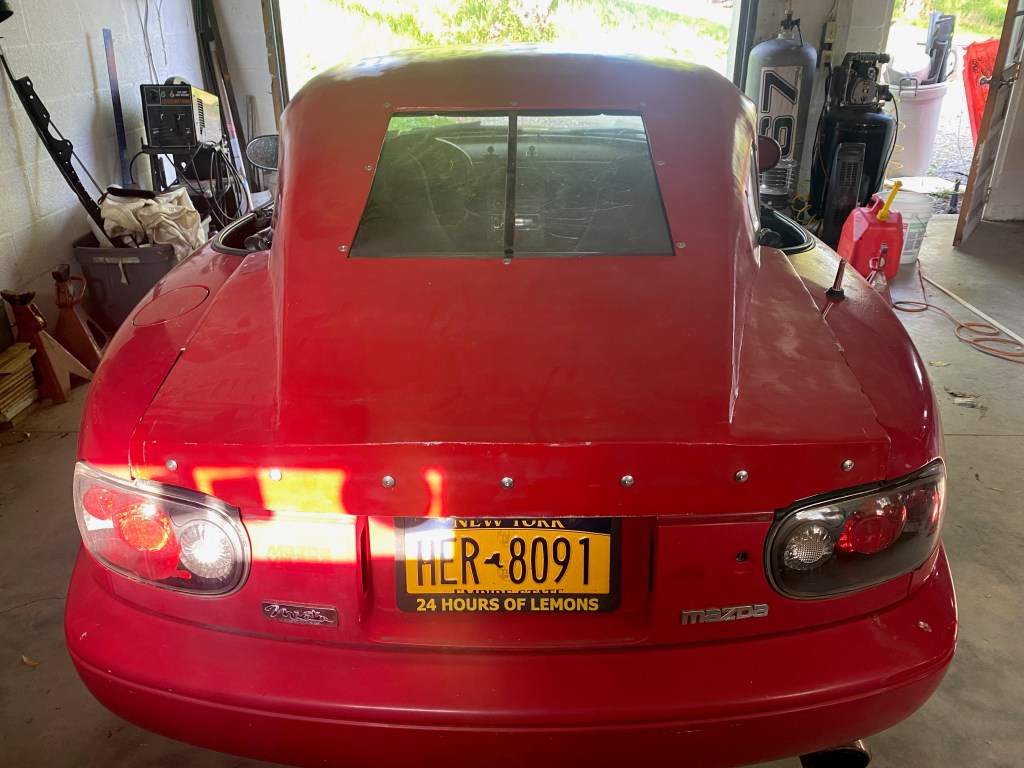
One of the things I discovered in my wind tunnel test was how to reduce the effect of open windows, and I expect fastback v2 to be even better, as it has some new tricks to further reduce drag and turbulence. First is a reduced window opening at the top edge, which is where most of the turbulence is. I also added a drip edge here, but the purpose is really to keep air from curling inside. Finally, the B pillar is well rounded for smooth extraction.
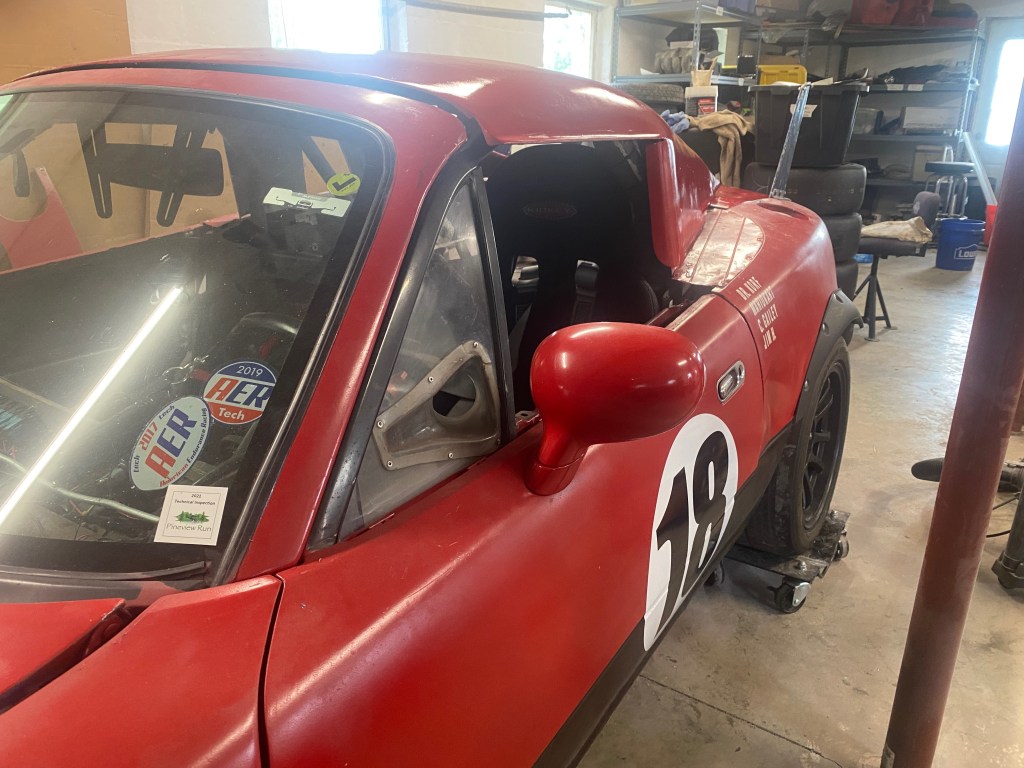
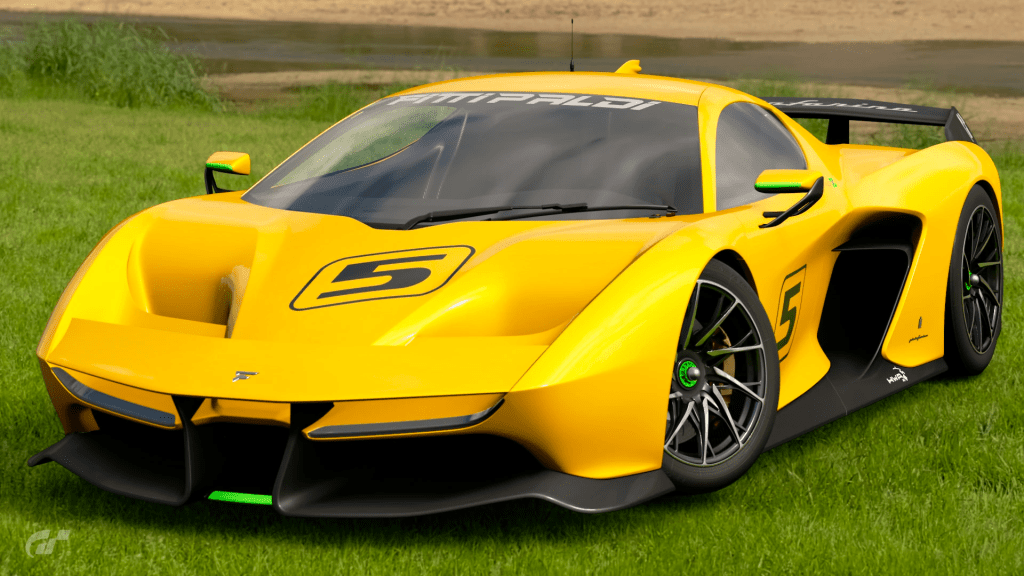
I don’t know exactly what the front end will look like yet, but I’m taking a lot of inspiration from the Fittipaldi EF7, with it’s front wing molded into the front bumper, and the extractor hood.
This wouldn’t be possible on a normal Miata, because the engine and radiator take up too much space. But look at the Busa engine and how much room there is in front for an extractor radiator and some kind of wing arrangement below that.
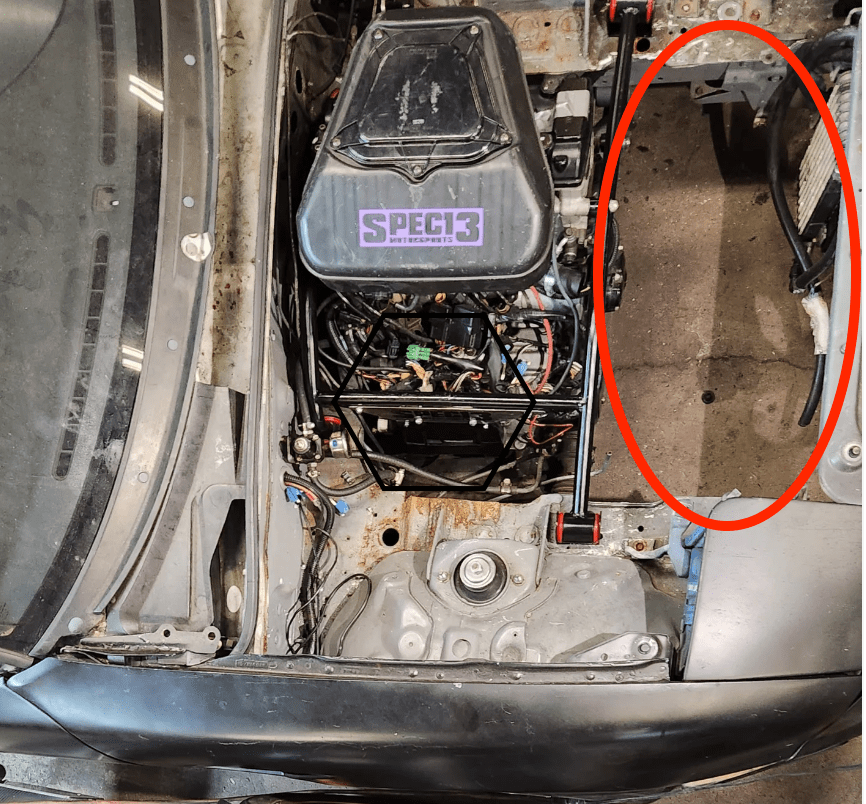
You’ll notice how far back the engine sits, and this, coupled with the lack of engine weight, means the car will have more weight on the rear wheels than the front. I’m not sure how this will affect the handling, and this might require non-standard spring rates. There will be a lot of experimentation, but that’s not a problem because we have unlimited testing days at Pineview Run.
But don’t expect rapid progress on this project from my side, I’ll be in a sling for 6 weeks come December, and won’t be able to life more than 5 lbs until next summer. But I have a couple partners in this project, and they can make a lot of progress while I’m on the mend.
So that’s what’s going on over here, big plans to smash some lap records. Falconet FTW.
 Occam's Racer
Wow….that’s a lot of rehab in front of you…hope it goes smoothly and is rewarding.
Good to be in a position to subcontract that set-up work to specialists.
Best of luck.
Jim
LikeLiked by 1 person
Will be quite curious to see how this compares to the 9Lives Johnny car at Nelson Ledges.
LikeLike